
Anybill Tax Payment Software: Features & Pricing Overview
Explore Anybill's automated tax payment solutions for modern businesses
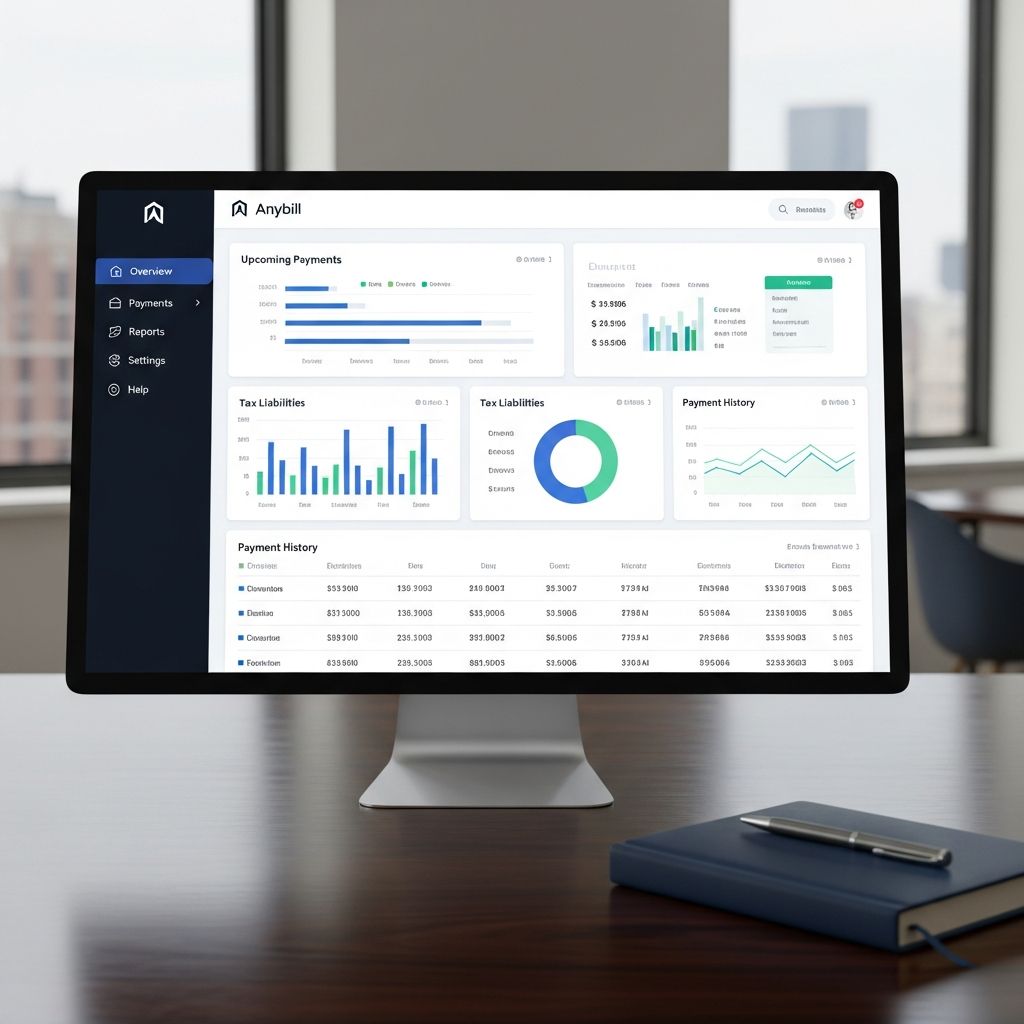
In today’s complex regulatory environment, managing tax payments and filings can present substantial challenges for organizations of all dimensions. The landscape of tax compliance has become increasingly intricate, with multiple jurisdictions, varying deadlines, and stringent accuracy requirements creating significant operational burdens. Modern businesses require solutions that can simplify these processes while ensuring complete adherence to regulatory standards. Anybill emerges as a specialized platform designed to address these exact pain points by providing a centralized system for managing tax payment obligations.
What Anybill Offers: Core Capabilities and Service Architecture
Anybill functions as a dedicated tax payment service provider that focuses specifically on streamlining the submission and management of tax payments and associated filing requirements. The platform differentiates itself through its emphasis on accuracy, timeliness, and security in handling sensitive financial transactions. Rather than attempting to be a general accounting software, Anybill specializes in the particular domain of tax obligation management, allowing it to develop deep expertise and targeted functionality within this critical business function.
The platform’s core architecture centers on an automated workflow system that reduces manual intervention in tax payment processes. This automation extends across multiple stages of the tax payment lifecycle, from initial calculation and categorization of tax liabilities to the actual submission of payments and documentation to relevant tax authorities. By minimizing human touchpoints in routine processes, the system inherently reduces the likelihood of errors that could trigger compliance issues or financial penalties.
Primary Operational Features
- Secure Payment Processing: The platform implements advanced encryption and security protocols to protect financial data throughout the payment transmission process. This security infrastructure addresses one of the primary concerns organizations have when entrusting third-party systems with sensitive tax and financial information.
- Automated Compliance Tracking: Rather than requiring finance teams to manually track various tax deadlines across different jurisdictions, the system maintains an automated calendar that alerts relevant personnel about upcoming filing and payment dates. This proactive notification system helps prevent missed deadlines and associated late-payment penalties.
- Return Submission Management: Beyond payment processing, the platform handles the submission of tax returns across multiple filing requirements. This comprehensive approach means organizations can manage both the financial aspect (payments) and the documentation aspect (returns) through a single integrated system.
- Multi-Jurisdiction Support: Organizations operating across different geographic regions face the complexity of managing tax obligations in each relevant jurisdiction. Anybill’s platform is designed to accommodate multiple jurisdictional requirements, helping centralize what would otherwise be a fragmented process.
- Audit Trail Documentation: The system maintains comprehensive records of all transactions and submissions, creating detailed audit trails that can prove invaluable during compliance reviews or tax audits. This documentation capability provides organizations with evidence of timely, accurate submissions.
Pricing Structure and Accessibility for Different Organization Sizes
Understanding the financial investment required for tax management solutions represents an important consideration for organizations evaluating their operational tools. Anybill positions itself as an accessible solution with a base entry price point, though the complete cost structure may vary depending on specific organizational needs and transaction volumes.
Baseline Cost Framework
The platform’s pricing begins at approximately $400 per month, establishing a starting point for organizations seeking to implement the system. This baseline pricing structure suggests that Anybill targets organizations beyond the smallest freelance or sole proprietor segment, positioning itself as a solution for businesses with meaningful tax filing obligations across multiple categories or jurisdictions.
The monthly subscription model provides predictability for budgeting purposes, allowing finance teams to plan for this expense as a recurring operational cost. Unlike transaction-based pricing models that can create unpredictability during high-volume periods, the subscription approach offers financial clarity and stability.
Scalability Considerations
One of Anybill’s positioning strengths involves its capacity to serve organizations across the spectrum of business sizes. The platform documentation indicates suitability for small businesses, mid-sized enterprises, and larger organizational structures. This broad applicability suggests that the pricing and feature set can scale to accommodate different operational complexities without requiring complete platform changes as organizations grow.
Rather than organizations needing to migrate to a different system as they expand, Anybill’s architecture appears designed to grow alongside business development. This scalability approach reduces the switching costs and implementation friction that could otherwise discourage organizations from adopting the platform.
Implementation and User Experience Characteristics
The practical experience of implementing and using a tax payment system significantly influences its effectiveness within an organization. Anybill appears to prioritize accessibility and ease of deployment, particularly for organizations without extensive technical expertise in specialized financial software.
Accessibility for Non-Specialized Teams
A notable characteristic of Anybill’s positioning involves its emphasis on user-friendliness and straightforward operation. The platform appears designed to function effectively without requiring highly specialized technical knowledge or financial software expertise from end users. This approach aligns with the reality that many organizations maintain finance teams with accounting expertise but limited software engineering capabilities.
By prioritizing intuitive interfaces and straightforward workflows, Anybill reduces the training burden and allows organizations to activate the platform more quickly. Shorter implementation timelines translate to faster realization of benefits, including reduced error rates and improved deadline management.
Centralized Support Structure Alignment
Anybill’s architecture appears particularly well-suited for organizations maintaining centralized accounting and finance operations. The platform facilitates coordination through a central support team structure, allowing organizations with one primary accounting office or team to manage all tax obligations through unified workflows and centralized decision-making.
This centralized approach contrasts with more distributed organizational models where multiple offices or departments might handle their own compliance requirements. For organizations with consolidated finance operations, Anybill provides a natural fit that aligns with existing organizational structure.
Comparative Position Within the Tax and Accounting Software Market
The broader tax compliance and accounting software market includes numerous solutions ranging from comprehensive enterprise platforms to focused niche tools. Understanding Anybill’s position within this competitive landscape helps organizations determine whether it aligns with their particular requirements.
Specialization Versus Generalization Trade-offs
Unlike comprehensive accounting platforms that attempt to handle the complete range of financial management functions including accounts payable, accounts receivable, general ledger management, and financial reporting, Anybill concentrates specifically on tax payment management. This specialization approach creates both advantages and considerations.
The specialization advantage manifests in deeper functionality and optimization specifically for tax processes. The development team can focus expertise on the particular complexities of tax compliance rather than distributing resources across numerous accounting functions. However, organizations requiring comprehensive accounting integration would need to combine Anybill with other platforms to achieve complete financial management coverage.
Integration Capabilities and Ecosystem Fit
Given Anybill’s specialized focus, its effectiveness often depends on integration capabilities with other financial systems organizations already utilize. Organizations using comprehensive platforms like major ERP systems or accounting software need assurance that Anybill can connect effectively with their existing technology infrastructure.
The ability to import financial data from upstream accounting systems and export compliance documentation to other platforms becomes critical for seamless operation. Organizations evaluating Anybill should prioritize understanding its integration architecture and whether it supports connections to systems already present in their technology environment.
Key Use Cases and Organizational Scenarios
Different organizations face varying tax compliance complexities based on their structure, geographic footprint, and operational characteristics. Understanding when Anybill provides optimal value helps organizations make informed implementation decisions.
Multi-Jurisdiction Operations
Organizations operating across multiple states or countries face exponentially complex tax obligations, with each jurisdiction maintaining distinct filing requirements, deadlines, and payment processes. Anybill’s multi-jurisdiction support becomes particularly valuable in these scenarios, consolidating what would otherwise be a fragmented set of compliance activities into a unified workflow.
Frequent Payment Requirements
Certain business structures, particularly entities with substantial payroll operations or significant sales tax liabilities, require frequent tax payments across multiple tax categories. These organizations benefit significantly from Anybill’s automated scheduling and payment processing capabilities, which reduce manual processing overhead and improve deadline adherence.
Audit Compliance Focus
Organizations operating in highly regulated industries or those with complex compliance requirements benefit from Anybill’s comprehensive audit trail and documentation capabilities. The detailed records maintained by the platform provide defensible evidence of compliance efforts, which can prove invaluable if tax authorities conduct examinations.
Implementation Considerations and Organizational Readiness
Successfully implementing any new financial software requires careful planning and organizational preparation. Several factors influence whether an organization can effectively leverage Anybill’s capabilities.
Data Integration and System Connectivity
Organizations must evaluate their existing technology infrastructure to ensure Anybill can connect effectively with systems where financial data originates. Understanding data flow from accounting systems into Anybill and establishing reliable integration pipelines represents a critical implementation prerequisite.
Stakeholder Training and Change Management
While Anybill emphasizes accessibility and ease of use, any system change requires adequate user training and change management. Finance teams must understand the platform’s workflow, familiarize themselves with notification mechanisms, and develop new processes aligned with the system’s capabilities.
Vendor Evaluation and Ongoing Relationship
Selecting a tax payment platform represents a meaningful business decision given the critical role compliance plays in organizational operations. Organizations should evaluate the vendor’s stability, support quality, ongoing development roadmap, and commitment to maintaining compliance with evolving regulatory requirements.
Financial Impact and Value Realization
Beyond the direct subscription costs, implementing a tax payment automation solution can generate financial benefits that justify the investment. Understanding these potential returns helps organizations evaluate the overall value proposition.
Error Reduction and Penalty Avoidance
Tax compliance errors can result in substantial penalties, interest charges, and potential legal complications. By reducing manual processes and implementing validation checks, Anybill’s automated approach can significantly decrease error rates. Even modest reduction in compliance-related penalties typically recovers the annual subscription investment multiple times over.
Labor Efficiency Improvements
Accounting teams currently managing tax payments through manual processes, spreadsheets, or distributed systems consume considerable labor hours tracking deadlines, preparing payments, and managing documentation. Automation can redirect this labor toward higher-value analysis and strategic financial activities rather than routine compliance execution.
Cash Flow and Payment Timing Benefits
Systematic tax management can improve organizational cash flow by ensuring payments process efficiently and on schedule. Avoiding late payments and associated penalties preserves working capital that might otherwise be diverted to penalty charges.
Frequently Asked Questions About Anybill
Who represents the ideal candidate organization for Anybill implementation?
Anybill functions optimally for organizations with centralized accounting operations, regular tax filing obligations across multiple categories or jurisdictions, and finance teams seeking to reduce manual compliance workload. Organizations ranging from established small businesses to mid-sized enterprises typically find strong alignment with the platform’s capabilities.
Does Anybill replace comprehensive accounting platforms?
No, Anybill represents a specialized solution focused specifically on tax payment management. Organizations require complementary systems for general accounting, accounts payable, and other financial functions. Anybill integrates alongside existing accounting platforms rather than replacing them.
How does Anybill handle different tax types and jurisdictions?
The platform maintains jurisdiction-specific tax calendars and requirements, automatically tracking different tax types relevant to each organization. This multi-dimensional tracking allows the system to manage payroll taxes, sales taxes, estimated taxes, and other obligations simultaneously across multiple geographies.
What security measures protect tax information within Anybill?
Anybill implements industry-standard encryption, secure authentication mechanisms, and comprehensive data protection protocols to safeguard sensitive tax and financial information. The platform maintains audit trails documenting all access and transactions.
Can organizations integrate Anybill with existing accounting systems?
Integration capabilities represent a critical consideration during evaluation. Organizations should confirm Anybill supports connections to their existing accounting or ERP systems to ensure seamless data flow and elimination of manual data entry.
Making the Decision: Evaluation Framework
Organizations considering Anybill should establish a structured evaluation framework assessing how the platform aligns with their specific operational needs and strategic objectives. Key evaluation dimensions include alignment with existing technology infrastructure, adequacy of feature set for current and anticipated future requirements, total cost of ownership including implementation and training expenses, and vendor capability to support evolving compliance requirements as regulations change.
Successful implementation requires recognizing that tax payment automation represents an investment in operational excellence and compliance reliability. Organizations prioritizing accuracy, efficiency, and peace of mind regarding tax obligations typically discover that Anybill’s focused specialization and automated workflows deliver meaningful value that extends well beyond the direct software costs.
References
- Internal Revenue Service Tax Compliance Guidelines — U.S. Department of Treasury. 2025. https://www.irs.gov/
- State Tax Administrators Directory and Multi-State Tax Commission Resources — Federation of Tax Administrators. 2025. https://www.taxadmin.org/
- Cybersecurity and Data Protection Standards for Financial Services — National Institute of Standards and Technology (NIST). 2024. https://www.nist.gov/
- Software as a Service (SaaS) Business Model and Implementation Best Practices — Technology Industry Association. 2025. https://www.comptia.org/
Similar Articles






Read full bio of Sneha Tete