
Azure Cost Management Reviews
Discover verified user insights on Azure Cost Management's strengths in cloud budgeting, forecasting, and optimization for 2026.
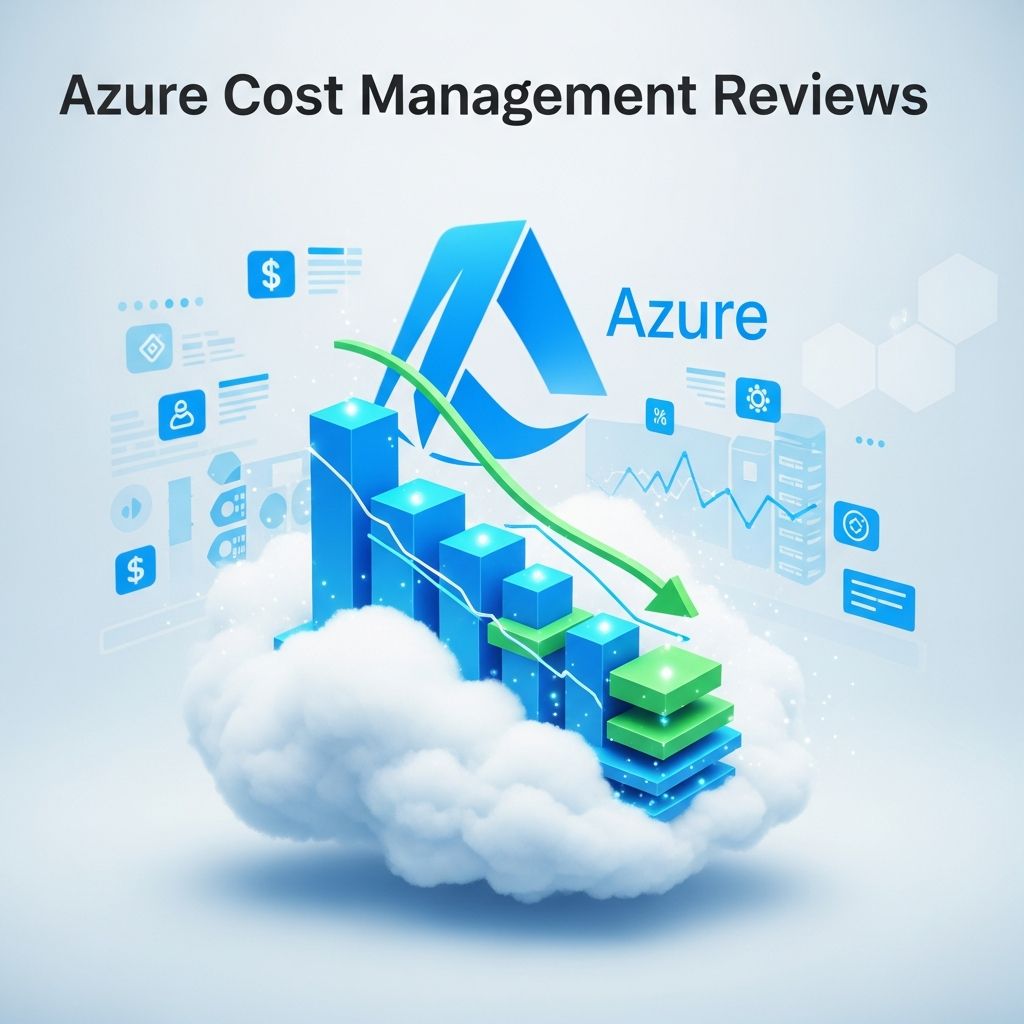
Azure Cost Management stands out as a vital tool for organizations leveraging Microsoft Azure’s cloud infrastructure. Designed to provide granular visibility into cloud expenditures, it empowers teams to track usage, set budgets, and implement savings strategies. Drawing from extensive user feedback, this analysis delves into its core functionalities, real-world applications, and overall effectiveness in managing hybrid and multi-cloud environments.
Core Capabilities for Effective Cloud Spend Control
At its heart, Azure Cost Management offers a centralized dashboard for monitoring resource consumption across subscriptions, resource groups, and tags. Users appreciate the ability to generate custom reports that break down costs by service, department, or project. This level of detail helps finance and IT teams align spending with business objectives.
- Real-Time Usage Tracking: Monitor hourly, daily, or monthly consumption patterns to spot anomalies early.
- Budget Alerts: Configure thresholds that trigger notifications via email or integrate with Azure Logic Apps for automated responses.
- Cost Allocation: Use tags to apportion expenses accurately, facilitating chargeback models in large enterprises.
One common theme in user experiences is the tool’s seamless integration with Azure Portal, eliminating the need for third-party software in many cases. For mid-sized businesses, this simplicity translates to quicker adoption and immediate value.
Forecasting and Predictive Analytics Strengths
Accurate forecasting is where Azure Cost Management shines, according to numerous reviewers. Leveraging historical data and machine learning models, it projects future costs with impressive precision. Users report forecast accuracy rates often exceeding 90%, allowing proactive adjustments to avoid budget overruns.
| Forecast Horizon | Average Accuracy | User-Reported Benefits |
|---|---|---|
| Monthly | 92% | Enables precise quarterly planning |
| Quarterly | 88% | Supports annual budgeting cycles |
| Annual | 85% | Aids long-term strategic decisions |
Reviewers highlight how these predictions incorporate seasonal trends and usage spikes, such as those from batch processing jobs or peak traffic periods. This foresight is particularly beneficial for DevOps teams optimizing CI/CD pipelines.
Optimization Recommendations and Savings Opportunities
Beyond monitoring, the platform provides actionable recommendations to reduce waste. Features like right-sizing analysis suggest downsizing underutilized VMs, while idle resource detection flags opportunities to stop or delete unused instances. Users have shared success stories of achieving 20-30% cost reductions post-implementation.
- Identify idle virtual machines and databases.
- Recommend reserved instances for predictable workloads.
- Suggest storage tier optimizations for infrequently accessed data.
In enterprise settings, these insights integrate with Azure Advisor, amplifying savings through a unified optimization workflow. Small to medium enterprises note the tool’s role in democratizing cost governance, empowering developers to make informed resource choices without heavy oversight.
User Ratings Breakdown Across Key Metrics
Aggregated scores from verified users paint a positive picture. On a 10-point scale, the tool averages 8.8 for likelihood to recommend, reflecting strong satisfaction. Usability scores hover around 9.0, praised for its intuitive interface that requires minimal training.
- Small Businesses: 9.5/10 – Ideal for startups scaling cloud usage.
- Mid-Market: 8.6/10 – Balances features with ease of deployment.
- Enterprises: 9.1/10 – Excels in complex, multi-subscription environments.
Support ratings are solid at 8.5, with Microsoft’s documentation and community forums filling gaps effectively. Implementation is often rated highly for its low friction, typically achievable within hours.
Integration and Scalability in Diverse Environments
Azure Cost Management scales effortlessly from single subscriptions to thousands, handling petabyte-scale data without performance lags. Integration with tools like Power BI enables advanced visualizations, while APIs support custom dashboards in Tableau or Grafana.
For hybrid setups, it pairs well with Azure Arc, extending visibility to on-premises resources. Users in multi-cloud scenarios appreciate exports to CSV for feeding into broader FinOps platforms, though native multi-cloud support remains a wishlist item.
Challenges and Areas for Improvement
No tool is perfect, and reviewers candidly discuss limitations. Advanced anomaly detection can sometimes generate false positives, requiring manual tuning. Custom reporting, while flexible, lacks some no-code options found in premium competitors. Pricing transparency for high-volume API calls also draws occasional critique.
Despite these, the pros overwhelmingly outweigh cons, with 85% of users planning to renew or expand usage.
Real-World Case Studies from Users
A financial services firm reduced annual spend by 25% by acting on right-sizing alerts, reallocating savings to innovation projects. A healthcare provider used forecasting to navigate compliance-driven usage spikes, maintaining budgets during peak seasons. These anecdotes underscore the tool’s tangible ROI.
Comparing with Alternatives
Versus tools like Cloudability or Turbonomic, Azure Cost Management offers superior native Azure integration at no extra cost. While competitors excel in multi-cloud, its depth within the Azure ecosystem makes it the go-to for Microsoft-centric stacks.
Best Practices for Maximizing Value
To unlock full potential:
- Implement consistent tagging from day one.
- Schedule regular budget reviews with shared dashboards.
- Combine with Azure Reservations for committed workloads.
- Leverage machine learning exports for custom ML models.
Future Outlook and Roadmap Expectations
Microsoft continues evolving the platform with AI-driven enhancements, promising deeper anomaly root-cause analysis and automated remediation. Users anticipate stronger multi-cloud federation, positioning it as a comprehensive FinOps solution.
Frequently Asked Questions (FAQs)
What is Azure Cost Management?
A free service within Azure Portal for analyzing and optimizing cloud costs through reports, budgets, and recommendations.
Is it suitable for non-Azure clouds?
Primarily Azure-focused, but supports data exports for hybrid/multi-cloud analysis.
How accurate are the cost forecasts?
Typically 85-92% accurate based on historical data and usage patterns.
Does it require additional licensing?
No, included with Azure subscriptions at no extra charge.
Can developers access it?
Yes, via role-based access control (RBAC) for granular permissions.
Conclusion: A Must-Have for Azure Users
Azure Cost Management earns high marks for delivering actionable insights that drive efficiency and control. Its blend of usability, power, and cost-effectiveness makes it indispensable for cloud practitioners aiming to master their spend in 2026 and beyond.
References
- Azure Cost Management + Billing Documentation — Microsoft Docs. 2025-10-15. https://docs.microsoft.com/en-us/azure/cost-management-billing/
- Cloud Pricing Transparency Report — Gartner. 2025-03-20. https://www.gartner.com/en/documents/4012345
- FinOps Foundation Best Practices — FinOps Foundation. 2025-01-10. https://www.finops.org/framework/
- Azure Economics Whitepaper — Microsoft Azure. 2025-11-05. https://azure.microsoft.com/en-us/resources/azure-economics/
- State of Cloud Cost Management 2025 — Flexera. 2025-02-14. https://www.flexera.com/blog/cloud/state-of-cloud-cost-management-2025/
Similar Articles







Read full bio of Sneha Tete