
Bean Cruncher Accounting Software: Features, Pricing & User Insights
Comprehensive guide to cloud-based accounting for growing businesses
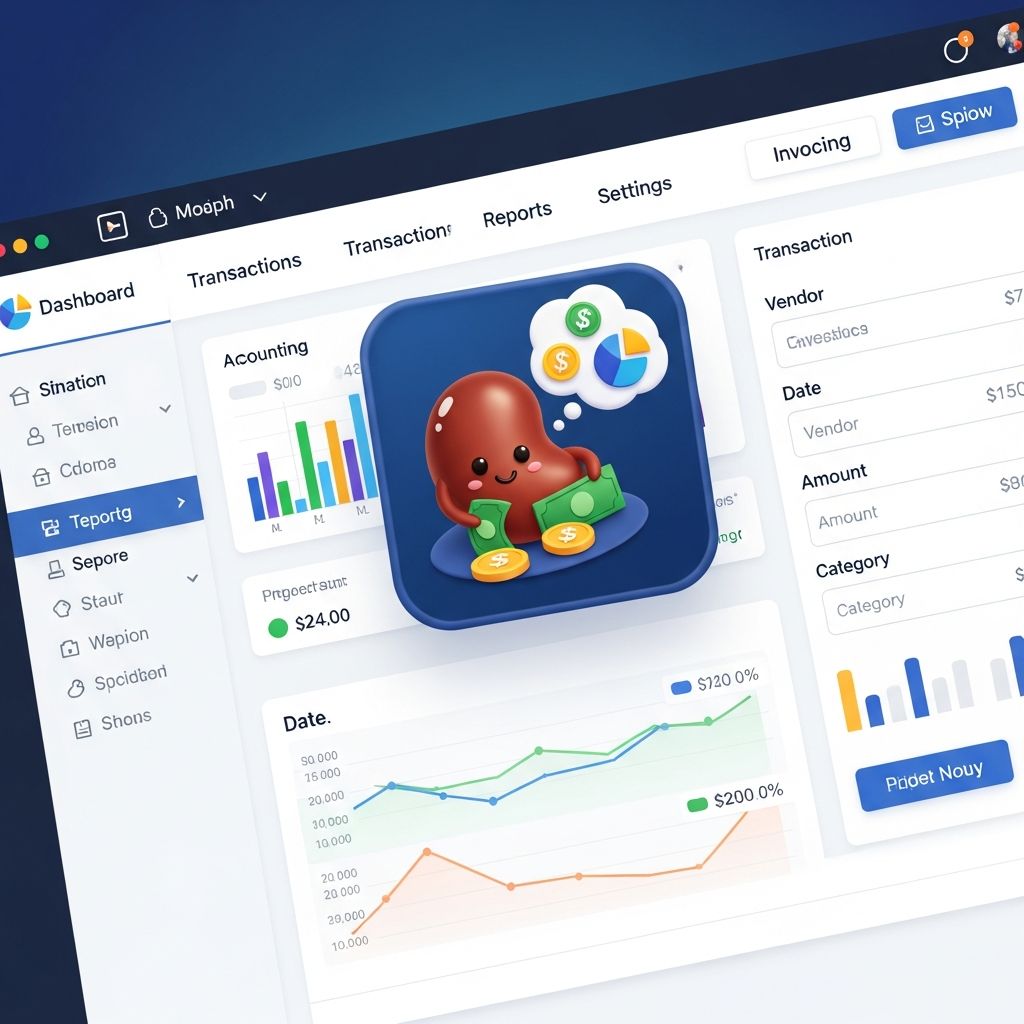
The accounting landscape has undergone significant transformation over the past decade, with cloud-based solutions becoming the preferred choice for businesses seeking flexibility, accessibility, and comprehensive financial management tools. Bean Cruncher Accounting represents one such solution, specifically engineered to address the unique challenges faced by small and medium-sized enterprises. This exploration examines the platform’s architecture, feature set, pricing models, and user feedback to provide a thorough understanding of its capabilities and limitations.
Understanding Bean Cruncher’s Market Position
Bean Cruncher Accounting positions itself as a specialized solution developed with input from accounting professionals who understand the complexities of modern business finance. The platform operates on a cloud-based infrastructure, enabling users to access their financial information from any location with internet connectivity. This accessibility represents a fundamental shift from traditional desktop accounting applications, offering increased mobility and collaborative capabilities for distributed teams and remote workers.
The software targets organizations that require more sophistication than basic bookkeeping tools but may not need the extensive complexity of enterprise-level ERP systems. This positioning makes it particularly relevant for growing businesses that experience fluctuating financial management needs and require scalable solutions.
Comprehensive Feature Overview
Core Accounting Functions
Bean Cruncher delivers a comprehensive suite of accounting features designed to streamline financial operations:
- Invoice Management: The platform enables users to create, customize, and send professional invoices with tracking capabilities. A notable feature allows modification of invoices prior to payment processing, reducing the need for complex adjustment entries and maintaining cleaner accounting records.
- Accounts Receivable and Payable: Automated tracking of customer payments and vendor obligations helps maintain accurate cash flow projections and payment schedules.
- General Ledger Management: The foundation of all accounting records, the general ledger provides centralized tracking of all financial transactions with intuitive categorization and reporting capabilities.
- Banking Integration: Direct connections with financial institutions facilitate automated transaction reconciliation and real-time balance updates.
- Inventory Tracking: Users can monitor stock levels, asset values, and inventory movements within the integrated system, providing comprehensive visibility into physical assets.
Advanced Capabilities
Beyond basic accounting functions, Bean Cruncher incorporates several sophisticated features that distinguish it from simpler alternatives:
- Error Correction Flexibility: The ability to fix accounting errors without creating adjustment entries maintains a cleaner audit trail and simplifies reconciliation processes.
- Transaction Deletion: Users can remove erroneous transactions entirely rather than reversing them, a feature that significantly improves account accuracy and record integrity.
- Job Tracking: Organizations managing multiple projects can track costs, revenues, and profitability by individual job or engagement.
- Tax Compliance Tools: Built-in tax management features help ensure compliance with relevant regulations and facilitate year-end tax preparation.
- Consolidated Reporting: The platform aggregates data across multiple entities, departments, or locations into unified reports for executive decision-making.
Reporting and Analysis Capabilities
The platform provides an extensive library of standard financial reports necessary for regulatory compliance, stakeholder communication, and internal management decision-making. Users consistently report that the reporting functionality delivers all essential financial statements and customizable analysis tools required for standard accounting operations.
Pricing Structure and Investment Analysis
Subscription Models
Bean Cruncher employs a subscription-based pricing model that varies depending on business requirements and feature utilization levels:
- Entry-Level Plans: Starting at approximately $66 per month, the basic tier serves nascent ventures and sole proprietorships with fundamental accounting needs.
- Mid-Tier Options: Mid-range pricing around $95 monthly provides enhanced capabilities for growing organizations with more complex financial structures.
- Scalable Growth: The pricing architecture permits businesses to adjust service levels as operational complexity increases, eliminating the need for wholesale platform migrations.
Return Policy
The platform offers a 30-day return or trial period, allowing prospective users to evaluate functionality before committing to ongoing subscription costs. This trial approach reduces adoption risk and demonstrates vendor confidence in product quality.
Value Proposition Analysis
When assessed against alternative cloud accounting solutions, Bean Cruncher’s pricing remains competitive, particularly for organizations prioritizing ease of use and accounting-specific functionality. The subscription model distributes costs predictably across monthly budgets without large capital expenditures, making financial planning more manageable for cash-constrained businesses.
User Experience and Interface Design
Navigation and Accessibility
User feedback consistently highlights the intuitive dashboard design and logical module organization. The navigation structure enables even non-technical users to locate required functions without extensive training or documentation review. This accessibility reduces onboarding time and accelerates organizational adoption.
Learning Curve Considerations
Organizations implementing Bean Cruncher report that the platform proves relatively easy to learn, particularly for users with prior accounting software experience. The straightforward interface design minimizes the implementation period, allowing businesses to achieve productivity improvements more quickly than with more complex alternatives.
Strengths and Competitive Advantages
Accuracy and Functional Completeness
Multiple user evaluations emphasize the platform’s accuracy in financial calculations and comprehensive functional coverage. The software executes complex calculations reliably, reducing the probability of accounting errors that could compromise financial reporting accuracy.
Year-End Process Simplification
The platform streamlines year-end closing procedures through automated processes and simplified workflows. This capability proves particularly valuable during high-pressure periods when accounting teams face compressed timelines and heightened accuracy requirements.
Ledger Maintenance Tools
The ability to modify or delete transactions before finalization enables organizations to maintain exceptionally clean accounting records. This feature proves particularly valuable during implementation phases or when correcting data entry errors, reducing administrative burden and improving record quality.
Accountant-Centric Design
The platform was developed by accounting professionals for accounting professionals, resulting in workflows and features aligned with how accountants actually work. This specialization differentiates Bean Cruncher from generic financial management tools designed for general business users rather than accounting specialists.
Areas of Concern and Limitations
Bank Reconciliation Challenges
Some users report encountering difficulties with bank reconciliation procedures, suggesting that this particular workflow may require enhancement or present a steeper learning curve for certain user segments. While not universally problematic, this limitation warrants evaluation during the trial period, particularly for organizations with high-volume transaction processing or multiple bank accounts.
Limited Customer Access Control
The platform currently lacks granular permission controls that would enable businesses to provide customers with restricted access to specific inventory information or financial data. This limitation requires manual data extraction for customer inquiries rather than enabling self-service access, potentially creating operational inefficiencies in customer-facing scenarios.
Inventory Visibility Constraints
While inventory management functionality exists, the platform’s approach to inventory visibility operates at a high organizational level rather than providing detailed, item-level customer access. Organizations seeking sophisticated inventory portal capabilities may find current functionality insufficient for their requirements.
Target User Profiles and Ideal Implementation Scenarios
Best Suited Organizations
Bean Cruncher proves most valuable for:
- Small to medium-sized businesses with straightforward to moderately complex accounting structures
- Professional service firms managing multiple client engagements with job-tracking requirements
- Distributed organizations where remote accounting access provides competitive advantage
- Growing ventures seeking scalable solutions that evolve with organizational complexity
- Organizations prioritizing user-friendly interfaces and rapid implementation over maximum feature depth
Scenarios Requiring Alternative Evaluation
Businesses with the following characteristics should carefully evaluate whether Bean Cruncher meets their needs:
- Highly complex multi-entity structures requiring sophisticated consolidation workflows
- Organizations requiring extensive customization or specialized industry modules
- Enterprises demanding granular permission controls for customer portal access
- Businesses prioritizing advanced inventory management as a core functional requirement
Implementation and Support Ecosystem
Getting Started Process
The platform comes pre-loaded with a default chart of accounts including the most commonly utilized account categories. While this default structure accelerates initial setup, organizations should review and customize these accounts to align with their specific operational and reporting requirements.
Support Resources
The vendor provides support services to assist with implementation challenges and operational questions. Organizations should evaluate the support tier included with their subscription level and determine whether premium support options justify additional investment for their circumstances.
Comparative Market Context
Bean Cruncher occupies a distinct position within the cloud accounting software landscape. While competing against established players offering more extensive feature libraries, it differentiates through simplified workflows, accountant-focused design, and cost-effectiveness. Organizations comparing alternatives should consider their specific requirements for feature depth, customization capability, and user interface simplicity when making selection decisions.
Financial Implications and ROI Considerations
The subscription-based pricing model creates predictable ongoing costs without large capital expenditures. For organizations transitioning from manual accounting processes or legacy desktop applications, the efficiency improvements and error reduction typically generate positive return on investment within the first operating year. The time savings realized through automated bank reconciliation, streamlined reporting, and error elimination directly offset subscription costs for most organizations.
Frequently Asked Questions
How does Bean Cruncher’s pricing compare to competitor offerings?
Bean Cruncher’s entry-level pricing remains competitive with other cloud-based accounting solutions targeting small to medium businesses. The value proposition centers on ease of use, accounting specialization, and rapid implementation rather than maximum feature breadth, justifying the positioning within the mid-range pricing segment.
What kind of customer support does Bean Cruncher provide?
The platform offers support services to address implementation and operational questions. The specific support scope and responsiveness should be confirmed with the vendor during the evaluation process, as support coverage may vary by subscription tier.
Can Bean Cruncher handle multi-entity accounting requirements?
Yes, the platform provides consolidated reporting capabilities enabling organizations to manage multiple entities within a single system. However, organizations with exceptionally complex consolidation requirements should verify that available consolidation workflows meet their specific needs.
How secure is the cloud-based infrastructure?
Cloud-based accounting software inherently relies on vendor security practices and infrastructure. Organizations should review Bean Cruncher’s security documentation, data encryption protocols, and compliance certifications before implementation to ensure alignment with their information security requirements.
Is there a trial period available?
Yes, Bean Cruncher offers a 30-day return or evaluation period, permitting organizations to test functionality before committing to ongoing subscription costs.
Conclusion
Bean Cruncher Accounting represents a solid choice for organizations seeking user-friendly cloud-based accounting software with solid foundational functionality and accountant-focused design. The platform excels at simplifying core accounting operations, maintaining clean financial records through flexible error correction, and providing accessible tools that minimize training requirements. The competitive pricing structure and scalable architecture align well with growing businesses experiencing evolving financial management needs.
However, organizations with sophisticated requirements around customer portal access, complex multi-entity consolidation, or advanced inventory management should carefully evaluate whether Bean Cruncher’s current feature set fully addresses their operational needs. The reported challenges with bank reconciliation workflows warrant investigation during the trial period, particularly for organizations expecting high transaction volumes.
By leveraging the available 30-day trial period, prospective users can directly assess whether the platform’s strengths outweigh its limitations within their specific operational context. The decision ultimately depends on individual business requirements, existing system integrations, and prioritization of simplicity versus maximum feature complexity.
References
- Cloud Computing Adoption in Business Finance — Deloitte Insights. 2024. https://www2.deloitte.com/us/en/insights/industry/financial-services/cloud-computing-adoption.html
- Small Business Technology Spending Report — U.S. Small Business Administration. 2024. https://www.sba.gov/
- Accounting Software Selection Criteria and ROI — American Institute of CPAs (AICPA). 2023-2024. https://www.aicpa.org/
- Enterprise Resource Planning Systems for Mid-Market Organizations — Gartner Research. 2024. https://www.gartner.com/en
- Data Security in Cloud-Based Financial Systems — National Institute of Standards and Technology (NIST). 2023. https://www.nist.gov/
Similar Articles






Read full bio of Sneha Tete