
ClicFacture Invoice Software Review & Analysis
Comprehensive evaluation of ClicFacture invoicing platform for SMBs and e-commerce businesses
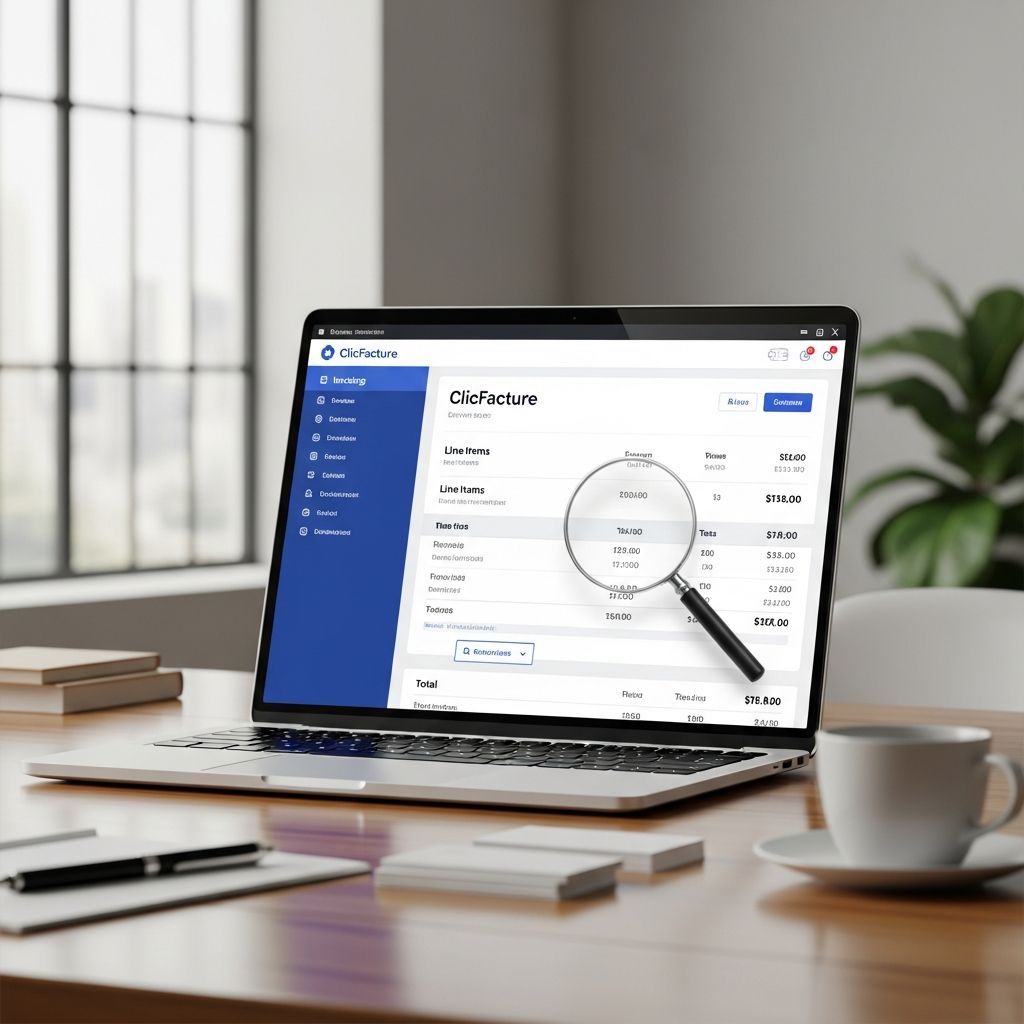
Managing financial documentation has become increasingly complex for entrepreneurs and small business owners operating in today’s digital economy. The shift toward online commerce, multiplatform sales channels, and regulatory compliance requirements has created a pressing need for integrated invoicing solutions. ClicFacture represents one such platform designed specifically to address these challenges, particularly for businesses operating within French regulatory frameworks. This comprehensive examination explores the platform’s capabilities, value proposition, and practical applications for various business types.
The Core Purpose of Dedicated Invoicing Platforms
Modern invoicing software serves far more than the basic function of generating documents bearing amounts owed. Contemporary business owners require systems that integrate sales data from multiple sources, maintain compliance with increasingly stringent regulations, provide actionable financial insights, and streamline communication with both customers and financial advisors. The fragmentation of sales channels—website storefronts, marketplace listings, physical locations, and third-party platforms—creates a genuine operational challenge without proper consolidation tools.
A unified invoicing solution addresses several interconnected problems simultaneously. First, it eliminates data entry redundancy by connecting directly to sales sources. Second, it ensures consistency across all customer-facing financial documents. Third, it generates the documentary evidence required for accounting and tax purposes. Finally, it provides business owners with the analytical framework needed to understand their financial performance in real time.
Key Operational Capabilities and Feature Set
ClicFacture functions as a centralized command center for invoice generation and financial documentation management. The platform processes orders from various channels—e-commerce websites, online marketplaces, and other digital sales sources—converting them into professionally formatted invoices that comply with both commercial best practices and regulatory requirements.
Document Customization and Branding
One significant feature available within the platform involves template customization. Businesses can modify invoice appearance to reflect their brand identity while maintaining compliance with mandatory information fields. This approach allows entrepreneurs to present a cohesive professional image across all customer interactions without sacrificing regulatory adherence. Different business types may require distinct document formats, and the platform acknowledges this diversity by offering multiple template options tailored to various commercial activities.
Multi-Channel Sales Integration
The platform’s architecture enables connection with multiple sales channels simultaneously. Rather than manually logging into each platform to record sales or transferring data through cumbersome manual processes, ClicFacture aggregates information from diverse sources. This consolidation reduces administrative overhead and minimizes errors that commonly occur during manual data transfer operations. Businesses selling through personal websites, marketplace platforms, and other channels benefit from unified data management.
Accounting and Tax Documentation
Beyond customer-facing invoices, the platform generates sales journals and accounting records suitable for transmission to accountants and tax professionals. This capability proves particularly valuable for businesses operating in jurisdictions with specific regulatory documentation requirements. The platform handles compliance with French fiscal and accounting standards, ensuring generated documents meet legal specifications without requiring manual adjustment.
Business Analytics and Reporting
The platform provides analytical capabilities that transform raw transaction data into meaningful business intelligence. Users access comprehensive reports offering visibility into sales trends, revenue patterns, customer behavior, and other performance metrics. These insights enable data-driven decision-making regarding pricing strategies, inventory management, marketing focus, and resource allocation. Rather than maintaining isolated financial records, business owners gain a cohesive view of their entire operation through a single interface.
Pricing Structure and Accessibility
ClicFacture operates on a tiered pricing model designed to accommodate businesses at different growth stages. Understanding the relationship between cost and delivered functionality helps prospective users determine whether the platform aligns with their operational needs and financial constraints.
Pricing Tiers Overview
| Plan Level | Annual Cost | Monthly Equivalent | Primary Audience |
|---|---|---|---|
| Free | €0 | €0 | Microbusinesses and startups |
| EXO | €78 | €6.50 | Freelancers and very small operations |
| TPE | €105 | €8.75 | Small enterprises with moderate volume |
| TPE+ | €156 | €13 | Growing businesses with complex needs |
The tiered approach enables businesses to start without financial commitment through the free offering while scaling to more comprehensive solutions as operations expand. This progression-based model reduces barriers to adoption and allows organizations to evaluate whether the platform delivers sufficient value before committing budget resources.
Regulatory Compliance and Legal Framework
Invoicing exists within a highly regulated environment in most jurisdictions. Regulatory bodies impose specific requirements regarding document formatting, information inclusion, record retention, and reporting. Non-compliance can result in penalties ranging from administrative fines to prosecution in extreme cases. The significance of this regulatory context cannot be overstated for businesses operating in France or other European Union markets with stringent accounting regulations.
ClicFacture was developed with explicit attention to French fiscal and accounting regulations. The platform automatically incorporates required information fields, maintains proper record sequences, and generates documentation suitable for submission to tax authorities. This built-in compliance reduces the likelihood of unintentional regulatory violations while eliminating the need for business owners to maintain separate compliance expertise or hire specialized consultants solely for regulatory document generation.
The platform’s compliance focus extends beyond basic legal requirements. Many businesses must also meet industry-specific standards or contractual obligations. By maintaining proper documentation and generating audit-ready records, ClicFacture supports organizations undergoing external audits or regulatory inspections.
Suitability Assessment Across Business Types
E-commerce Operations
E-commerce businesses face particular complexity regarding invoice generation. These operations typically process numerous transactions daily, often from customers in multiple jurisdictions. Simultaneously serving multiple marketplaces, operating proprietary websites, and potentially maintaining retail locations creates invoice management challenges that demand automated, integrated solutions. ClicFacture’s specific design for e-commerce contexts makes it particularly suitable for this segment.
Service-Based Enterprises
Service providers generate invoices less frequently but often work with larger individual transaction values and more complex billing arrangements. The customization capabilities within ClicFacture allow service businesses to create invoices reflecting their specific billing structures, whether based on hourly rates, project completion, milestone achievements, or other metrics.
Marketplace Sellers
Vendors selling through platforms like Amazon, eBay, or other marketplace ecosystems benefit from ClicFacture’s multi-channel integration. Rather than manually creating invoices for each marketplace transaction, sellers can consolidate data and maintain unified records while still generating marketplace-specific documentation when required.
Comparison Against Alternative Solutions
While ClicFacture occupies a specific market position, alternative invoicing platforms exist offering different approaches and feature combinations. Understanding how ClicFacture differentiates itself relative to competitors provides important context for evaluation.
Some alternative platforms focus on broader accounting functionality, offering comprehensive general ledger, expense tracking, and financial statement generation alongside invoicing. These solutions provide greater integrated accounting capabilities but typically involve steeper learning curves and higher costs. ClicFacture’s more focused scope makes it more accessible for businesses primarily concerned with invoice generation and basic financial tracking rather than full-service accounting.
Other competitors emphasize international flexibility, supporting multiple languages, currencies, and regulatory frameworks simultaneously. ClicFacture’s specific optimization for French regulatory requirements provides advantages for domestically-focused French businesses but may offer less adaptability for organizations operating across multiple jurisdictions.
Implementation Considerations and Setup Process
Successfully deploying invoicing software requires more than simply paying subscription fees. Organizations must evaluate implementation effort, training requirements, data migration challenges, and ongoing support accessibility. The practical experience of getting a platform operational often determines whether projected benefits materialize in practice.
ClicFacture’s design philosophy emphasizes simplicity and accessibility for non-technical users. The platform targets entrepreneurs and small business owners who typically lack dedicated IT staff. This focus on usability reduces implementation friction and shortens the timeline from subscription purchase to productive utilization. Straightforward onboarding processes enable businesses to begin generating compliant invoices within hours rather than requiring extended implementation projects.
Financial Management Beyond Invoicing
While invoicing represents the core function, modern financial management extends into related areas where ClicFacture provides integrated support. The platform enables businesses to maintain comprehensive records suitable for accountant collaboration. This integration with external financial professionals creates a connected ecosystem where data flows smoothly between operational systems and accounting consultation.
The analytical reporting capabilities transform ClicFacture from a pure document generation tool into a business intelligence platform. Owners and managers gain visibility into financial performance metrics that inform strategic planning, resource allocation decisions, and performance evaluation. This insights-driven approach supports more informed business management compared to creating invoices in isolation without deeper financial analysis.
Decision Framework for Prospective Users
Evaluating whether ClicFacture merits adoption requires honest assessment of several factors. Organizations should first evaluate whether their invoicing volume and complexity justify platform investment. Microbusinesses generating only occasional invoices might find free or extremely low-cost options sufficient. Conversely, operations processing hundreds or thousands of invoices monthly find automation value justifies subscription costs.
Geographic and regulatory considerations matter significantly. Businesses operating within French regulatory frameworks benefit substantially from ClicFacture’s specific compliance engineering. Organizations in other markets might discover that competing platforms optimized for their jurisdictions offer better regulatory alignment.
Channel diversity should inform the decision. Businesses selling through multiple platforms experience greater value from ClicFacture’s multi-channel integration capabilities compared to single-channel operators. Similarly, the customization and analytics features deliver more value for sophisticated users compared to those seeking only basic invoice generation.
Future Considerations and Platform Evolution
Software platforms evolve continuously as technology advances and market demands shift. Prospective users should consider not only current capabilities but the platform’s trajectory and responsiveness to emerging needs. The invoicing software landscape continues evolving as artificial intelligence, advanced automation, and predictive analytics become increasingly accessible. Platforms that successfully incorporate emerging technologies while maintaining their core accessibility will likely retain competitive positioning.
Regulatory environments themselves evolve, particularly in response to digital commerce expansion and cross-border transaction complexity. Platforms maintaining robust compliance frameworks and updating them promptly as regulations change provide ongoing assurance that generated documents remain legally compliant.
Conclusion: Strategic Value Assessment
ClicFacture represents a focused, purposeful approach to invoice generation and basic financial documentation management specifically optimized for French-market small businesses and e-commerce operations. The platform’s strength lies in its combination of accessibility, regulatory compliance, reasonable pricing, and multi-channel integration. Rather than attempting to serve all possible users and all possible use cases, ClicFacture identifies a specific market segment and delivers tailored solutions addressing their particular needs.
Organizations evaluating invoicing solutions should engage in structured assessment examining their specific requirements, regulatory context, sales channel complexity, and sophistication level. For French e-commerce businesses managing orders across multiple platforms and requiring compliant documentation, ClicFacture merits serious consideration. Other segments or geographic contexts may discover alternative solutions better aligned with their particular circumstances.
References
- Official ClicFacture Website — ClicFacture. https://www.clicfacture.com
- French Tax Administration (DGFiP) – Digital Invoicing Requirements — Direction Générale des Finances Publiques. https://www.economie.gouv.fr/dgfip/facture-electronique
- European Union Directive on VAT Invoicing (2010/45/EU) — Official Journal of the European Union. 2010. https://eur-lex.europa.eu/legal-content/EN/TXT/?uri=celex:32010L0045
- Small Business Accounting Standards and Best Practices — International Federation of Accountants (IFAC). https://www.ifac.org/knowledge-gateway/developing-accounting-profession
- E-commerce Invoice Management Trends — Shopify. https://www.shopify.com/enterprise/invoicing
Similar Articles






Read full bio of medha deb