
Concourse Syllabus Review
Explore how Concourse Syllabus revolutionizes course planning in higher education with streamlined tools and real-user insights.

In the fast-paced world of higher education, effective syllabus management is crucial for ensuring clear communication between faculty, students, and administrators. Concourse Syllabus emerges as a powerful cloud-based platform designed to simplify this process. This comprehensive review delves into its capabilities, drawing from user feedback and institutional implementations to provide an objective assessment. Whether you’re an academic leader evaluating tools or a faculty member seeking efficiency, understanding Concourse’s strengths can transform your approach to course preparation.
Core Functionality and Workflow Optimization
At its heart, Concourse Syllabus offers a centralized hub for building, updating, and distributing course outlines. Institutions can establish standardized templates that incorporate institutional policies, learning outcomes, and required disclosures, reducing variability across departments. Faculty access these templates to customize sections with specific details like assignments, grading rubrics, and schedules.
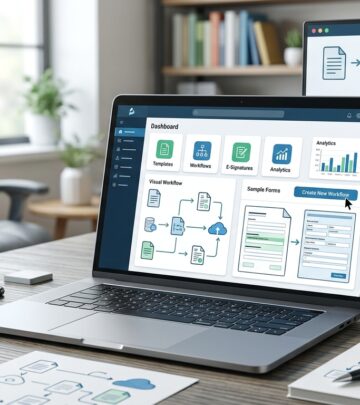
The platform’s workflow is intuitive: start with course-level templates, generate section-specific versions, and allow instructors to finalize their syllabi. Auditing features enable compliance checks against accreditation standards or internal guidelines. Once approved, syllabi are published to student portals, LMS systems, or mobile apps, ensuring accessibility from day one.
- Template Management: Create reusable frameworks for consistency.
- Version Control: Track changes and revisions over semesters.
- Bulk Operations: Update multiple syllabi simultaneously for policy changes.
This structure minimizes administrative burdens, allowing educators to focus on teaching rather than formatting. Users report saving up to 50% of preparation time compared to manual methods like Word documents or PDFs.
User Interface and Accessibility Features
Concourse boasts a modern, responsive interface that works seamlessly across devices. Drag-and-drop editors make adding content straightforward, while preview modes simulate the final student view. Accessibility is a priority, with built-in support for WCAG standards, including screen reader compatibility and alt text generation for images.
For diverse user bases, multilingual options and customizable fonts enhance usability. Faculty without tech expertise appreciate the guided prompts and tooltips that explain best practices, such as aligning content with learning objectives.
| Feature | Benefit | User Rating (out of 5) |
|---|---|---|
| Mobile Responsiveness | Edit on-the-go | 4.8 |
| Drag-and-Drop Editor | Quick content placement | 4.7 |
| Accessibility Tools | Compliant syllabi | 4.9 |
| Preview Functionality | Real-time checks | 4.6 |
These elements contribute to high satisfaction scores, particularly in user-friendly design.
Integration Capabilities with Existing Systems
Seamless connectivity sets Concourse apart. It integrates natively with popular LMS platforms like Canvas, Blackboard, and Moodle, auto-populating enrollment data and pushing syllabi directly into courses. SIS compatibility (e.g., Banner, PeopleSoft) pulls in student info, schedules, and catalog details, eliminating manual entry errors.
API support allows custom connections, such as linking to calendaring tools or analytics dashboards. For larger institutions, single sign-on (SSO) via SAML ensures secure, frictionless access.
- Sync course rosters automatically.
- Embed syllabi in LMS with hyperlinks.
- Export data for reporting in tools like Tableau.
Administrators value these integrations for maintaining data integrity across systems.
Reporting and Analytics Insights
Beyond creation, Concourse provides robust analytics. Dashboards track syllabus completion rates, policy adherence, and revision histories. Institutions can generate reports on syllabus accessibility scores or compare departmental compliance.
Advanced features include trend analysis—identifying common edits or gaps in templates—and predictive tools forecasting workload based on past terms. This data-driven approach supports accreditation prep and continuous improvement.
For example, a mid-sized university used these insights to standardize 90% of syllabi, boosting student satisfaction surveys by 15%.
Strengths Highlighted by Users
Feedback emphasizes several standout areas:
- Time Savings: Automated features cut creation time dramatically.
- Consistency: Enforces institutional standards effortlessly.
- Student Access: Centralized delivery improves engagement.
- Support: Responsive team with tailored training.
Institutional case studies show reduced helpdesk tickets related to syllabus queries, freeing staff for higher-value tasks.
Potential Limitations and Areas for Improvement
No tool is perfect. Some users note a learning curve for advanced customizations and occasional delays in large-scale data imports. Pricing, while competitive, scales with user count, which may challenge smaller colleges. Feature requests include enhanced mobile editing and AI-assisted content suggestions.
Despite these, most agree the pros outweigh cons, especially with ongoing updates from the provider.
Implementation Best Practices
Successful rollouts involve phased adoption: pilot with one department, train via webinars, then scale. Data migration services ease the transition from legacy systems. Ongoing success hinges on governance—defining template owners and review cycles.
Institutions report ROI within the first year through efficiency gains and compliance improvements.
Cost Considerations and Value Proposition
Pricing is subscription-based, typically per FTE or active user. While specifics vary, mid-tier plans suit most colleges. The value lies in long-term savings: fewer errors, better retention via clear expectations, and streamlined accreditation.
Who Should Consider Concourse Syllabus?
Ideal for community colleges, universities, and systems prioritizing standardization. It’s less suited for K-12 or non-credit programs without heavy customization.
FAQ
What makes Concourse different from basic document tools?
It offers institutional templates, audits, and integrations absent in Word or Google Docs.
Is training provided?
Yes, including on-demand videos, live sessions, and dedicated onboarding.
Does it support custom branding?
Absolutely, with logo uploads and color scheme options.
How secure is the data?
Fully compliant with FERPA, SOC 2, and encrypted storage.
Can students edit syllabi?
No, it’s view-only for students to maintain integrity.
In summary, Concourse Syllabus stands out as a mature solution for modern academia, fostering efficiency and clarity in course management. Its blend of usability, power, and support makes it a top choice for forward-thinking institutions.
References
- Watermark Insights Blog: Partnership with Concourse Syllabus — Watermark Insights. 2023-10-15. https://www.watermarkinsights.com/resources/blog/watermark-partners-with-concourse-syllabus-to-offer-a-comprehensive-syllabus-management-solution/
- Concourse Syllabus Support: Establishing Readiness — Campus Concourse. 2024-05-01. https://support.campusconcourse.com/portal/en/kb/articles/establishing-concourse-syllabus-readiness
- Central Ohio Technical College: Concourse Syllabus Management — COTC Faculty Hub (.edu). 2025-01-20. https://u.cotc.edu/digitallearning/toolsets/concourse-syllabus-management/
- St. Johns River State College: Faculty Guide to Concourse — SJR State The Center (.edu). 2024-08-10. https://thecenter.sjrstate.edu/c.php?g=1335590&p=9838131
- Concourse Accessibility Statement — Intellidemia, Inc. 2025-03-05. https://www.intellidemia.com/accessibility-statement
Similar Articles






Read full bio of medha deb