
DocAuthority Review: Strengths, Limitations, and Best-Fit Use Cases
A detailed, vendor-neutral look at DocAuthority’s data classification and governance platform based on real-world user perspectives.
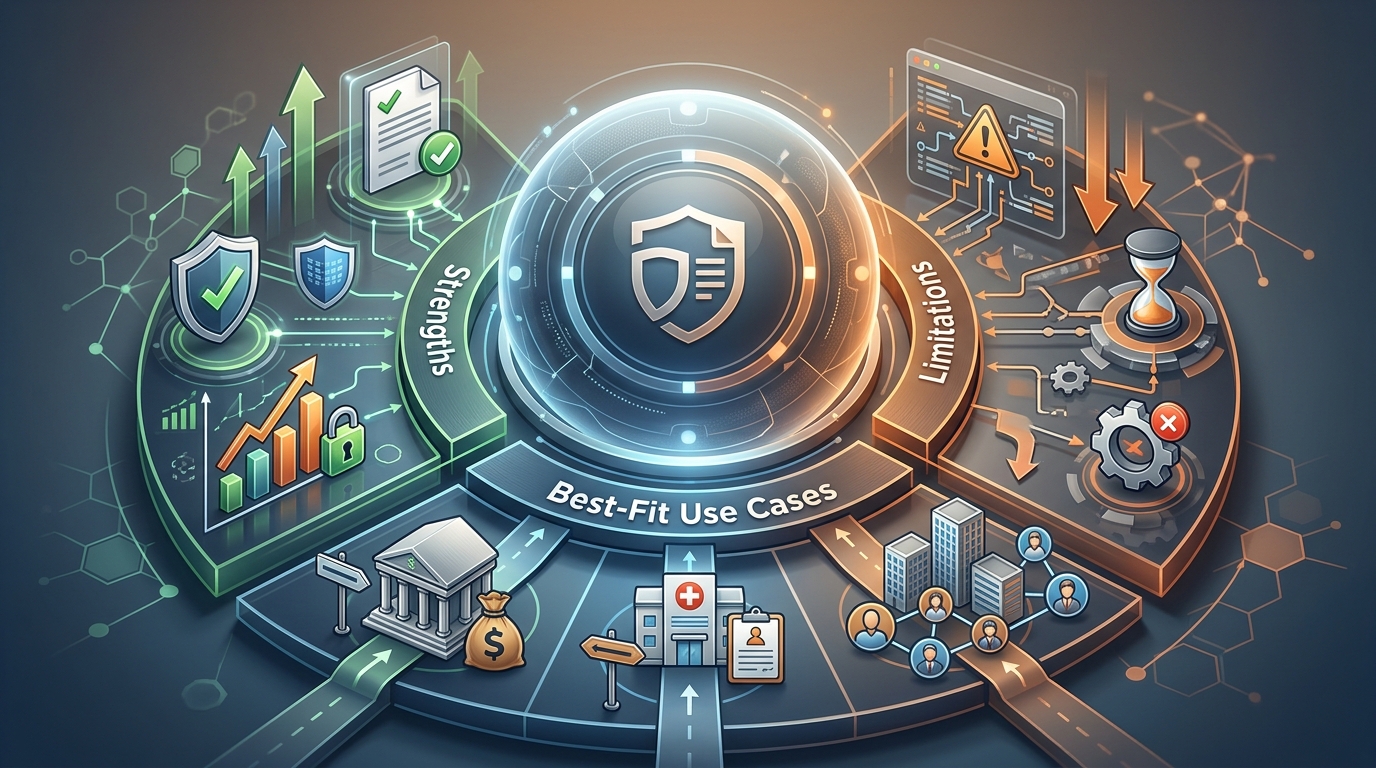
DocAuthority is positioned as a platform for understanding, organizing, and protecting unstructured data across an organization. Drawing on user feedback and widely accepted principles of data governance, this review looks at what DocAuthority does well, where it can struggle, and which types of teams are most likely to get value from it.
This article is not endorsed by DocAuthority or TrustRadius. It synthesizes themes commonly discussed in user reviews with broader industry context from independent, reputable sources.
What DocAuthority Aims to Solve
Most organizations now manage enormous volumes of documents, emails, spreadsheets, and other file types stored across file shares, collaboration tools, and endpoints. Research consistently shows that unstructured data represents the majority of enterprise information and is growing quickly.1 Without tools to understand and control this content, organizations face:
- Regulatory risk from unmanaged personal, financial, or health information spread across systems.
- Security exposure when sensitive or confidential files are stored in open locations.
- Operational friction as employees struggle to find the right documents or duplicate work.
DocAuthority is designed to address these challenges by discovering unstructured data, classifying it, and supporting better governance decisions.
Core Capabilities at a Glance
Although exact feature sets may vary by version and deployment, user feedback and product positioning indicate that DocAuthority typically focuses on the following areas:
- Automated discovery of files across network drives and repositories
- Content-based and metadata-based data classification
- Identification of sensitive or regulated information
- Reporting for governance, risk, and compliance teams
- Support for remediation actions (such as clean-up or access changes)
| Capability | Purpose | Typical Users |
|---|---|---|
| Data Discovery | Locate files and repositories across the environment, including older and forgotten content. | IT operations, data owners, records managers |
| Classification Engine | Categorize files based on content, patterns, and context to understand what data exists. | Information security, compliance, data governance teams |
| Sensitive Data Detection | Identify files containing personal, financial, or other sensitive information. | Privacy officers, legal, risk and audit teams |
| Reporting & Dashboards | Visualize where sensitive or outdated content is stored and how it is used. | CIOs, CISOs, compliance leadership |
| Remediation Support | Drive clean-up, archival, or access rights changes based on classification. | IT administrators, data owners, records teams |
Deployment Experience and Implementation Considerations
Tools like DocAuthority are rarely plug-and-play. They interact with core infrastructure, file shares, and identity systems, so planning is crucial. Industry guidance on data governance stresses that success depends as much on process and ownership as on technology.2 In practice, organizations adopting DocAuthority typically need to consider:
1. Scoping and Pilot Phase
Many users report that the most successful deployments start with a tightly defined scope, such as a single business unit or a limited set of file shares. A pilot allows teams to:
- Validate performance and scanning impact on production systems.
- Adjust classification rules to reduce false positives and negatives.
- Determine which reports and dashboards are genuinely useful to stakeholders.
Once the pilot proves value, organizations can scale deployment more confidently.
2. Integration with Existing Infrastructure
DocAuthority’s value relies on reaching the systems that actually store data. Typical targets include:
- On-premises file servers and network shares.
- Cloud storage or collaboration tools where supported.
- Document management systems or ECM platforms.
Before deployment, IT teams usually need to review network architecture, authentication methods, and available service accounts to ensure the tool can scan content without creating security gaps.
3. Performance and Resource Planning
Scanning large repositories can be resource-intensive. This is not unique to DocAuthority; any discovery and classification tool must inspect vast numbers of files. Planning typically includes:
- Scheduling scans during off-peak hours where possible.
- Allocating dedicated infrastructure for the scanning engine.
- Monitoring network and storage performance during early runs.
4. Governance Ownership and Change Management
Technology alone cannot decide which files to keep, archive, or delete. Effective use of DocAuthority usually requires clear roles:
- Data owners to make decisions on classification outcomes and retention.
- Security and compliance teams to interpret risks surfaced by the tool.
- IT administrators to implement remediation actions and manage the platform.
Many organizations also provide training and communication to explain why changes are being made and how they support regulatory obligations, including privacy regulations such as the GDPR.3
User-Perceived Strengths
Aggregated user feedback highlights several recurring advantages of DocAuthority, especially when deployed with a clear governance strategy.
Effective Visibility into Unstructured Data
A common theme among reviewers is that DocAuthority reveals content that was previously hidden or overlooked. Examples include:
- Old project folders and shared drives that nobody actively manages.
- Multiple copies of the same document stored across different locations.
- Files containing sensitive information stored in unexpected places.
This visibility supports risk assessments, clean-up projects, and efforts to meet regulatory expectations for knowing what personal data is stored where.
Classification Capabilities
Users often appreciate that DocAuthority can classify files based not only on simple metadata (such as location or file type) but also on patterns in the content. This is important for identifying regulated data, such as payment card numbers or national identifiers, as recognized by data protection authorities and security standards bodies.4
When tuned properly, the classification engine helps teams quickly focus on the highest-risk content rather than manually inspecting individual files.
Support for Compliance and Audits
Because DocAuthority aggregates information about where data is stored and how it is classified, it often becomes a central resource during audits and compliance assessments. Typical benefits reported include:
- Faster responses to questions about where particular types of data reside.
- Evidence for data minimization and clean-up efforts.
- Improved documentation for internal or external auditors.
Enabling Data Clean-Up and Rationalization
Many organizations use DocAuthority as a catalyst for reducing redundant, obsolete, or trivial content (often called “ROT”). Once files are identified and categorized, teams can:
- Archive content that must be retained for legal or regulatory reasons.
- Delete items that no longer have business value and are beyond retention periods.
- Consolidate important documents in better-governed locations.
This not only reduces risk but can also lower storage costs and simplify data subject access requests under privacy regulations.
Common Pain Points and Limitations
Although users see value in DocAuthority, feedback also highlights challenges that potential buyers should consider.
Complexity of Initial Setup
Because DocAuthority touches many parts of the environment, initial configuration can feel complex. Typical hurdles include:
- Establishing correct permissions and service accounts for scanning.
- Configuring connectors or endpoints for all relevant repositories.
- Designing classification policies that align with existing governance frameworks.
Organizations without a mature data governance program may find that the tool exposes underlying process gaps rather than solving them by itself.
Tuning Classification Rules
Automated classification, by nature, produces some level of false positives and false negatives. Many reviewers note that getting the right balance requires an iterative process:
- Running initial scans and reviewing samples of classified content.
- Adjusting rules, thresholds, or dictionaries based on observed errors.
- Repeating until results are reliable enough for operational decisions.
This tuning phase can demand active involvement from subject matter experts, such as privacy officers or legal teams, who understand what constitutes sensitive or regulated data.
Performance on Very Large Environments
In environments with tens or hundreds of terabytes of unstructured data, scan performance and indexing time can become concerns. While this is typical of data discovery tools, reviewers sometimes mention the need to carefully schedule and segment scans to avoid disruption. Planning for incremental scanning of new or changed files can help mitigate long full-scan cycles.
User Interface and Usability
Some feedback implies that the user interface, while functional, may have a learning curve—especially for non-technical stakeholders. Organizations often address this by:
- Creating tailored dashboards or saved reports for specific teams.
- Providing targeted training for data owners and managers.
- Documenting internal guidelines on how to interpret and act on findings.
Security and Compliance Context
DocAuthority’s capabilities align with broader trends in cybersecurity and regulatory compliance. Recognized frameworks and regulators emphasize understanding and managing data as a core requirement. For example:
- The NIST Cybersecurity Framework highlights the importance of identifying and protecting critical assets, including information assets.5
- Data protection authorities stress data minimization and storage limitation, requiring organizations to avoid retaining personal data longer than necessary.3
By helping organizations map and classify their unstructured data, DocAuthority can support these obligations, provided it is integrated into a broader governance and security program.
Best-Fit Organizations and Use Cases
Not every organization will benefit equally from a platform like DocAuthority. Based on common review themes and industry practices, the tool tends to be most effective for:
Organizations with Significant Unstructured Data
DocAuthority is particularly relevant for companies that have:
- Large shared drives accumulated over many years.
- Heavily used collaboration platforms with limited oversight.
- Distributed teams that create and store documents across multiple locations.
In such contexts, manual approaches to understanding and governing data are impractical, making automated discovery and classification essential.
Regulated Industries
Industries such as financial services, healthcare, and the public sector often face stringent regulatory requirements for protecting personal or confidential data. For these organizations, DocAuthority can support:
- Compliance with privacy laws and sector-specific regulations.
- Preparation for internal or external audits.
- Evidence of good-faith efforts to identify and reduce risk.
Mature or Growing Data Governance Programs
Organizations that already have (or are actively building) formal governance structures—such as data owners, retention schedules, and classification schemas—are best placed to make use of DocAuthority. For them, the platform becomes a practical tool to enforce and operationalize policies that might otherwise remain on paper.
When DocAuthority May Not Be Ideal
While DocAuthority provides powerful capabilities, there are situations where it might not be the best fit:
- Very small organizations with limited unstructured data may not realize enough value to justify the investment and implementation effort.
- Teams without governance foundations may struggle to act on the insights the platform provides, leading to frustration and limited return.
- Organizations seeking a document management system may confuse DocAuthority with tools designed for content creation and collaboration; it is focused on discovery and classification, not document authoring or workflow.
Practical Tips for Prospective Buyers
For teams considering DocAuthority or similar tools, a structured evaluation approach helps reduce risk and clarify expectations.
Define Clear Objectives
Before engaging vendors, organizations should articulate what they hope to achieve. Common objectives include:
- Reducing exposure of sensitive information.
- Preparing for upcoming regulatory audits.
- Cleaning up legacy file shares and improving findability.
These goals provide a framework for measuring success and help prioritize features during evaluation.
Ask for a Proof of Concept
A limited proof of concept (PoC) in your own environment can reveal practical realities that marketing materials may not capture. During a PoC, it is useful to:
- Test scanning performance on representative repositories.
- Evaluate classification accuracy on real documents.
- Solicit feedback from both technical and non-technical stakeholders.
Plan for Ongoing Governance
Data landscapes change quickly as new systems and repositories are introduced. To keep DocAuthority results relevant, organizations should plan for:
- Regular reviews of classification policies and detection rules.
- Periodic rescans or continuous monitoring where supported.
- Integrating outputs into broader security, privacy, and records management processes.
Frequently Asked Questions (FAQ)
1. Is DocAuthority primarily a security tool or a governance tool?
DocAuthority sits at the intersection of security and governance. Its ability to find and categorize sensitive information supports security and privacy obligations, while its reporting and classification structure help governance and compliance teams manage data lifecycle and policy adherence.
2. Can DocAuthority delete or move files automatically?
Capabilities can vary by version and configuration, but in many deployments, DocAuthority is used to inform decisions rather than make irreversible changes automatically. Organizations typically prefer to review findings and then implement remediation actions—such as deletion, archival, or access changes—through controlled processes.
3. How does DocAuthority compare to a document management system?
A document management system (DMS) focuses on the creation, storage, and collaboration aspects of documents—versioning, check-in/out, workflows. DocAuthority, by contrast, focuses on discovering, analyzing, and classifying data that may already be stored in many different locations. They can complement each other but are not equivalents.
4. Will DocAuthority help with privacy regulations such as GDPR?
DocAuthority can support GDPR-related efforts by providing visibility into where personal data is stored and how it is classified. However, technology alone cannot ensure compliance. Organizations must combine the tool with policies, legal guidance, and processes that address all regulatory requirements, such as legal bases for processing and data subject rights.
5. What skills are needed to manage DocAuthority effectively?
Successful deployments usually involve a mix of:
- Technical skills in infrastructure, identity, and storage administration.
- Governance expertise in records management, privacy, or information security.
- Change management capabilities to engage business stakeholders and data owners.
Conclusion
DocAuthority offers a structured approach to one of the most difficult challenges in modern IT: understanding and controlling unstructured data at scale. Users frequently highlight its strengths in data discovery, classification, and supporting compliance initiatives. At the same time, organizations must be ready to invest in planning, configuration, and ongoing governance to realize its full value.
For enterprises dealing with sprawling file shares, increasing regulatory scrutiny, and complex security requirements, DocAuthority can be a valuable component of a broader data governance and protection strategy.
References
- Worldwide IDC Global DataSphere Forecast, 2022–2026 — IDC. 2022-03-28. https://www.idc.com/getdoc.jsp?containerId=US49018922
- Records and Information Management: A Benchmark — ARMA International. 2021-06-01. https://www.arma.org/page/standards
- Guidelines on Data Protection Officers (‘DPOs’) — European Data Protection Board (formerly WP29). 2017-12-05. https://edpb.europa.eu/sites/default/files/files/file1/20160413_wp243_enpdf.pdf
- Payment Card Industry Data Security Standard v4.0 — PCI Security Standards Council. 2022-03-31. https://www.pcisecuritystandards.org/document_library
- Framework for Improving Critical Infrastructure Cybersecurity (Version 1.1) — National Institute of Standards and Technology (NIST). 2018-04-16. https://nvlpubs.nist.gov/nistpubs/CSWP/NIST.CSWP.04162018.pdf
Similar Articles








Read full bio of medha deb