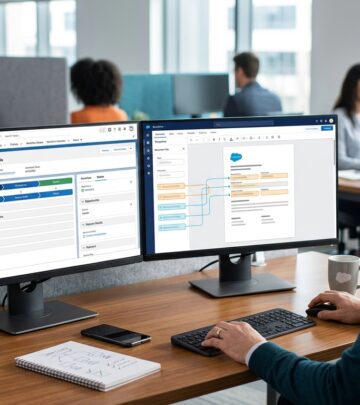
Doccept Review: Features, Fit, and Value
A practical look at how Doccept supports document control, collaboration, and security.

Doccept is designed for organizations that want to bring order to large volumes of digital files, reduce manual handling, and improve oversight across document-heavy workflows. In broad terms, it belongs to the document management system category, where the main goal is not simply to store files, but to make them searchable, controlled, and easier to move through daily business processes.
This guide takes an original, practical look at what Doccept is meant to do, where it tends to help most, and which teams are most likely to benefit from it. Rather than repeating product page language, the focus here is on how a system like Doccept fits into real operations, what capabilities matter most, and what to evaluate before adoption.
What Doccept is built to solve
Many organizations reach a point where shared drives, email attachments, and scattered cloud folders stop being manageable. Files are duplicated, version control becomes unclear, and approvals slow down because nobody is certain which draft is final. Doccept addresses these pain points by acting as a centralized platform for document capture, storage, retrieval, and collaboration.
Its value is strongest in environments where documents need to be classified consistently, accessed by multiple users, and reviewed under defined permissions. Instead of treating files as passive storage objects, a document management system like Doccept treats them as controlled records with lifecycle rules.
Core capabilities that matter in daily use
The most useful way to assess a DMS is to ask what employees can actually do with it every day. Doccept is generally positioned around a few essential functions:
- Centralized document storage: teams can keep files in one structured repository instead of across disconnected locations.
- Metadata-based organization: documents can be tagged or categorized so that retrieval is faster than relying on folder browsing alone.
- Version tracking: users can reduce confusion about edits by maintaining a clearer history of revisions.
- Access control: permissions help limit sensitive files to approved users only.
- Workflow support: routing documents for review or approval can reduce manual follow-up.
These features are not just technical extras. They directly influence turnaround time, audit readiness, and the confidence teams have in the documents they use. In many businesses, even modest improvements in these areas can save hours each week.
Why document management software is still important
It may seem simple to keep everything in cloud storage, but that approach often breaks down as document volume grows. Without a structured system, users spend time searching, checking whether a document is current, or asking colleagues to resend files. Over time, this creates risk and inefficiency.
Document management platforms help solve these problems in several ways. They improve retrieval, preserve consistency, and provide better oversight over who changed what and when. For companies that deal with contracts, internal policies, case files, customer records, or regulatory paperwork, these capabilities are especially valuable.
Where Doccept may fit best
Doccept is most relevant for organizations that manage recurring document processes and need a more disciplined structure than shared folders can provide. Typical use cases include administrative departments, operations teams, finance groups, legal teams, HR functions, and organizations that require document review trails.
It may also appeal to businesses that want an on-premises or controlled deployment model rather than relying entirely on a generic consumer-style file storage tool. That preference often comes up in industries where internal governance, permissions, or local control matter more than simplicity alone.
| Business need | How a DMS like Doccept helps |
|---|---|
| Too many scattered files | Creates one organized repository with clearer structure |
| Slow approvals | Routes files through defined review steps |
| Unclear version history | Tracks revisions so users can identify the latest file |
| Security concerns | Restricts access through user roles and permissions |
| Search frustration | Uses metadata and indexing to improve retrieval |
Strengths that buyers usually care about
When organizations evaluate systems in this category, a few strengths tend to rise to the top. Doccept’s appeal generally comes from practical benefits rather than flashy design. The emphasis is on handling documents reliably and giving teams a repeatable way to work.
- Better organization: structured repositories help reduce reliance on informal file naming conventions.
- Improved accountability: approval paths and revision histories make it easier to see how documents move through a process.
- Time savings: staff can locate documents faster and avoid repeated manual follow-up.
- Security and control: permissions can help protect confidential or regulated information.
- Process consistency: teams are more likely to follow the same steps when the system supports them.
For many companies, these advantages outweigh the learning curve that comes with implementing a formal document system. The platform’s value is not in replacing human judgment, but in reducing routine friction.
Potential limitations to keep in mind
No document management system is ideal for every business. Before committing to Doccept or any similar product, buyers should think carefully about deployment effort, user adoption, and configuration needs. Systems built for document governance can introduce complexity if the team expects a very lightweight file-sharing experience.
Some organizations may also find that advanced document control requires planning around taxonomy, permissions, and workflow design. In practice, the software itself is only one piece of the equation; success depends on how well internal processes are mapped and maintained.
- Implementation may require preparation and internal coordination.
- Users may need training to take advantage of structured workflows.
- Metadata standards should be defined early to avoid inconsistent tagging.
- Teams with simple storage needs may not use the full feature set.
Important capabilities to evaluate during a demo
When reviewing a document management platform, it helps to go beyond feature lists and test the day-to-day experience. A demo should focus on the tasks your employees actually perform, such as creating folders, searching for files, assigning access, or sending documents through an approval sequence.
Some questions worth asking include:
- How easy is it to set up document categories and metadata fields?
- Can users find documents quickly without knowing the exact folder path?
- How are permissions managed across departments or user groups?
- What controls exist for version history and change tracking?
- Can the workflow process match the organization’s approval steps?
The best software choice is the one that matches your existing business rules closely enough to be useful, while also improving them enough to justify change.
How to think about implementation
Successful DMS adoption usually depends less on technical novelty and more on operational discipline. Businesses get the best results when they define document naming rules, ownership expectations, permission boundaries, and review logic before broad rollout. Without that groundwork, even a strong platform can become another place where files pile up without structure.
It is also wise to start with one or two high-value workflows first. For example, a finance team may begin with invoice approvals, or HR may begin with personnel file organization. Early wins help users trust the system and create momentum for broader adoption.
Who is likely to benefit most
Doccept is likely to be most useful for organizations that deal with recurring, structured, and potentially sensitive documents. That includes teams that must preserve records carefully, share files across multiple roles, and ensure that documents move through a defined review path.
Smaller teams with basic storage needs may not need such a comprehensive system, while larger organizations often benefit from the consistency and control that a formal DMS brings. In other words, the product is most compelling when document chaos has become a real operational cost.
A simple decision framework
If you are deciding whether Doccept is a good fit, it may help to weigh the following criteria:
- Document volume: do you manage enough files to justify a structured platform?
- Compliance pressure: are you expected to retain records with clear accountability?
- Approval complexity: do documents need to move through multiple reviewers?
- Security requirements: do certain users need restricted access?
- Search needs: is fast retrieval a frequent pain point?
If you answer yes to several of these questions, a dedicated document management platform is likely more appropriate than basic cloud file storage.
Frequently asked questions
Is Doccept only for large businesses?
No. While larger companies may benefit from its control features, smaller organizations with structured documentation needs can also use a DMS effectively.
Does Doccept help with collaboration?
Yes, in the sense that it gives teams a shared system for storing, reviewing, and tracking documents. Collaboration is strongest when roles and workflows are clearly defined.
What is the main advantage of using a document management system?
The biggest advantage is control. A DMS helps organizations organize files, manage access, track changes, and reduce confusion over document status.
How should a company prepare before adopting a system like this?
Companies should define document categories, user roles, review steps, and naming conventions before rollout. That preparation improves adoption and keeps the repository organized.
Final thoughts
Doccept belongs to a software category that solves a very practical problem: making document work less chaotic and more reliable. Its value comes from structured storage, controlled access, and workflow support that can reduce the friction common in file-based operations. For organizations struggling with dispersed documents and unclear version history, that can be a meaningful improvement.
The best way to judge the platform is not by feature count alone, but by whether it fits the way your teams already work. If your business needs discipline, visibility, and better handling of document lifecycles, a system like Doccept may be worth serious consideration.
References
- Doccept.com: Document Management System Software (DMS) — Doccept. n.d. https://www.doccept.com
- Doccept – Electronic Document Management System – Features List — SlideShare. 2015-02-01. https://www.slideshare.net/slideshow/doccept-electronic-document-management-system-features-list/43145724
- User Guide — Doccept. n.d. https://www.doccept.com/img/documents/Doccept-User-Guide.pdf
- Comparative Analysis of Document Management Systems for … — SEAMEO INNOTECH. 2018-07-01. https://www.seameo-innotech.org/mt4t/wp-content/uploads/2018/07/1570366689-final.pdf
Similar Articles





Read full bio of medha deb