
DocCreator User Insights and Practical Review
An in-depth, user-focused look at DocCreator’s strengths, weaknesses, and real-world use cases for document generation at scale.

DocCreator is a document-generation and publishing platform used by organizations that need to produce large volumes of consistent, professional documentation. Based on patterns visible in user reviews, it is typically adopted by teams that must standardize manuals, contracts, technical documentation, reports, or customer-facing PDFs while integrating with other business systems.
This article synthesizes those user perspectives into an independent, original overview. It is not affiliated with the vendor and is intended to help buyers understand how DocCreator behaves in practice: what it does well, where it struggles, and what environments it suits best.
What DocCreator Is Designed to Do
DocCreator belongs to the broader category of document automation and publishing tools. These platforms are built to streamline the process of creating complex documents that must be accurate, standardized, and frequently updated.
In typical implementations, DocCreator is used to:
- Design templates for recurring documents such as manuals, policies, proposals, and contracts.
- Manage content fragments (chapters, sections, clauses) that can be reused across multiple outputs.
- Generate branded PDFs and other formats with a uniform look and feel.
- Automate aspects of document creation, reducing repetitive manual editing.
Organizations that produce highly regulated or technically complex documentation (for example, in manufacturing, engineering, finance, or software) often benefit most from tools in this category.1
Core Capabilities Highlighted by Users
While implementation details vary by organization, reviewers tend to focus on a few recurring capabilities when describing their experience with DocCreator.
Template-Driven Document Creation
One of DocCreator’s central strengths is template-driven authoring. Users typically create base templates that define layout and structure, then apply those templates across many documents. Advantages of this model include:
- Consistency at scale: Branding, headings, spacing, and styles are uniform, even when many authors contribute.
- Reduced formatting work: Authors focus on content; formatting decisions are encoded in the template.
- Faster onboarding: New users have clearer guidance when templates provide a structured framework.
This approach aligns with broader best practices in technical communication, where style guides and templates are recommended to improve clarity and efficiency.1
Content Reuse and Modular Documentation
Reviewers often highlight the ability to reuse content fragments across multiple documents. Instead of copying and pasting sections, DocCreator lets teams maintain a single source of truth and reference that content in many outputs. Benefits include:
- Less duplication: A product description or legal disclaimer can be stored once and reused everywhere.
- Easier updates: When a policy changes, users update one module rather than dozens of separate documents.
- Consistency of messaging: Marketing and compliance teams can ensure the same language appears across all documents.
This modular approach is similar in spirit to component content management systems (CCMS) used in large documentation teams.1
PDF and Multi-Format Output
DocCreator is frequently used to generate high-quality PDFs, and in some environments, other output formats as well. User feedback usually emphasizes:
- Reliable pagination and page breaks for complex documents.
- Support for images, tables, and lists within structured content.
- Branding elements like logos, headers, footers, and cover pages.
For organizations that need printable or archivable documents, stable PDF output is a core requirement and a key reason to adopt such a tool.
Integration with Existing Systems
In more advanced deployments, DocCreator is integrated with other enterprise systems such as content repositories, ERP or CRM tools, or product lifecycle management (PLM) systems. While specific integrations vary, reviewers often mention:
- Importing data or text from external databases.
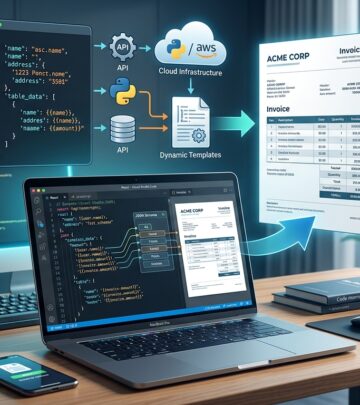
- Using scripts or APIs to automate document generation.
- Embedding DocCreator into a broader publishing workflow.
These integrations matter because document automation delivers the most value when it taps into authoritative data sources, minimizing manual re-entry and reducing errors.2
User Experience: Strengths and Pain Points
User reviews typically paint a nuanced picture of DocCreator’s user experience: the platform can be powerful and reliable once configured, but it may also present a learning curve and some usability challenges.
Learning Curve and Onboarding
Many reviewers describe DocCreator as easier to manage once templates and processes are established, but not necessarily intuitive for first-time users. Common themes include:
- Initial complexity: Setting up templates, styles, and structure requires time and familiarity with the tool.
- Need for training: New users typically benefit from formal training or documentation rather than self-discovery alone.
- Power vs. simplicity trade-off: Advanced capabilities can make the interface feel dense for users who only need basic tasks.
The experience is comparable to other professional authoring tools, where a richer feature set often correlates with a more demanding learning phase.
Editor and Interface Usability
Feedback about the editing and layout tools is mixed, but several recurring points appear in reviews:
- Structure-centric editing: The interface often emphasizes structure and styles over free-form formatting, which suits disciplined documentation workflows but may frustrate casual users.
- Limited WYSIWYG feel: Some reviewers note that the editing view does not always match the final PDF perfectly, requiring preview checks.
- Interface age or clunkiness: A subset of users perceive the UI as dated or less polished compared to more modern SaaS editors.
These perceptions may matter more in organizations where non-specialist staff must create content occasionally, as opposed to dedicated documentation teams comfortable with more technical tools.
Performance and Reliability
Performance feedback usually hinges on document size and complexity:
- Stable for typical documents: Everyday manuals, reports, or contracts are often generated quickly and reliably.
- Slower for large outputs: Very large, image-heavy, or highly structured documents can lead to longer rendering times.
- Importance of infrastructure: In on-premise or self-hosted deployments, server capacity and configuration can heavily influence responsiveness.
As with most enterprise document tools, planning infrastructure and testing performance with real workloads is essential before broad rollout.3
Advantages Reported by Organizations
Despite some usability challenges, many reviewers highlight clear benefits after implementation.
Higher Consistency and Professional Appearance
One of the most frequently cited outcomes is more consistent, professional documentation. When templates and content fragments are configured correctly, organizations see:
- Uniform branding across hundreds or thousands of documents.
- Reduced formatting errors and layout problems.
- A more polished impression for customers, regulators, and partners.
In industries where documentation reflects on an organization’s credibility—such as healthcare, finance, or manufacturing—this consistency can have tangible reputational benefits.4
Time Savings for Repetitive Documentation
Once repetitive documents are modeled as templates, reviewers often report time savings:
- Shorter turnaround times for new versions of existing documents.
- Less manual copying and pasting across multiple files.
- Fewer review cycles focused on formatting issues.
The magnitude of these savings depends on volume. High-volume publishers or teams dealing with frequent updates typically see the biggest ROI.
Better Control Over Compliance and Risk
In regulated environments, document automation helps maintain compliance by reducing opportunities for manual error. Users note that DocCreator’s structured templates and reusable components support:
- Consistent inclusion of required legal or safety notices.
- Controlled access to approved text blocks.
- Clear versioning of official documentation.
Regulators and auditors often expect well-governed documentation processes, and tools like DocCreator can form part of that governance framework.4
Limitations and Common Frustrations
No tool is without trade-offs. Reviewers raise a number of recurring limitations that potential buyers should weigh.
Steep Setup Effort for Smaller Teams
DocCreator’s strengths are most visible once templates, style sheets, and workflows are defined. For smaller teams with limited time and expertise:
- The initial configuration can feel heavy compared with simpler editing tools.
- Return on effort may be limited if the document volume is modest.
- Configuring integrations and automation may require outside help or IT resources.
Organizations with occasional documentation needs may find lighter-weight tools more appropriate.
Usability for Non-Specialist Users
Where DocCreator is used outside a dedicated documentation team—say, by sales or operations staff—some reviewers report friction:
- Interfaces and terminology can be unfamiliar to non-technical authors.
- Users may accidentally override styles or break templates if permissions are not carefully managed.
- Training overhead increases if many casual users must interact with the tool.
Establishing role-based access and clear workflows can mitigate some of these issues but requires deliberate governance.
Customization and Feature Gaps
A subset of reviewers mention desired features that are difficult or impossible to implement in their current version of DocCreator. These may include:
- More granular control over some layout behaviors.
- Additional integrations or API capabilities.
- Modern user interface enhancements and collaboration tools.
As with any enterprise product, evaluating the vendor’s roadmap and release cadence is important to see whether such gaps are likely to close over time.
Ideal Use Cases for DocCreator
Based on patterns in user feedback, certain scenarios stand out as particularly well-suited for DocCreator.
High-Volume Technical Documentation
Teams responsible for manuals, installation guides, and product documentation across multiple versions or product lines often benefit strongly from DocCreator’s templates and content reuse. Examples include:
- Engineering and industrial manufacturers producing equipment manuals.
- Software vendors with complex on-premise or enterprise products.
- Telecommunications or utility companies with extensive service documentation.
Standardized Contracts and Legal Documents
Legal, procurement, and compliance teams that must maintain consistent wording across many contracts and policies can leverage DocCreator to:
- Enforce approved clause libraries.
- Generate standardized agreements with variable data fields.
- Update all documents quickly when regulations or internal policies change.
Multi-Language or Region-Specific Documentation
Organizations operating in several regions may use DocCreator to manage variations in language, regulatory text, or branding. While specific language features depend on the configuration, the underlying idea of modular content is well suited to:
- Maintaining different language versions of the same manual.
- Embedding region-specific legal text or safety instructions.
- Managing country-specific templates for invoices, letters, or disclosures.
Who Might Not Be a Good Fit
While DocCreator can be adapted to many environments, there are scenarios where alternative tools may be more suitable.
- Very small teams with ad hoc needs: If you only create a handful of documents each year and do not need strict standardization, the setup overhead may not be justified.
- Teams focused on real-time collaboration: If your primary need is simultaneous editing in the browser with comments and live cursors, modern cloud editors or collaborative suites may be a better match.
- Highly design-centric workflows: When pixel-perfect creative design is more important than structure (for example, marketing collateral), dedicated design tools may offer more flexibility.
Evaluation Checklist: Questions to Ask Before Buying
Before selecting DocCreator or any similar platform, teams should clarify their requirements and constraints. Consider asking the following questions internally and to the vendor:
| Area | Key Questions |
|---|---|
| Volume & Complexity |
|
| Users & Skills |
|
| Integration Needs |
|
| Compliance & Risk |
|
| Total Cost of Ownership |
|
Practical Tips for a Successful Implementation
Organizations that report positive experiences with DocCreator often share similar implementation practices.
Start with a Pilot Project
Rather than migrating every document at once, many teams benefit from piloting DocCreator on a well-defined use case, such as a single product manual or contract type. This allows you to:
- Test templates and workflows with real content.
- Gather user feedback before standardizing the approach.
- Identify performance or integration issues early.
Invest in Template and Style Governance
Strong template governance is key to unlocking the value of any document automation tool:
- Appoint a small group as template owners and gatekeepers.
- Document style rules (fonts, headings, numbering, disclaimers).
- Control who can modify templates versus who can only use them.
This reduces the risk of template fragmentation and maintains consistency over time.
Provide Role-Based Training
Different user groups need different levels of training:
- Template designers: Deep training on styles, structure, and advanced features.
- Authors: Focused training on drafting within existing templates.
- Approvers and reviewers: Training on review workflows, comments, and version checks.
Tailored training prevents overwhelming casual users with unneeded details while empowering core specialists to use the platform fully.
Frequently Asked Questions (FAQ)
Is DocCreator suitable for non-technical users?
DocCreator can be used by non-technical authors when templates and workflows are well configured, and when training is provided. However, compared with simple word processors or lightweight online editors, it may feel more complex. Many organizations restrict template editing to power users and allow others to work only within pre-defined structures.
How does DocCreator compare to basic word processing software?
Basic word processors are flexible and easy to use for one-off documents but do not scale well when you need consistent formatting, content reuse, and integration with external systems. DocCreator, by contrast, prioritizes structure, automation, and reuse over free-form editing. The trade-off is additional setup and training in exchange for higher consistency and automation.
Can DocCreator help with regulatory compliance?
DocCreator itself does not guarantee compliance, but its structured templates and reusable content can support compliance programs. By centralizing approved text blocks, enforcing styles, and simplifying updates, it reduces the risk of outdated or inconsistent content appearing in regulated documents. Organizations still need governance policies and review processes alongside the tool.
What types of organizations gain the most value from DocCreator?
Organizations that produce large volumes of structured, repeatable documents typically gain the most value. This includes manufacturers, software vendors with extensive documentation, financial and legal teams managing standard contracts, and enterprises that operate across multiple regions and languages.
How should we estimate the return on investment?
Common ROI indicators include time saved in producing updates, reduced formatting and layout effort, fewer documentation errors, and improved consistency for branding and compliance. Before implementation, it can help to track current document creation time and error rates, then compare those metrics after a few months of using DocCreator.
References
- Standards for technical documentation — Microsoft Learn. 2023-07-18. https://learn.microsoft.com/en-us/style-guide/developer-content/
- Intelligent automation in business processes — IBM. 2024-02-05. https://www.ibm.com/topics/intelligent-automation
- Planning and managing enterprise IT infrastructure — Carnegie Mellon University, Software Engineering Institute. 2022-11-10. https://insights.sei.cmu.edu/blog/planning-a-modern-it-infrastructure/
- Documentation and risk management in regulated industries — U.S. Food & Drug Administration (FDA). 2022-03-01. https://www.fda.gov/media/75418/download
Similar Articles






Read full bio of Sneha Tete