DocDigitizer Review: AI Data Capture Through Real User Eyes
An in-depth, user-driven look at DocDigitizer’s AI data capture, accuracy, integrations, support, and real-world ROI.

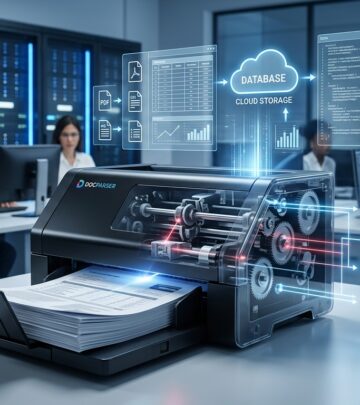
DocDigitizer is an AI-driven data capture and intelligent document processing (IDP) platform designed to turn unstructured documents into clean, structured data. Instead of manually keying in information from invoices, contracts, forms, or IDs, organizations can send files to DocDigitizer and receive verified data ready to flow into ERPs, CRMs, or custom apps.
This article distills insights inspired by verified user reviews and vendor information into a structured, independent overview. It focuses on how DocDigitizer performs in real-world scenarios, which types of teams benefit most, where it excels, and where buyers should proceed carefully.
What DocDigitizer Aims to Solve
At its core, DocDigitizer tackles the problem of extracting data from heterogeneous documents with minimum configuration and ongoing maintenance. Typical business pain points include:
- Large volumes of invoices, receipts, or bills requiring manual keying
- Onboarding documents, KYC/KYB forms, and IDs that need verification
- Contracts and agreements with key fields scattered across pages
- Legacy archives (PDFs, scans) that are difficult to search and analyze
Manual processing is expensive and error-prone. Studies consistently show that manual data entry is linked to high error rates and rework; for example, the U.S. Bureau of Labor Statistics notes that repetitive back-office tasks are especially vulnerable to human error and inefficiency in financial and administrative roles.1 DocDigitizer’s proposition is to combine AI-based extraction with human-in-the-loop validation to deliver high-quality data with predictable performance and costs.
Core Capabilities in Plain Language
While marketing material often emphasizes technical terms, users typically care about a few core capabilities: can it read my documents, how accurate is it, and how quickly can I get value? DocDigitizer’s main features can be grouped as follows.
1. AI-Powered Document Understanding
DocDigitizer applies machine learning and optical character recognition (OCR) to understand and extract content from a broad range of document types. According to the vendor’s site, the platform supports hundreds of document categories and formats (PDF, image scans and more).2 In practice, users mention common scenarios such as:
- Accounts payable invoices and credit notes
- Utility bills and bank statements
- Identity documents (IDs, passports) and onboarding forms
- Contracts and legal documents with specific clauses or dates
The system is template-agnostic, meaning it does not require a predefined layout for each vendor or form. This is particularly valuable in environments where new suppliers or document formats appear frequently, as it avoids costly rule-based template maintenance.
2. Human-in-the-Loop Validation
One of the distinctive aspects of DocDigitizer compared with pure OCR tools is the integrated human validation layer. The company positions this as a way to guarantee near-perfect accuracy: AI performs the first pass, and human reviewers correct or confirm extracted data before it is returned to the customer.
This model aligns with broader industry trends in intelligent automation. The OECD highlights that hybrid systems combining AI and human supervision are better suited for high-stakes or high-accuracy workflows, as they reduce systemic errors while preserving efficiency gains.3 For customers, this means:
- Fewer downstream corrections by internal staff
- More trust in exported data (e.g., posting invoices to ERP)
- A service-level agreement (SLA) that can be tied to accuracy thresholds
3. API-First Integration
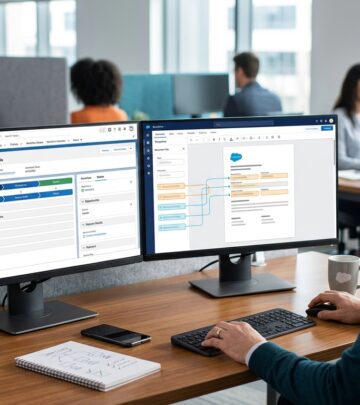
DocDigitizer is delivered as a SaaS service accessible via REST APIs. Reviews and official documentation emphasize that the platform can be integrated with ERPs, CRMs, RPA tools, or custom software. Common integration scenarios include:
- Sending documents directly from an ERP or DMS for extraction
- Embedding DocDigitizer in an onboarding workflow to validate IDs
- Using RPA robots to collect documents and push them through the API
- Feeding validated data into analytics or BI tools for reporting
For teams with limited development capacity, an API-first model can still be accessible because many RPA and low-code platforms offer native HTTP connectors, minimizing custom code.
4. Managed Service & Pay-As-You-Go Model
Instead of selling a toolkit that requires extensive configuration, DocDigitizer offers a managed service: clients provide sample documents, desired fields, and business rules; the vendor configures extraction models and validation processes. Reviews frequently mention that there is minimal setup on the client side.
Many competitors follow a consumption-based pricing model, and DocDigitizer fits into this category: customers pay per document or per page, often with volume discounts. Analyst coverage of IDP platforms indicates that usage-based pricing helps small and mid-sized organizations adopt advanced technology without large upfront licenses.4
Strengths Highlighted by Users
Feedback from various software review platforms surfaces recurring themes. The following strengths are commonly mentioned when organizations evaluate or adopt DocDigitizer.
High Accuracy on Complex Documents
Users often highlight accuracy as the main differentiator. Invoices with multiple tax lines, totals, and vendor-specific fields can be challenging for generic OCR, but DocDigitizer’s combination of AI and manual verification is reported to reduce error rates significantly. This matters because even small data entry errors can have material financial impact; research on financial reporting highlights how data quality issues can distort decision-making and compliance.5
Low Operational Overhead
Organizations with limited IT resources appreciate that they do not need to maintain templates or retrain models each time a new supplier appears. Once the integration is in place, most of the heavy lifting is handled by the provider. As a result, internal teams can focus on exception handling and higher-value analysis instead of routine keying.
Responsive and Consultative Support
Multiple reviewers refer to the support and customer success teams as responsive and proactive. This is important because intelligent document processing often involves nuanced business rules: which fields are mandatory, how to handle missing data, or when to flag anomalies. A vendor willing to iterate on configuration can accelerate time-to-value and reduce internal frustration.
Flexibility Across Industries
Real-world use cases span different sectors:
- Financial services: processing bank statements, KYC documents, and loan files
- Accounting & bookkeeping: automating invoice capture and expense documents
- Utilities & telecom: decoding complex bills and statements
- Public sector or NGOs: digitizing archives and standard forms
This cross-industry applicability is supported by DocDigitizer’s layout-agnostic approach and configurable data models.
Limitations and Buyer Considerations
No platform is perfect, and user reviews indicate several limitations or caveats that potential buyers should weigh before committing.
Pricing Transparency and Cost Predictability
Some reviewers mention that pricing details are not fully visible upfront and require direct contact with sales. While usage-based pricing is common in this space, organizations with highly variable document volumes need clear forecasts and guardrails to avoid surprises. It is advisable to:
- Run a pilot with realistic volume estimates
- Request tiered pricing scenarios (e.g., low, medium, peak volumes)
- Clarify what counts as a billable document or page
Dependence on Vendor’s Validation Workflow
The human validation layer is a strength, but it also means organizations rely on the vendor’s staffing and process quality. When evaluating the service, buyers should ask about:
- Average turnaround times under normal and peak loads
- Data security practices, access controls, and geographic location of reviewers
- Options for on-premise or region-specific processing if required by policy
Data protection is especially important in regulated sectors; the European Data Protection Board and national regulators set strict requirements for processing personal data and financial information.6
Learning Curve for Custom Extraction Logic
For basic use cases (e.g., extracting standard invoice fields), configuration is straightforward. However, when organizations want to extract very specific, uncommon fields or perform complex validations, they may need multiple iterations with the vendor. Teams should factor in this collaboration when planning timelines.
Limited On-Premise Options
DocDigitizer is geared towards cloud delivery. For organizations with strict on-premise mandates, this may be a limiting factor. Buyers should verify deployment options and ensure they align with internal security and compliance policies.
Where DocDigitizer Fits Compared to Alternatives
To place DocDigitizer in context, it helps to compare it with adjacent categories of tools. The following table summarizes the differences at a high level.
| Category | Typical Tools | Main Characteristics | DocDigitizer’s Position |
|---|---|---|---|
| Basic OCR | Desktop OCR, scanner software | Converts images/PDFs to text; limited structure awareness; no human validation. | More advanced: understands document structure and fields, not just text. |
| Developer OCR APIs | Cloud OCR APIs from major providers | Highly scalable but require substantial custom development and model tuning. | Abstracts complexity via managed service; less control but faster time-to-value. |
| RPA Suites with OCR | RPA platforms with built-in OCR connectors | Automate workflows end-to-end; OCR quality varies; templates often required. | Acts as a specialized extraction component that RPA bots can call. |
| Full IDP Platforms | Enterprise IDP suites | Broad feature set (classification, extraction, workflow); higher complexity and cost. | Focused on extraction + validation, simpler to adopt for mid-market teams. |
Ideal Use Cases and Organization Profiles
Based on user feedback trends, DocDigitizer is well-suited for organizations that share at least some of the following characteristics.
Mid-Market Firms with Growing Volumes
Companies that have outgrown manual processing but lack the appetite for large IT projects often find value in a managed extraction service. Common examples include:
- Accounting firms handling thousands of client invoices monthly
- Fintechs scaling onboarding and KYC processes rapidly
- BPOs seeking to modernize data entry operations
Teams Seeking High Accuracy Over DIY Control
If the priority is getting highly accurate, ready-to-use data without building and maintaining models internally, DocDigitizer’s human-in-the-loop approach makes sense. By contrast, teams with strong internal data science and engineering capabilities might prefer to build on top of raw OCR APIs or fully customizable IDP platforms.
Organizations with Diverse Document Types
Industries dealing with many suppliers, counterparties, or citizen-facing forms benefit from a layout-agnostic approach. Frequent changes in document formats become less painful when the vendor absorbs the complexity.
Implementation Journey: What to Expect
While exact timelines vary, the typical journey to value with DocDigitizer resembles the following path.
Step 1: Discovery and Document Assessment
During the early stage, organizations identify key document types, volumes, and required fields. They share representative samples with the vendor, including edge cases or poor-quality scans. This is also the right time to discuss SLAs, pricing tiers, and security requirements.
Step 2: Pilot and Calibration
A limited-scope pilot allows the team to measure:
- Extraction accuracy on critical fields
- Turnaround times under typical loads
- Integration effort with existing systems
During this phase, the configuration is refined based on feedback, and business rules for exception handling are solidified.
Step 3: Integration into Production Workflows
Once the pilot is successful, developers or RPA teams integrate DocDigitizer’s API into production systems. Common patterns include:
- Automatically sending inbound emails with attachments to the API
- Creating queues in an ERP where validated data lands for final review
- Triggering downstream approvals based on extracted amounts or dates
Step 4: Continuous Optimization
After go-live, real-world data reveals additional edge cases. Organizations and the vendor collaborate to fine-tune extraction rules, adjust SLAs if needed, and potentially expand to new document types. Continuous improvement is a hallmark of effective intelligent automation projects.3
Pros and Cons Summary
The table below summarizes DocDigitizer’s main advantages and drawbacks from a buyer’s perspective.
| Pros | Cons |
|---|---|
|
|
Practical Tips for Evaluating DocDigitizer
To derive the most value from demos and trials, prospective buyers can use the following checklist.
- Bring your toughest documents: Include low-quality scans, handwritten notes, and unusual layouts in pilot tests.
- Test end-to-end workflows: Don’t just evaluate extraction; simulate the full process from document arrival to data posting.
- Monitor exception rates: Track how many documents require manual intervention after DocDigitizer returns data.
- Clarify SLAs: Ensure that processing times and accuracy guarantees are documented and realistic for your volumes.
- Validate compliance: Confirm how data is stored, who can access it, and how long it is retained, especially for personal or financial data.
Frequently Asked Questions (FAQ)
Is DocDigitizer suitable for small businesses?
Smaller organizations with modest document volumes can still benefit, especially if they lack staff to handle repetitive data entry. However, they should carefully compare per-document costs with manual processing costs to ensure a clear ROI.
How does DocDigitizer differ from basic OCR?
Basic OCR converts images or PDFs into editable text but does not understand which part of the text corresponds to specific fields (e.g., invoice total, tax ID). DocDigitizer not only recognizes text but also identifies, validates, and structures it into fields that downstream systems can consume, often with human verification to ensure accuracy.
Can DocDigitizer be integrated without heavy development?
Yes. While it is API-based, many teams integrate DocDigitizer using existing connectors in RPA platforms or low-code tools. For simple scenarios, this may require only configuration rather than extensive custom code.
What types of documents see the greatest benefit?
Recurring transactional documents with structured information—such as invoices, statements, bills, and standardized forms—tend to see the largest efficiency gains. Highly unstructured content (e.g., long emails or free-form reports) can still be processed but may require more custom configuration.
How should organizations measure success after deployment?
Common success metrics include reduction in manual data entry hours, decrease in error rates, faster turnaround times from document receipt to posting, and the ability to reassign staff to higher-value tasks. Reviewing these metrics quarterly helps quantify the impact and justify further expansion.
Final Verdict
DocDigitizer occupies a pragmatic niche in the intelligent document processing landscape: it offers an AI-plus-human managed service that aims to deliver highly accurate, structured data with minimal internal overhead. Based on user feedback, it is particularly attractive to mid-market organizations and service providers looking to modernize document-heavy processes without building and maintaining complex AI pipelines themselves.
Prospective buyers should pay close attention to pricing structure, data protection, and SLA details, and should insist on pilots that reflect real-world complexity. For organizations that prioritize accuracy, flexibility across document types, and low operational burden, DocDigitizer is a compelling option worthy of serious consideration.
References
- Occupational Outlook Handbook: Bookkeeping, Accounting, and Auditing Clerks — U.S. Bureau of Labor Statistics. 2023-09-06. https://www.bls.gov/ooh/business-and-financial/bookkeeping-accounting-and-auditing-clerks.htm
- DocDigitizer — Document Extraction API — DocDigitizer. 2024-01-15 (accessed). https://www.docdigitizer.com
- OECD Framework for the Classification of AI Systems — Organisation for Economic Co-operation and Development. 2022-02-22. https://www.oecd.org/going-digital/ai/classification-of-ai-system.htm
- Market Guide for Intelligent Document Processing Solutions — Gartner (summary page). 2023-06-30. https://www.gartner.com/en/doc/market-guide-intelligent-document-processing
- Data Quality and Financial Reporting — Financial Accounting Standards Board (FASB) Staff Educational Paper. 2021-11-10. https://www.fasb.org/document/data-quality-financial-reporting-educational-paper.pdf
- Guidelines 07/2020 on the Concepts of Controller and Processor in the GDPR — European Data Protection Board. 2021-07-07. https://edpb.europa.eu/our-work-tools/our-documents/guidelines/guidelines-072020-concepts-controller-and-processor_en
Similar Articles




Read full bio of medha deb