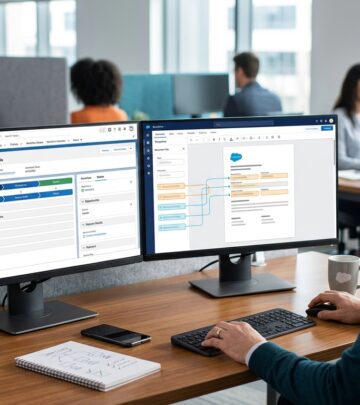
Docebo LMS Review: Strengths, Limits, and Best Uses
A practical, in‑depth look at Docebo’s learning platform from real‑world use cases, including pros, cons, and implementation tips.

Docebo is a cloud-based learning management system (LMS) positioned for midsize and enterprise organizations that need to deliver training to employees, partners, and customers. It sits in the broader category of corporate learning platforms and aims to blend classic LMS capabilities with modern tools like AI recommendations, social learning, and extended enterprise support.
This review synthesizes feedback from users of the Docebo Learning Platform and combines it with publicly available technical information to help you decide if it fits your organization’s learning strategy. The focus is on practical strengths, common pain points, and scenarios where Docebo tends to be a strong or weak choice.
What Docebo Is Designed To Do
At its core, Docebo provides a centralized hub for creating, managing, and tracking training content. It is built for multiple audience types, including:
- Internal employees (onboarding, compliance, skills development)
- Channel partners and resellers (product enablement)
- Customers (product education, certification programs)
The platform follows a software-as-a-service (SaaS) model and offers features such as course management, content libraries, reporting, skills management, and integrations with HR and collaboration tools. According to Docebo’s own documentation, recent releases emphasize AI-powered recommendations and skills mapping to personalize learning paths and automate some administration tasks.1
User Experience and Interface
Many reviewers highlight Docebo’s interface as one of its more attractive aspects, especially compared with older, legacy LMS tools. Overall impressions can be summarized as follows:
Learner View
Learners typically see a clean dashboard with assigned courses, recommended learning, and a search bar. Commonly praised aspects include:
- Modern visual design that feels closer to consumer-grade web apps than traditional LMS interfaces.
- Clear navigation with tiles or catalog views that make it simple to find new training.
- Responsive design, so learners can access content on desktops, tablets, and phones.
Where some learners struggle is when organizations heavily customize the front end. If multiple catalogs, branches, and learning plans are layered on top of each other, the interface may feel busy or confusing without thoughtful design.
Administrator and Instructor View
For training managers and admins, Docebo offers a rich control panel. Users often mention:
- Comprehensive configuration options for structuring audiences, catalogs, and permissions.
- An intuitive course creation experience for basic workflows (uploading SCORM/xAPI courses, adding videos, setting completion criteria).
- Powerful but sometimes overwhelming settings that require training to use effectively.
New admins may initially find the system complex because there are many interconnected modules (courses, learning plans, skills, channels, branches). This is a common trade-off in enterprise LMS platforms: breadth of options can increase implementation complexity.
Core Learning Features
Docebo offers a broad set of features. Below is an overview of the capabilities users most frequently rely on.
Course and Content Management
Docebo supports a wide range of content types, including SCORM, xAPI, videos, documents, and external content. Key elements include:
- Course structures: Multi-lesson courses with prerequisites, tests, and surveys.
- Learning plans: Bundled sequences of courses for specific roles or programs.
- Certification and retraining: Validity periods and automated renewals for compliance training.
For organizations already using authoring tools such as Articulate Storyline or Adobe Captivate, Docebo acts as the delivery and tracking layer. Its support for standards like SCORM and xAPI aligns with IMS Global’s widely adopted interoperability specifications.2
Social and Informal Learning
One of Docebo’s differentiators is its emphasis on social and user-generated learning. Features typically include:
- Social feeds and channels where users can post content, ask questions, and share tips.
- Peer contributions that can be curated and turned into reusable learning assets.
- Q&A or discussion tools embedded within the platform.
These capabilities support a more continuous learning culture, aligning with research that shows most workplace learning happens informally rather than in formal training events.3 However, the value of these features depends heavily on adoption and community management; without active moderation and promotion, social spaces can become quiet.
AI Recommendations and Skills
Docebo positions itself as an AI-first platform. According to the company’s product pages, the AI engine is used for tasks such as content recommendations, automatic tagging, and skills mapping.1 Users report mixed experiences:
- When the content library is large and well-structured, recommendations can surface useful courses to learners based on role and behavior.
- If the catalog is small or inconsistently tagged, AI suggestions may feel generic and less relevant.
Organizations that invest time in defining skill frameworks, tagging content, and monitoring AI suggestions tend to benefit more than those expecting out-of-the-box perfection.
Extended Enterprise and Multi-Audience Training
Docebo is frequently used for extended enterprise training—serving external stakeholders like customers, franchisees, or partners alongside employees. This capability is supported through:
- Branches or sub-portals for different brands, regions, or customer organizations.
- Custom branding for each branch, including logos, colors, and homepages.
- Flexible enrollment rules (self-enrollment, invitations, ecommerce options depending on plan).
Many reviewers highlight this area as a strong point, especially for organizations running multiple training portals under one umbrella. At the same time, complex multi-tenant setups can increase administrative overhead, so careful planning of structure and permissions is essential.
Reporting, Analytics, and Insights
Every LMS buyer wants clear, trustworthy reporting. Docebo offers standard reports such as course completions, time spent, and assessment results. More advanced analytics are available via custom reports and integrations with business intelligence tools.
What Users Like
- Pre-built reports that quickly answer common questions like “Who completed compliance training?” or “Which courses are most popular?”
- Export options (CSV, Excel) for analysis in external tools.
- Dashboard widgets that give managers a high-level view of their team’s progress.
Common Challenges
- Building highly customized reports can require time and familiarity with the data model.
- Some organizations wish for more visual analytics and drill-down capabilities without exporting.
- Aligning LMS data with business metrics (e.g., sales performance, quality indicators) typically requires integrations and a clear measurement strategy.
These challenges are not unique to Docebo; research by the Association for Talent Development notes that training impact is often difficult to quantify without connecting learning data to performance metrics in other systems.4
Integrations and Ecosystem
Docebo integrates with a range of external systems. The exact options depend on your subscription level and technical setup, but typical integration categories include:
- HR and HCM systems (for user provisioning and organizational data)
- Collaboration tools like Microsoft Teams or Slack (for notifications and embedded learning access)
- Web conferencing platforms (for virtual classroom sessions)
- Single sign-on (SSO) using standards such as SAML or OAuth
When integration is done well, learners move seamlessly from their everyday tools into Docebo, and admins benefit from automated user management. Organizations using cloud-based HR systems or identity providers that adopt modern security and integration standards typically have smoother setups.5
Implementation Experience
User reviews often provide candid commentary on the implementation phase. Experiences vary by organization size, internal expertise, and the complexity of the desired configuration, but several themes emerge.
Planning and Configuration
Successful deployments tend to share these practices:
- Clear learning objectives and use cases defined before configuration.
- Thoughtful design of branches, catalogs, and groups to avoid later restructuring.
- Early decisions on SSO, HR integrations, and user provisioning rules.
Some customers report that underestimating the configuration effort leads to delayed launches or the need for expensive rework. Having a dedicated project owner on the client side, along with an experienced Docebo implementation specialist, can mitigate this risk.
Migration of Legacy Content
Organizations moving from older LMSs often bring a mix of SCORM packages, PDFs, videos, and historical data. Typical observations include:
- Most modern SCORM content imports without issue, though older packages may require adjustments.
- Cleaning up outdated or redundant materials before migration reduces clutter in the new system.
- Historical completion data can sometimes be imported, but this may require scripting or professional services depending on data quality.
Support, Documentation, and Community
Support quality is a frequent topic in LMS reviews. Based on user feedback and publicly available information, Docebo’s support experience can be characterized as follows:
- Knowledge base: Docebo maintains documentation and tutorials that cover most core tasks, which many users find sufficient for day-to-day questions.
- Customer support: Ticket-based support is standard; some customers praise responsiveness, while others desire faster resolution or more proactive guidance.
- Customer success and training: Depending on the plan, customers may have access to onboarding sessions, webinars, or dedicated success managers.
The quality of support often correlates with the organization’s investment in ongoing enablement. Teams that attend training sessions and participate in user communities typically gain more from the platform than those relying solely on ad-hoc support tickets.
Pricing and Total Cost of Ownership
Docebo does not typically publish full pricing details on its public site, instead offering quotes based on the number of users, modules, and support level.1 From user comments and market comparisons, we can infer the following:
- Docebo is positioned as a mid-to-high tier enterprise solution, not a low-cost LMS.
- Costs rise with active user counts, advanced modules (e.g., skills, ecommerce), and custom integrations.
- Professional services and internal staffing represent a significant portion of total cost of ownership.
To assess value, organizations should account for not just license fees but also implementation, content creation or migration, admin time, and the opportunity cost of delays or misconfigurations.
Advantages and Limitations at a Glance
| Aspect | Strengths | Limitations |
|---|---|---|
| User experience | Modern, responsive interface for learners; intuitive layout with clean navigation. | Complex setups can make navigation less intuitive without careful design. |
| Features | Broad functionality including social learning, certifications, and AI suggestions. | Feature breadth can feel overwhelming; unused modules may add complexity. |
| Extended enterprise | Strong multi-audience and branding options with branches and catalogs. | Multi-portal architectures require sophisticated admin skills. |
| Analytics | Solid core reporting; exports and dashboards support leadership views. | Advanced analytics and impact measurement often require external tools. |
| Implementation | Flexible configuration enables tailored learning environments. | Underestimated planning can lead to delays and rework. |
| Cost | Enterprise-grade features and integrations at a mid-to-high tier price point. | Not ideal for small budgets or simple, single-audience training needs. |
Best-Fit Scenarios for Docebo
Based on aggregated reviews and market positioning, Docebo tends to be a strong fit for organizations that:
- Need to support multiple audiences (employees, partners, customers) within one platform.
- Have a strategic focus on blended and social learning, not just standalone SCORM courses.
- Are willing to invest in implementation, integrations, and ongoing admin capability.
- Value modern UI and learner experience as a differentiator.
It may be less suitable for organizations that:
- Want a lightweight, low-cost LMS for simple compliance tracking only.
- Lack internal resources or budget for structured implementation and content governance.
- Need heavily specialized capabilities in areas like higher education campus management or niche certification standards better served by purpose-built systems.
Practical Tips for Prospective Buyers
If you are evaluating Docebo against other LMS platforms, consider the following steps to make your assessment more rigorous:
- Map your use cases. Prioritize your top 5–10 learning scenarios and validate them in a live demo or sandbox environment.
- Ask about integrations. Bring your IT and HR teams into the conversation early to confirm feasibility and cost of required integrations.
- Plan for governance. Define how courses will be created, reviewed, retired, and tagged so that AI and search can work effectively.
- Clarify reporting needs. Identify which metrics leadership expects and ask for examples of how to generate them in Docebo.
- Check reference customers. Speak with organizations of similar size and industry to understand real-world pros and cons.
Frequently Asked Questions About Docebo LMS
Is Docebo suitable for small businesses?
Docebo can technically support small organizations, but its cost structure and configuration depth are typically better suited to midsize or larger companies. Smaller businesses with limited budgets or simpler needs might find lighter LMS options more economical.
Can Docebo handle compliance training?
Yes. Docebo supports certifications, expiration dates, and automated retraining assignments, which are crucial for compliance programs in regulated industries. To maximize effectiveness, you should ensure courses are properly tagged and that reporting is configured to surface non-compliance quickly.
Does Docebo offer mobile learning?
Docebo provides a responsive web experience and mobile app options, allowing learners to access training on various devices. Many organizations use this to support distributed or frontline workers, though mobile success also depends on content design and bandwidth considerations.
How does Docebo compare to traditional LMS platforms?
Compared with older, on-premise LMSs, Docebo generally offers a more modern interface, cloud delivery, and advanced features like AI recommendations and social learning. However, like many enterprise SaaS platforms, it still requires careful implementation and dedicated admin skills to deliver on its full potential.
What should we know about data security and privacy?
As a cloud platform, Docebo must align with industry-standard security practices, including secure authentication, encryption, and access controls. Buyers should review Docebo’s security documentation, data processing terms, and any relevant certifications to ensure alignment with their internal security and compliance requirements.5
Conclusion
Docebo is a feature-rich, enterprise-oriented learning platform that stands out for its modern user experience, extended enterprise support, and emphasis on social and AI-driven learning. Its strengths are most evident in organizations that treat learning as a strategic function, invest in thoughtful implementation, and maintain strong content governance.
For buyers willing to commit those resources, Docebo can be a powerful foundation for scalable, multi-audience learning programs. For teams seeking a lightweight, low-touch solution, the platform may feel more complex and costly than necessary. Evaluating it through the lens of your specific use cases, integrations, and governance maturity will help you determine whether Docebo is the right LMS for your organization.
References
- Docebo Learning Platform — Docebo Inc. 2025-02-10. https://www.docebo.com
- Experience API (xAPI) — Advanced Distributed Learning Initiative (ADL). 2023-06-01. https://adlnet.gov/projects/xapi
- Informal Learning: The Social Evolution — Association for Talent Development (ATD). 2022-09-15. https://www.td.org/research-reports/informal-learning-the-social-evolution
- Evaluating Learning: Getting to Measurements That Matter — Association for Talent Development (ATD). 2023-04-12. https://www.td.org/research-reports/evaluating-learning-getting-to-measurements-that-matter
- Security and Identity for Cloud Applications — National Institute of Standards and Technology (NIST). 2022-08-30. https://csrc.nist.gov/publications/detail/sp/800-204c/final
Similar Articles





Read full bio of medha deb