DocExtractor Review and User Insights
A practical, in-depth look at DocExtractor’s strengths, weaknesses, and best-fit use cases based on real-world user experiences.

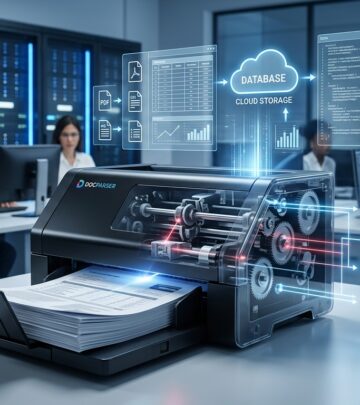
DocExtractor is a document data extraction tool aimed at organizations that want to convert PDFs and other documents into structured, usable data. On review platforms like TrustRadius, users highlight its ability to automate data capture workflows while also calling out areas where the product and experience could improve. This article synthesizes that feedback into a comprehensive, original review to help you decide whether DocExtractor fits your needs.
What DocExtractor Is Designed to Do
At its core, DocExtractor focuses on turning unstructured or semi-structured documents into machine-readable data. Typical sources include:
- Invoices, receipts, and bills
- Purchase orders, delivery notes, and shipping documents
- Contracts and legal paperwork
- Application forms or onboarding documents
- Scanned PDFs and image-based records
The goal is to cut down on manual data entry and reduce human error by using technologies like Optical Character Recognition (OCR) and pattern recognition to automatically pull key fields out of each document and feed them into your business systems.
Key Capabilities Highlighted by Users
While individual experiences vary, several capabilities appear repeatedly in user feedback. These are the aspects that tend to define the DocExtractor experience.
Automated Data Extraction
Users typically adopt DocExtractor to automate the capture of fields such as dates, totals, invoice numbers, customer information, and reference IDs from documents. Instead of typing data into spreadsheets or ERP systems, reviewers describe workflows where documents are ingested in bulk, processed automatically, and exported as structured data. This aligns with the broader industry trend where OCR and intelligent data capture are used to replace manual keying in finance, logistics, and back-office operations.1,2
Template-Driven and Rule-Based Processing
Many document extraction tools, including DocExtractor, rely on templates, rules, or models that define where and how data should be captured from each document type. From user comments, a typical setup includes:
- Defining specific fields to capture (e.g., “Invoice Total”, “Tax Amount”).
- Mapping those fields to positions, keywords, or patterns in the document.
- Saving these configurations as reusable templates for recurring document types.
When templates are configured correctly, users report repeatable, reliable extraction results. However, when documents vary significantly—or when templates are not maintained—accuracy can decline, which is a common theme in the broader OCR market.2
Integration Into Existing Workflows
DocExtractor is often used as part of a broader process rather than a standalone tool. Users mention scenarios like:
- Pushing extracted data into accounting or ERP systems for reconciliation.
- Feeding structured data into CRM or case management platforms.
- Using it as a preprocessing step before analytics or reporting.
While specific integration mechanisms differ depending on the user’s stack (APIs, exports, or custom scripts), reviewers emphasize the importance of being able to connect DocExtractor to their downstream systems without excessive custom development.
User Experience: Setup, Interface, and Learning Curve
Beyond features, reviewers put significant emphasis on what it feels like to actually use DocExtractor day-to-day.
Onboarding and Initial Configuration
Setting up any document extraction tool involves choices about accuracy, template design, and workflow. From feedback on TrustRadius and similar platforms, DocExtractor’s onboarding experience can be summarized in a few themes:
- Moderate learning curve: Non-technical users can get basic extraction running, but more advanced scenarios often require experimentation or support guidance.
- Time investment in templates: The initial configuration period may feel intensive, as teams have to test, refine, and iterate on templates before achieving reliable accuracy.
- Benefits over time: Once tuned, workflows tend to run more smoothly, with users noting substantial time savings compared to manual data entry.
Interface and Usability
Users generally value tools that clearly present documents, recognized fields, and any errors that require human review. In the context of DocExtractor, feedback commonly revolves around:
- How intuitive the navigation and dashboard views are.
- Whether it is easy to spot extraction errors and make corrections.
- The clarity of error messages and system notifications.
In the wider market, research shows that poor usability can significantly limit adoption of automation tools, even when the underlying technology is strong.3 DocExtractor’s success in an organization often hinges on whether operational teams feel comfortable working in the interface day after day.
Performance: Accuracy, Speed, and Reliability
Performance is often the make-or-break factor for document processing software. Users of DocExtractor typically evaluate it on three dimensions: accuracy, speed, and uptime.
Extraction Accuracy
Accuracy is influenced by multiple variables:
- Document quality (clear text vs. skewed, low-resolution scans).
- Consistency of layouts across documents from different vendors.
- Language, fonts, and special characters.
- Quality of the underlying OCR engine and any AI models used.
Industry studies indicate that modern OCR combined with machine learning can achieve very high character recognition rates on clean, printed text, often above 98%, but performance drops on noisy or handwritten documents.1,2 User reviews of DocExtractor reflect this reality: when documents are standardized and clean, performance is strong; when documents vary widely in format or quality, some users report the need for manual review or template updates.
Processing Speed and Scalability
For organizations dealing with thousands of documents per month, throughput and scalability matter. User commentary typically touches on:
- How quickly large batches of documents can be processed.
- Whether performance holds up during peak periods.
- Any rate limits or infrastructure constraints.
Automation can drastically cut processing time compared with manual entry, but consistency is key. If performance slows significantly with volume, the operational benefits can be reduced. Reviewers often evaluate DocExtractor in light of their own volume and timing requirements, such as month-end closing cycles or daily invoice runs.
Reliability and Uptime
Reliability also features prominently in user feedback. Organizations expect tools like DocExtractor to be available when needed, with clear communication in the event of outages or maintenance. Reviewers generally look at:
- Frequency and duration of downtime.
- How well the vendor communicates about incidents.
- Availability of logs and monitoring information.
While specific uptime figures may not always be disclosed in reviews, reliable operation is often cited as a prerequisite for adoption in mission-critical workflows.
Support, Documentation, and Vendor Responsiveness
Support quality can be as important as product features, especially for tools that sit deep within operational workflows.
Support Channels and Responsiveness
Users typically reference support in terms of:
- Response times to tickets or emails.
- Availability of live chat or phone support for urgent issues.
- Willingness to help with configuration questions, not just break-fix issues.
Industry surveys show that effective vendor support materially affects satisfaction and renewal decisions for enterprise software.3 When evaluating DocExtractor, potential buyers should pay attention to current customers’ comments about how quickly and thoroughly the support team resolves issues.
Documentation and Self-Service Resources
Beyond direct support, documentation and self-service materials play a key role in how quickly teams can become productive. Reviewers may comment on:
- Clarity and completeness of user guides.
- Availability of step-by-step tutorials or onboarding checklists.
- Examples or templates that help new users get started faster.
Good documentation shortens the learning curve and allows organizations to expand usage (for example, to new document types) without always relying on vendor support.
Pricing, Value, and ROI Considerations
Pricing models for document extraction tools vary widely. While specific DocExtractor pricing details often require a quote, user reviews frequently touch on perceived value and return on investment (ROI).
Typical Pricing Factors
In this product category, several factors often influence cost:
- Number of documents processed per month.
- Complexity of use cases and required features (e.g., advanced AI, custom integrations).
- Support tiers and service-level agreements (SLAs).
- Whether the deployment is cloud-based or on-premises.
Users measuring ROI usually compare the subscription or licensing cost with the savings from reduced manual data entry, fewer errors, and faster processing. Studies in the automation and shared services space have shown that well-implemented automation can significantly reduce processing costs, sometimes by 20–60% depending on the process and baseline efficiency.4
Perceived Value in User Feedback
On review platforms, some customers highlight DocExtractor as cost-effective, especially for small to midsize operations that are moving away from fully manual workflows. Others might feel constrained by volume-based pricing if their document throughput spikes seasonally. As with any such tool, organizations should model different volume scenarios and ask vendors for pricing transparency before committing.
Strengths and Limitations Summarized
The table below summarizes typical strengths and limitations of DocExtractor as inferred from user feedback and broader market context.
| Aspect | Strengths (User-Reported) | Limitations (User-Reported) |
|---|---|---|
| Data Extraction | Automates capture of key fields; reduces manual entry when templates are tuned. | Accuracy can drop with inconsistent layouts or poor-quality scans. |
| Usability | Once configured, daily operations can run smoothly for recurrent document types. | Initial configuration may feel complex for non-technical users. |
| Integrations | Can be integrated into existing workflows via exports or APIs. | Custom integrations may require technical resources. |
| Support | Vendor assistance helps with setup and troubleshooting in many cases. | Experience may vary depending on support tier and region. |
| Value | Potentially strong ROI compared to fully manual processes. | Benefits depend on document volume and level of process standardization. |
Best-Fit Use Cases for DocExtractor
DocExtractor tends to be most successful in environments where documents follow relatively predictable patterns and where automation can replace repetitive data entry. Based on common review themes, good-fit scenarios often include:
- Accounts payable automation: Regular processing of invoices and receipts from a known set of vendors.
- Order and logistics documentation: Extracting data from purchase orders, packing lists, and shipping documents.
- Operations and compliance: Capturing key fields from contracts, onboarding kits, or regulatory forms.
- Back-office digitization: Migrating paper archives or PDF repositories into structured databases.
Organizations with highly variable document formats or heavy reliance on handwriting may still benefit from DocExtractor, but should plan for more extensive testing and ongoing template tuning.
How to Evaluate DocExtractor for Your Organization
If you are considering DocExtractor, a structured evaluation will help you determine whether it aligns with your operational and strategic needs.
Key Questions to Ask Internally
- What document types are we dealing with, and how standardized are they?
- How many documents do we process each month, and how is volume expected to change?
- Which systems (ERP, CRM, BI, etc.) need to receive the extracted data?
- How much manual effort is currently spent on data entry and verification?
- What accuracy threshold is acceptable for our use case (e.g., finance vs. low-risk reporting)?
Questions to Ask the Vendor
- What accuracy levels can we expect for our specific document samples?
- How does pricing scale with volume or additional features?
- What onboarding support and training are included in the subscription?
- Which integrations are available out of the box, and which require custom work?
- What are the documented SLAs for uptime and support response?
Frequently Asked Questions (FAQ)
1. Is DocExtractor suitable for small businesses?
Yes, many small and midsize businesses can benefit from DocExtractor, especially if they handle recurring document types like invoices or purchase orders. The key is to ensure that the pricing and complexity of setup align with your volume and available technical resources.
2. How does DocExtractor compare with generic OCR tools?
Generic OCR tools focus primarily on converting images or PDFs into text, while DocExtractor adds a layer of structure and automation by mapping specific fields and feeding them into your workflows. In other words, it aims to act as a focused data capture solution rather than only a text recognition engine.
3. Can DocExtractor handle handwritten documents?
Like most solutions in this space, performance on handwriting is typically lower than on printed text. If your use case includes significant handwritten content, it is important to conduct a proof of concept with real samples to determine whether the accuracy is sufficient.
4. What types of integrations are commonly used with DocExtractor?
Organizations often connect DocExtractor to accounting platforms, ERP systems, CRMs, or custom databases. Integrations may use APIs, file exports, or middleware tools, depending on the existing technology stack.
5. How long does implementation usually take?
Implementation time varies. Simple use cases with standardized documents can be configured relatively quickly, while complex, multi-document workflows may require weeks or months of template tuning, testing, and integration work. User feedback suggests that investing in a pilot phase significantly improves long-term results.
Conclusion
DocExtractor positions itself as a practical solution for organizations looking to automate document data capture and reduce manual entry. User reviews point to meaningful gains in efficiency and accuracy when documents are standardized and workflows are carefully designed. At the same time, prospective buyers should be aware of the learning curve around template configuration, the impact of document quality on accuracy, and the importance of strong vendor support.
For teams ready to invest in a structured rollout and ongoing optimization, DocExtractor can be an effective part of a broader digital transformation strategy, particularly in finance and operations. Conducting a targeted proof of concept with real documents and clearly defined success metrics is the best way to determine whether it is the right fit for your organization.
References
- Optical Character Recognition (OCR) Technology Overview — U.S. National Institute of Standards and Technology (NIST). 2023-04-10. https://www.nist.gov/programs-projects/optical-character-recognition-ocr
- AI in Document Processing: Opportunities and Challenges — IBM. 2022-09-15. https://www.ibm.com/topics/intelligent-document-processing
- Customer Support and Satisfaction in Enterprise Software — Gartner. 2022-06-01. https://www.gartner.com/en/insights/customer-service-and-support
- Robotic Process Automation and the Future of Shared Services — Deloitte. 2021-11-18. https://www2.deloitte.com/global/en/pages/operations/articles/robotic-process-automation.html
Similar Articles






Read full bio of medha deb