Dociphi Review: Intelligent Document Processing for Modern Enterprises
In-depth look at Dociphi’s intelligent document processing, real-world use cases, strengths, gaps, and how it fits into your automation roadmap.

Dociphi is positioned as an intelligent document processing (IDP) and automation platform focused on helping organizations capture data from complex documents, reduce manual work, and streamline back-office workflows. Based on user feedback and typical IDP implementation patterns, this review examines Dociphi’s capabilities, benefits, limitations, and ideal use cases so you can decide whether it fits your automation strategy.
What Is Dociphi and Where Does It Fit?
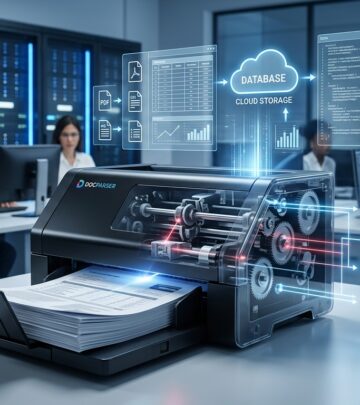
Dociphi sits at the intersection of optical character recognition (OCR), machine learning, and workflow automation. It is designed to ingest unstructured or semi-structured documents, extract key information, validate it, and push it into downstream systems such as line-of-business applications, CRMs, or core banking/insurance platforms.
While marketing language often focuses on artificial intelligence, Dociphi’s practical value lies in three pillars:
- Data capture: Transforming scanned or digital documents into structured, searchable data.
- Classification: Identifying document types (e.g., KYC forms, invoices, policy documents) automatically.
- Workflow orchestration: Routing documents and extracted data through review, approval, and enrichment steps.
This places Dociphi in the same general category as other IDP platforms and advanced OCR tools, but its differentiation comes from industry-specific templates and process-focused configuration rather than being just a generic OCR engine.
Key Capabilities and Core Modules
Different organizations use Dociphi for different workflows, but most deployments rely on a common feature set. Below is a breakdown of core capabilities typically highlighted by users and vendors in the IDP space.
1. Document Ingestion and Capture
Dociphi supports multiple input channels, making it possible to centralize document intake without radically changing existing processes:
- Batch upload via web interface or secure file transfer
- Integration with email inboxes for automated capture of attachments
- APIs or connectors to upstream systems (e.g., DMS or core business apps)
- Scanning from multifunction devices via standard file drops or connectors
Once documents are ingested, the platform typically applies pre-processing (deskewing, noise removal, contrast adjustments) to improve OCR accuracy, a common best practice across IDP solutions.1
2. OCR and Data Extraction
At the heart of Dociphi is its OCR and data extraction engine. While specific accuracy numbers vary by document type, users generally evaluate IDP tools across these dimensions:
- Printed text recognition: Converting machine-printed documents into text reliably.
- Handwriting capture: Extracting form fields filled out by hand, which remains a challenge across the industry.2
- Key-value pair extraction: Identifying fields like names, addresses, policy numbers, or invoice totals.
- Table and line-item extraction: Parsing multi-row tabular data into structured entities.
Dociphi typically uses templates, machine learning models, or a combination of both to identify fields. Template-based extraction works best for standardized documents, while ML-based approaches are more flexible for varied layouts.
3. Document Classification and Indexing
Another foundational capability is automatically determining document type and indexing it for retrieval. For example, Dociphi can be configured to distinguish among:
- Customer onboarding forms
- Know Your Customer (KYC) documents (ID proofs, utility bills, etc.)
- Claims or loan applications
- Billing and payment documents
By assigning consistent metadata and categories, organizations can search, filter, and apply specialized workflows to specific document classes, improving governance and compliance as recommended in industry guidance on digital records management.3
4. Validation, Review, and Exceptions
No IDP platform can operate entirely without human oversight. Dociphi incorporates review screens and validation logic to balance automation with control:
- Confidence-based review: Fields below a configured confidence threshold are flagged for human verification.
- Business rule checks: Simple rules (e.g., date ranges, field formats, cross-field consistency) can automatically validate extracted data.
- Exception queues: Documents that fail rules or classification are routed to specialized queues for subject-matter experts.
This approach aligns with regulatory guidance that emphasizes maintaining human oversight when AI and automated systems are used in high-stakes processes.4
5. Workflow Automation and Integration
Dociphi’s value increases when it is not just a standalone capture tool but integrated into end-to-end processes. Typical workflow features include:
- Configurable stages for review, approval, and enrichment
- Role-based queues (e.g., maker-checker flows, team assignment)
- Notifications and reminders for aging items
- APIs or connectors to push data into CRM, ERP, or core systems
Organizations often compare how tightly Dociphi integrates with their existing environment relative to alternatives such as RPA platforms, which can also be used to orchestrate document-based tasks.5
Typical Use Cases and Industry Scenarios
While Dociphi can theoretically handle any document-centric workflow, it is most commonly associated with industries that process high volumes of structured and semi-structured paperwork.
Financial Services and Banking
In banking, Dociphi is typically deployed for processes such as:
- Retail and SME account opening
- Loan origination and credit underwriting
- KYC and periodic customer review documentation
- Back-office reconciliation of statements and payment proofs
Banks look for reduced turnaround time, fewer manual data entry errors, and improved compliance through auditable document trails.
Insurance and Claims Management
Insurance carriers often use IDP tools to automate:
- New policy proposal forms
- Medical and supporting documents for claims
- Endorsement and policy change requests
- Agent submitted paperwork and commissions documentation
Automation in these areas can materially impact claim settlement times and operational costs, priorities widely highlighted in insurance digital transformation studies.5
Shared Services and Back-Office Operations
Shared service centers, particularly in large enterprises, often centralize document-intensive processes such as:
- Accounts payable invoice processing
- HR onboarding and employee file management
- Vendor onboarding and compliance checks
- Contract and agreement archival
Dociphi can serve as the capture and classification layer for such centers, feeding data into ERP, HR, or procurement platforms.
User Experience: Strengths and Pain Points
User reviews and implementation stories point to recurring strengths and limitations that prospective buyers should weigh carefully.
Perceived Strengths
- Reduction in manual data entry: Organizations often report significant time savings as staff shift from typing data into systems to handling exceptions and complex queries.
- Configurability of business rules: Non-developers can typically influence validation logic and routing rules, which is valuable in highly regulated industries.
- Support for diverse document types: Unlike basic OCR tools, Dociphi is designed for multi-page, multi-format business documents rather than only simple forms.
- Auditability: Centralized logs of documents, changes, and approvals support internal and external audits.
Common Challenges and Limitations
- Model training and tuning: Achieving high extraction accuracy for complex layouts may require iterative training, sample sets, and fine-tuning.
- Handwriting limitations: Like most OCR/IDP tools, perfectly reliable handwriting recognition is rare, particularly for cursive or low-quality scans.2
- Change management: Staff used to manual processes may need training and clear communication to trust and fully utilize the system.
- Integration complexity: Deep integration with legacy or proprietary systems can extend project timelines and requires strong IT involvement.
Feature Overview at a Glance
The table below summarizes how Dociphi typically addresses major requirements in an IDP evaluation.
| Capability Area | Dociphi Focus | Buyer Considerations |
|---|---|---|
| Capture & Ingestion | Multi-channel input (email, file, API) with pre-processing. | Confirm supported formats, volume limits, and security controls. |
| OCR & Extraction | Printed text and structured data extraction, with some handwriting support. | Request sample runs on your documents to benchmark accuracy. |
| Classification | Model and rule-based document type detection. | Check how new document types are added and maintained. |
| Validation & Review | Confidence thresholds, business rules, and review dashboards. | Assess how easily business users can tweak rules and queues. |
| Workflow Automation | Configurable routing, approvals, and integration endpoints. | Clarify whether workflow is native or reliant on external tools. |
| Security & Compliance | Role-based access, audit trails, and data retention options. | Map features to your industry’s regulatory requirements. |
Implementation Considerations and Best Practices
Success with Dociphi, as with any IDP solution, depends as much on implementation strategy as on the product itself. Lessons learned from document automation projects can be distilled into several practical recommendations.
Start with High-Value, High-Volume Processes
Organizations often achieve the best ROI by focusing initial deployments on processes that combine high document volume with measurable business impact, such as account opening or invoice processing. This mirrors standard guidance on automation initiatives, which recommends starting with processes that are repetitive, rules-based, and high-volume.5
Invest in Clean, Representative Training Data
For machine learning-based extraction, the quality and diversity of training samples directly influence accuracy. Consider:
- Collecting examples across different branches, regions, or business units
- Including real-world noise: stamps, handwritten comments, and low-quality scans
- Re-training models periodically as document layouts or regulations change
Define Governance and Ownership Early
Clear ownership is essential for ongoing success. Many organizations establish a small, cross-functional steering group that includes:
- Business process owners
- IT and integration specialists
- Risk/compliance representatives
- Operations leads and super-users
This group can prioritize new document types, approve rule changes, and coordinate with the vendor.
Integrate with Security and Compliance Frameworks
Because Dociphi often processes sensitive personal and financial data, it should be integrated into your existing security and privacy programs. For organizations subject to regulations such as GDPR or sector-specific frameworks, this includes:
- Data minimization and clear retention policies
- Role-based access controls aligned with least-privilege principles
- Encryption in transit and at rest
- Audit logging for document access and changes
These measures are consistent with widely recognized data protection principles promoted by regulators and privacy authorities worldwide.6
How Dociphi Compares to Other IDP and OCR Solutions
When evaluating Dociphi, buyers typically benchmark it against a mix of traditional OCR engines, document capture suites, and modern AI-based IDP platforms. While this review does not focus on specific competing products, it is helpful to frame the comparison along key dimensions:
- Depth vs. breadth: Some tools excel at a narrow set of document types (e.g., invoices), whereas Dociphi aims to support a wider range of business documents with configurable templates.
- Embedded workflows: Legacy OCR tools may require external BPM or RPA platforms for workflow; Dociphi emphasizes process orchestration within the same environment.
- Industry tailoring: Dociphi appears particularly oriented toward financial services and similar industries; generic platforms may require more configuration to support those use cases.
- Ease of administration: Assess how much can be done by business users versus requiring vendor or IT support, especially for adding document variants and adjusting rules.
In practice, many enterprises consider using Dociphi alongside RPA or low-code automation platforms, leveraging each tool’s strengths rather than treating IDP as a stand-alone solution.
Who Should Consider Dociphi?
Based on typical deployments and what IDP solutions are generally designed to address, Dociphi is best suited for organizations that:
- Process large volumes of recurring document types, especially in financial services, insurance, or shared services.
- Operate in regulated environments and require auditable, rule-driven processing.
- Have a clear backlog of document-centric pain points, such as slow onboarding, delayed claims, or backlog in data entry.
- Are willing to invest in a structured implementation, including sample data preparation, integration, and user training.
Smaller organizations with low document volumes or ad hoc document types may find lighter-weight tools sufficient, whereas enterprises with complex legacy environments will value Dociphi’s ability to integrate into broader automation programs.
Pros and Cons Summary
| Pros | Cons |
|---|---|
|
|
Practical Evaluation Checklist
If you are considering Dociphi, use the following checklist during proof-of-concept or pilot phases:
- Run realistic pilot projects using real documents from at least three business units.
- Measure extraction accuracy by document type and field, not just overall averages.
- Validate that exception rates and manual review workloads are acceptable.
- Confirm that business users can maintain templates, rules, and workflows without relying heavily on vendor resources.
- Check alignment with your security, privacy, and data residency requirements.
- Compare total cost of ownership, including integration and maintenance, against alternative tools or manual work.
Frequently Asked Questions About Dociphi
Is Dociphi suitable for organizations just starting with automation?
Dociphi can be used as a first step into automation, but it is best suited for organizations that already have well-defined processes and at least some IT integration capacity. For teams just beginning their automation journey, starting with a narrowly scoped pilot on a single high-volume process can mitigate risk.
How does Dociphi handle regulatory and compliance requirements?
Dociphi typically supports essential features such as user access controls, audit logs, and configurable retention settings. However, compliance depends on how you configure and operate the platform. You should map features explicitly to your obligations (for example, financial regulations, data protection laws, and internal policies) and involve compliance teams early in the project.
What kind of documents does Dociphi process best?
Dociphi tends to perform best on recurring, semi-structured documents such as onboarding forms, KYC packets, claims, and invoices. Extremely unstructured content (e.g., long free-form letters without predictable fields) may require additional configuration or manual review.
Can business users update templates and rules, or is IT involvement always necessary?
One of the platform’s strengths is the ability for trained business users or power users to participate in maintaining templates, validation rules, and routing logic. Deep integrations or complex transformations may still require IT or vendor support, but day-to-day adjustments can often be handled by operations teams once they are trained.
How should we measure ROI from a Dociphi implementation?
Common ROI metrics include reduction in manual processing time per document, decrease in processing backlog, improvement in accuracy (fewer downstream corrections), faster turnaround times for customers, and audit/compliance findings related to documentation. Tracking these before and after deployment provides a quantitative picture of benefits.
References
- Document capture and scanning — U.S. National Archives. 2016-10-04. https://www.archives.gov/records-mgmt/policy/document-scanning
- Evaluation of OCR and ICR technologies for handwriting recognition — T. Huang & M. Mohan, in Handbook of Character Recognition and Document Image Analysis, World Scientific. 1997. https://doi.org/10.1142/9789812812007_0002
- Managing Digital Records in Office Environments — International Council on Archives. 2012. https://www.ica.org/en/managing-digital-records-office-environments
- Ethics guidelines for trustworthy AI — European Commission High-Level Expert Group on AI. 2019-04-08. https://digital-strategy.ec.europa.eu/en/library/ethics-guidelines-trustworthy-ai
- Intelligent Process Automation: The Engine at the Core of the Next-Generation Operating Model — McKinsey & Company. 2017-03-01. https://www.mckinsey.com/capabilities/operations/our-insights/intelligent-process-automation-the-engine-at-the-core-of-the-next-generation-operating-model
- Data minimization and privacy by design — European Data Protection Board (Guidelines 4/2019). 2020-07-08. https://edpb.europa.eu/our-work-tools/our-documents/guidelines/guidelines-42019-article-25-data-protection-design_en
Similar Articles





Read full bio of Sneha Tete