DOCISS EMR Review for Modern Clinics
In‑depth, vendor‑neutral look at DOCISS EMR for small and midsize practices, from usability to integrations and support.

Electronic medical record (EMR) platforms like DOCISS EMR have become essential infrastructure for outpatient clinics and multi‑doctor practices. This review draws inspiration from user feedback on TrustRadius and similar sources, while also placing DOCISS EMR in the broader context of EMR adoption, regulatory requirements, and day‑to‑day clinical workflows.
Instead of repeating individual user quotes, this article synthesizes themes commonly reported by clinics using DOCISS EMR and compares them with best practices and expectations for contemporary EMR systems.
What DOCISS EMR Is Designed to Do
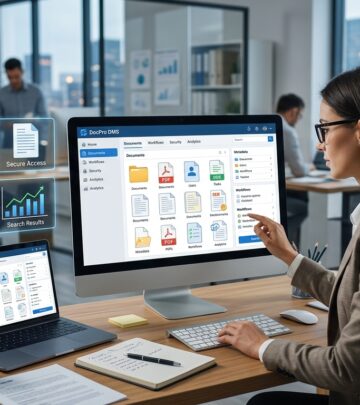
DOCISS EMR is positioned as a cloud‑based system that combines core electronic medical records functions with practice management. In practical terms, that means it aims to support the full visit cycle—from appointment scheduling through documentation, billing, and follow‑up.
Based on publicly available vendor messaging and aggregated user reviews, DOCISS EMR focuses on:
- Streamlining documentation and record keeping
- Simplifying appointment management and clinic throughput
- Supporting billing and claims workflows
- Offering tools for e‑prescribing and medication safety
This aligns with the typical expectations for modern EMR and practice management systems outlined by regulators and professional bodies.1,2
Core Feature Areas
To understand whether DOCISS EMR fits a particular practice, it helps to break its capabilities into key functional areas.
1. Patient Charting and Clinical Documentation
At the heart of any EMR is the patient chart. DOCISS EMR offers digital records that consolidate clinical data into a longitudinal view of the patient’s history. Clinics typically look for:
- Structured templates for common visit types (e.g., wellness visits, chronic disease follow‑ups, specialty‑specific exams).
- Free‑text note support for nuanced clinical narratives.
- Problem lists and history (past medical, surgical, family, social histories).
- Support for diagnostic coding (e.g., ICD, CPT) embedded in documentation workflows.
User feedback suggests that DOCISS EMR emphasizes ease of use in charts, with an interface that many clinicians find intuitive after a short learning period. This is important because inefficient charting is a major contributor to clinician burnout.1
2. Appointment Scheduling and Clinic Management
DOCISS EMR is marketed as a tool for practice management as well as documentation. Typical scheduling capabilities include:
- Multi‑provider calendars with color‑coding and filters
- Ability to schedule, reschedule, or cancel appointments with minimal clicks
- Support for different visit types and durations
- Potential patient self‑service scheduling (depending on module configuration)
Strong appointment workflows can reduce no‑shows, balance provider load, and improve patient throughput—key metrics for clinic sustainability.
3. E‑Prescribing and Medication Management
Modern EMRs are expected to support safe and efficient prescribing processes. DOCISS EMR typically includes:
- Electronic prescribing to retail and mail‑order pharmacies
- Medication lists and refill management tools
- Allergy and interaction checks based on patient history
Electronic prescribing has been shown to reduce medication errors compared with paper prescriptions, particularly when combined with clinical decision support.2 The value of DOCISS EMR in this area depends on how well its medication database and pharmacy interfaces are maintained and updated in a given jurisdiction.
4. Billing, Claims, and Revenue Cycle Support
Though depth can vary by implementation, DOCISS EMR is generally positioned as supporting revenue cycle tasks such as:
- Capturing billing codes directly from documentation
- Generating claims for payers
- Tracking claim status and rejections
- Generating financial reports for practice performance
For clinics that rely heavily on third‑party payers, integration between documentation and billing is critical to decrease denial rates and administrative overhead.
5. Telemedicine and Remote Care
Many EMR vendors expanded telehealth tools rapidly in recent years. While specific capabilities may depend on subscription level and region, telemedicine features associated with DOCISS EMR often include:
- Scheduling telehealth appointments alongside in‑person visits
- Embedded or integrated video visits
- Documentation templates tailored to remote encounters
Effective telemedicine integration is increasingly important, as regulatory guidance and reimbursement frameworks continue to normalize virtual care.3
Usability and Learning Curve
Usability is frequently highlighted in user reviews of DOCISS EMR, often described as straightforward or simple to navigate. When evaluating EMR usability, clinics typically consider:
- Navigation logic: how many clicks and screens are needed for common tasks.
- Speed: responsiveness of the cloud interface and minimal lag.
- Consistency: similar look and feel across modules (scheduling, charting, billing).
- Customization: ability to adapt templates and views to provider preferences.
Research from the U.S. Office of the National Coordinator for Health IT notes that poorly designed systems can increase cognitive load and contribute to errors, whereas intuitive interfaces can support safer, more efficient care.1 Many DOCISS EMR users report that, after initial familiarization, staff can perform daily tasks with relatively few steps.
Deployment, Hosting, and Security
DOCISS EMR is typically offered as a cloud‑based platform, meaning the vendor hosts the application and data in remote data centers. Cloud deployment offers several benefits:
- No on‑premises server maintenance for the clinic
- Automatic software updates and feature rollouts
- Remote access for clinicians (subject to clinic policies)
Security is a central concern. While specific certifications depend on geography, good practice for EMR vendors includes:
- Encryption of data in transit and at rest
- Granular user roles and access controls
- Audit logs of clinical and administrative actions
- Regular backups and tested disaster recovery plans
Regulators such as the U.S. Office for Civil Rights emphasize that EMR systems must support compliance with privacy laws (e.g., HIPAA in the United States).4 Clinics should confirm how DOCISS EMR addresses local legal requirements in their jurisdiction, including data residency and breach notification obligations.
Integrations and Interoperability
Interoperability—seamless data exchange between systems—is vital for coordinated care. While the depth of integration for DOCISS EMR can vary by implementation, clinics commonly inquire about compatibility with:
- Laboratory information systems
- Imaging centers and radiology workflows
- Pharmacies and e‑prescribing networks
- Clearinghouses for insurance claims
- National or regional health information exchanges
Standards such as HL7 FHIR and APIs are increasingly used to enable data exchange between EMRs and other digital health tools.5 Practices evaluating DOCISS EMR should ask which interoperability standards it supports and whether connectors are available for local partners and registries.
Support, Training, and Customer Service
User sentiment on TrustRadius and similar platforms often highlights customer support quality as a differentiator among EMR vendors. For DOCISS EMR, themes commonly mentioned include:
- Responsiveness of support during onboarding
- Availability of help for configuration and workflow customization
- Resolution speed for technical issues and outages
- Helpdesk channels (phone, email, in‑app ticketing)
Effective EMR training typically combines initial onboarding sessions with ongoing refreshers as features evolve. Clinics planning to implement DOCISS EMR should confirm:
- Whether training is included or billed separately
- Availability of role‑specific training for clinicians, front‑desk, and billing staff
- Access to up‑to‑date online documentation or knowledge bases
Advantages and Limitations
Like any system, DOCISS EMR has strengths and trade‑offs. The following table summarizes common themes reported by users and inferred from product positioning.
| Area | Potential Strengths | Potential Limitations |
|---|---|---|
| Usability | Generally described as easy to navigate; relatively short learning curve for basic tasks. | Advanced features may require training; some users may desire deeper customization in specific modules. |
| Clinic Management | Integrated scheduling, charting, and billing help centralize operations for small and midsize clinics. | Very large or highly specialized organizations may require more complex, enterprise‑grade functionality. |
| Cloud Hosting | No on‑site server maintenance; updates handled by vendor; accessible from multiple locations. | Reliance on internet connectivity; clinics in low‑bandwidth environments may face performance issues. |
| Telemedicine | Supports remote visits alongside in‑person appointments, which can broaden access. | Feature depth and video quality depend on configuration and network conditions. |
| Interoperability | Designed to work with typical clinical partners such as labs and pharmacies. | Actual integration options vary by region and partner systems; may require custom work for niche connections. |
Best‑Fit Use Cases for DOCISS EMR
Based on its positioning and typical user profiles, DOCISS EMR tends to be a good fit for:
- Small to midsize outpatient clinics seeking an all‑in‑one EMR and practice management tool.
- Multi‑provider practices that require shared scheduling, documentation, and billing in one system.
- Clinics shifting from paper records looking for a relatively straightforward platform without the overhead of an enterprise EHR deployment.
Larger hospital systems and academic medical centers typically require broader modules (inpatient, emergency, complex departmental workflows) that are often addressed by enterprise EHR platforms. DOCISS EMR is generally better suited for outpatient, ambulatory environments.
Evaluating DOCISS EMR for Your Practice
When deciding whether DOCISS EMR aligns with your organization, it helps to approach the evaluation systematically. Consider the following steps:
Clarify Clinical and Administrative Priorities
- Identify top pain points (e.g., documentation time, billing errors, appointment bottlenecks).
- Define must‑have features versus nice‑to‑have enhancements.
- Assess telehealth and remote monitoring needs over the next 3–5 years.
Assess Compliance and Security Needs
- Confirm how the vendor supports compliance with relevant laws (HIPAA, GDPR, or national equivalents).
- Request details on encryption, access control, and audit capabilities.
- Understand data ownership, exit strategies, and backup policies.
Analyze Workflow Fit
- Run scenario‑based demos for common visits (new patient intake, chronic disease follow‑up, procedure visits).
- Include clinicians, front‑desk staff, and billers in demo sessions.
- Ask vendors to show how DOCISS EMR can be configured to mirror your existing workflows—or improve them.
Consider Cost and Total Value
While specific pricing for DOCISS EMR may vary by practice size and configuration, consider:
- Per‑provider or per‑user license fees
- Implementation and training costs
- Fees for integrations or advanced modules
- Potential savings from efficiency gains, reduced paper usage, and faster billing cycles
Studies suggest that well‑implemented EHRs can yield both clinical and financial benefits, but these depend heavily on good change management and alignment with organizational goals.6
Frequently Asked Questions About DOCISS EMR
Is DOCISS EMR suitable for solo practitioners?
Solo practitioners can use DOCISS EMR, particularly if they plan to grow into a multi‑provider clinic or want robust scheduling and billing tools. However, very small practices with limited budgets should compare it with lighter or specialty‑specific solutions to ensure the feature set matches their needs and price expectations.
Can DOCISS EMR integrate with my existing billing or accounting systems?
DOCISS EMR includes billing capabilities, but integration with external accounting software or third‑party billing vendors varies by region and partner systems. When evaluating, ask the vendor for a list of supported integrations and whether APIs are available for custom connections.
How long does it take to implement DOCISS EMR?
Implementation timelines depend on the size of the clinic, the complexity of workflows, and data migration requirements. Small practices converting from paper may complete basic setup within weeks, whereas multi‑site organizations often require a phased approach and more extensive training.
What kind of training do staff need?
Typical rollouts include role‑based training for clinicians, front office, and billing staff. Many practices schedule refresher sessions after several weeks of live use to address real‑world questions and fine‑tune shortcuts and templates. Confirm whether training is delivered live, via recorded sessions, or through self‑paced modules.
How does DOCISS EMR support telehealth?
DOCISS EMR can support telemedicine workflows such as scheduling remote visits, documenting virtual encounters, and in some configurations conducting video visits. Clinics should verify which telehealth capabilities are included in their subscription and whether any third‑party tools are used for video conferencing.
Is DOCISS EMR compliant with privacy regulations?
EMR vendors generally design their systems to support compliance with applicable privacy laws, but legal responsibility ultimately sits with the healthcare organization. Clinics should review DOCISS EMR’s security documentation, business associate agreements (where applicable), and data handling policies in light of local regulations.
Conclusion
DOCISS EMR positions itself as an all‑inclusive, cloud‑based EMR and practice management system aimed primarily at outpatient clinics and multi‑provider practices. User feedback emphasizes ease of use, integrated scheduling and documentation, and supportive customer service. At the same time, clinics must carefully evaluate interoperability, telehealth needs, and long‑term scalability.
For clinics seeking a balanced, general‑purpose EMR with a relatively gentle learning curve and combined practice management capabilities, DOCISS EMR is a contender worth including in the shortlist—alongside other systems evaluated against standardized clinical, administrative, and regulatory criteria.
References
- Strategy on Reducing Burden Relating to the Use of Health IT and EHRs — Office of the National Coordinator for Health Information Technology (ONC). 2020-02-21. https://www.healthit.gov/topic/usability-and-user-experience/strategy-reducing-burden-relating-use-health-it-and-ehrs
- Computerized Provider Order Entry (CPOE) with Clinical Decision Support Systems — Agency for Healthcare Research and Quality (AHRQ). 2019-09-03. https://digital.ahrq.gov/health-it-tools-and-resources/evaluation-resources/workflow-assessment-health-it-toolkit/all-workflow-tools/computerized-provider-order-entry-cpoe-clinical-decision-support-systems
- Telehealth for Health Care Providers: Training and Resources — Centers for Disease Control and Prevention (CDC). 2023-01-31. https://www.cdc.gov/telehealth/hcp/index.html
- Summary of the HIPAA Security Rule — U.S. Department of Health & Human Services, Office for Civil Rights. 2013-07-26. https://www.hhs.gov/hipaa/for-professionals/security/laws-regulations/index.html
- FHIR Overview — HL7 International. 2024-01-15. https://www.hl7.org/fhir/overview.html
- Benefits and Challenges of Electronic Health Record Implementation — HealthIT.gov, U.S. Office of the National Coordinator for Health IT. 2019-03-20. https://www.healthit.gov/faq/what-are-benefits-electronic-health-records
Similar Articles




Read full bio of medha deb