Docket Meeting Management: In-Depth Review
A detailed, user-focused review of Docket’s meeting management features, strengths, limitations, and best-fit use cases.

Docket Meeting Management: In-Depth Review Based on Real User Feedback
Docket is a meeting management platform designed to bring structure to every stage of a meeting: planning, live discussion, and follow-up. Based on aggregated user feedback from review platforms and official product information, this article explores how Docket performs in real teams, what users like most, where it falls short, and which organizations are most likely to benefit from adopting it.
While Docket’s original product for meeting management has been discontinued in some listings and evolved into new offerings, the underlying concepts of agenda-led collaboration, shared notes, and action tracking remain highly relevant to teams seeking more efficient, outcomes-driven meetings.1
What Is Docket and Who Is It For?
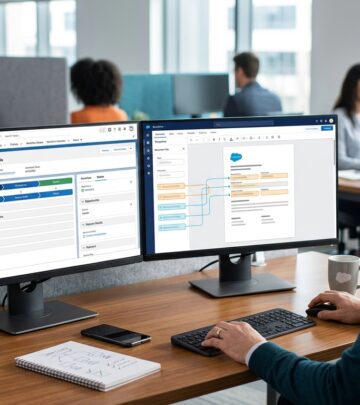
Docket is best understood as a meeting-focused workspace. Instead of scattering agendas in documents, notes in chat threads, and action items in separate task managers, Docket brings them into a single environment connected to your calendar and conferencing tools.
Typical teams that reviewers describe using Docket include:
- Revenue teams – sales and customer success running recurring client calls, internal pipeline reviews, and account planning.
- Product and engineering groups – sprint planning, backlog grooming, roadmap reviews, and cross-functional syncs.
- Marketing and operations teams – campaign planning, project updates, and stakeholder check-ins.
In short, Docket aims to help any group that runs frequent meetings and struggles with poor preparation, unclear outcomes, and lost follow-ups.
Core Capabilities Highlighted by Users
Reviews consistently point toward a set of core features that shape the user experience. The following subsections summarize these capabilities and how they play out in day-to-day use.
Structured Agenda Creation
Docket encourages teams to create an agenda before the meeting starts. Users frequently note that this habit alone improves meeting quality. Common aspects include:
- Reusable templates for recurring meetings such as weekly 1:1s, stand-ups, or QBRs.
- Shared editing so participants can propose topics and questions before everyone joins the call.
- Time estimates per agenda item to keep conversations focused.
Research on meeting effectiveness shows that structured agendas and clear goals significantly reduce wasted time and increase perceived meeting value.2 Docket operationalizes this by making agenda-building a first-class workflow, rather than an afterthought.
Collaborative Notes and Decisions
A second pillar of Docket is capturing notes in a shared workspace during the meeting:
- Multiple participants can type in the same note document in real time.
- Key decisions can be highlighted or tagged for quick reference later.
- Notes stay attached to the specific calendar event, making them easy to find.
By placing notes alongside agenda items, Docket nudges teams toward documenting not only what was discussed, but also what was decided and why—something many reviewers credit with reducing miscommunication.
Action Item Tracking and Follow-Up
Many users adopt Docket to solve a common problem: conversations end, but action items vanish. Docket addresses this by letting you promote notes to trackable tasks inside the meeting workspace. Typical patterns include:
- Assigning an owner to each follow-up.
- Setting due dates for key deliverables.
- Syncing tasks or decisions into other tools when integrated.
This shift from “discussion” to “action” aligns with research on effective meetings, which emphasizes closing sessions with explicit commitments and responsibilities.3
Calendar and Video Conferencing Integrations
Reviewers frequently mention integrations as a key reason they adopted Docket. Common integrations include:
- Calendar platforms such as Google Calendar and Microsoft Outlook, allowing you to attach agendas and notes directly to events.
- Video tools including Zoom and similar conferencing platforms, providing one-click access to meeting workspaces.
- Communication apps like Slack, used to share agendas and summaries to channels.
The underlying idea is to meet users where they already are—inside their calendars and recurring meeting invites—rather than forcing them to remember another standalone app.
CRM and Workflow Connectivity
Some users in sales and customer success roles highlight the value of pushing outcomes into CRMs such as Salesforce or HubSpot. While Docket’s core focus remains meetings themselves, the ability to log notes and decisions into CRM records helps preserve context around deals and customer health.
Pricing Context and Value Perception
Based on public information, Docket historically offered a free tier as well as paid plans with expanded capabilities.4 Although specific prices and packaging may change or be superseded by newer offerings, user reviews help reveal how customers perceive value:
- Free or entry tiers were often praised for being generous enough to support small teams or early adoption.
- Mid-tier plans added custom branding, advanced templates, and more robust support, appealing to growing companies.
- Higher-end offerings introduced analytics and more automation, which mattered most to organizations running high volumes of meetings.
Relative to broader meeting and productivity stacks, Docket is typically evaluated not just on list price, but on whether it reduces meeting time, prevents duplicate discussions, and increases accountability—factors that can materially impact team productivity and opportunity costs.2
| Dimension | Positive Feedback | Concerns or Trade-offs |
|---|---|---|
| Meeting quality | More focused conversations, fewer off-topic detours | Requires discipline to prepare agendas and use templates |
| Time savings | Shorter meetings; less time spent clarifying decisions later | Some ramp-up time to change habits and onboard team |
| Tool consolidation | Agendas, notes, and tasks in one place | May duplicate features of other note or task tools |
| Cost | Entry-level offerings accessible to small teams | Larger deployments need clear ROI versus existing tools |
Usability and User Experience
Reviewers often judge meeting tools on how quickly non-technical colleagues can adopt them. The general sentiment around Docket’s usability is positive, with several recurring themes.
Onboarding and Learning Curve
For many users, the initial onboarding is straightforward:
- Connecting calendars and installing browser or app integrations generally takes just a few minutes.
- Templates provide guidance for common meeting types, reducing setup time.
- Teams can start by using Docket for only one or two recurring meetings before rolling it out more broadly.
Most learning challenges revolve not around the interface itself, but around helping teammates break old habits—like walking into sessions without an agenda or failing to record decisions.
Interface Design and Navigation
Based on user comments, Docket’s interface is generally perceived as:
- Clean and minimal, avoiding clutter that might distract during live meetings.
- Calendar-centric, organizing meetings in familiar timelines and lists.
- Searchable, with the ability to find notes and summaries from past sessions.
However, some users wish for deeper customization of layouts or advanced filters for power users managing large numbers of meetings across teams.
Mobile and Remote Work Considerations
Remote and hybrid work have amplified the need for tools that function well across devices and time zones. Official and third-party sources highlight that Docket integrates with common cloud-based collaboration tools used by remote teams.1,4 Reviewers report that:
- Joining a meeting and pulling up the agenda from a laptop is smooth.
- Accessing and contributing to notes on mobile is possible, though heavy editing is easier on desktop.
- Asynchronous review of agendas and decisions works reasonably well across distributed teams.
Strengths Highlighted by Customers
Across aggregated user feedback, several strengths come up repeatedly when people describe their experience with Docket.
1. Meetings Become More Purpose-Driven
Many reviewers emphasize that simply adopting Docket changes behavior: meetings are more likely to have clear objectives and structured agendas. This aligns with public sector and organizational guidance that calls for defining objectives and desired outcomes before scheduling meetings.2,3
2. Better Documentation and Institutional Memory
By standardizing where notes and decisions are captured, teams reduce their reliance on memory or scattered documents. This is particularly valuable when:
- New members join a project and need to catch up on past decisions.
- Teams must demonstrate accountability or maintain records for audits.
- Long-running initiatives span multiple quarters or fiscal years.
3. Improved Follow-Through on Action Items
Users frequently point out that Docket helps ensure action items are not forgotten. When tasks are created during the meeting in front of everyone—rather than in someone’s personal notebook—people feel more accountable, and managers spend less time chasing down commitments.
4. Lightweight Compared to Full Project Management Suites
Some teams appreciate that Docket is focused narrowly on meetings, instead of trying to replace full project management platforms. For organizations already using heavy-weight tools, this can be a refreshing complement that doesn’t require overhauling existing workflows.
Limitations and Common Criticisms
No tool is perfect, and user reviews do surface consistent limitations for Docket. Understanding these caveats is essential for making an informed decision.
Dependence on Behavioral Change
The platform’s value depends heavily on whether participants consistently:
- Prepare agendas in Docket before meetings.
- Use the shared workspace for notes and decisions.
- Convert next steps into trackable actions.
Without this behavioral shift, Docket risks becoming another unused icon in the productivity stack. Teams that have strong meeting culture already tend to get more out of the tool than those hoping software alone will fix deep-rooted habits.
Overlap with Existing Tools
Some reviewers question whether they need a dedicated meeting tool when they already use products like shared docs, task managers, or collaboration suites. Docket’s unique value comes from combining these elements around the calendar event, but organizations with highly integrated existing stacks may experience redundancy.
Limited Scope Beyond Meetings
Docket is intentionally focused on meeting workflows. It does not replace:
- Full-featured project management software.
- Sales engagement platforms or marketing automation tools.
- Data enrichment and buyer intent solutions.
Some reviews from sales and marketing users note that they still require upstream tools to generate meetings and downstream systems to execute campaigns or complex projects.
Ideal Use Cases and Fit
Based on user feedback and the nature of the product, Docket tends to fit best in several scenarios.
Recurring Internal Meetings
Docket shines when applied to recurring meetings with similar structure:
- Weekly leadership check-ins.
- Team stand-ups and retrospectives.
- Regular cross-functional syncs.
Templates and historical notes make it easy to maintain continuity while gradually refining agendas over time.
Client-Facing Sessions
For sales, customer success, and account management, Docket can help by:
- Setting clear expectations before a client call.
- Ensuring important questions are addressed.
- Capturing commitments and next steps in a form that can be shared with the client afterward.
This structured approach is consistent with best practices for customer meetings, which emphasize clear objectives, listening to client needs, and summarizing agreements at the end.5
Distributed and Hybrid Teams
Organizations with colleagues spread across time zones often experience asynchronous collaboration challenges. Docket’s ability to share agendas in advance and capture decisions centrally makes it easier for people who couldn’t attend to catch up afterward.
Implementation Tips for Getting the Most Out of Docket
User stories suggest that success with Docket depends as much on implementation as on features. If you decide to adopt a similar meeting management tool, consider the following practices.
Start with a Small Pilot
Rather than rolling out the tool to the entire company at once, start with a specific team or a handful of recurring meetings. Use this pilot to:
- Refine your templates and agenda structures.
- Demonstrate quick wins to leadership.
- Collect feedback on what works and what needs adjustment.
Standardize Templates for Key Meeting Types
Create a small library of templates aligned with your organization’s meeting culture. For example:
- One-on-one template with sections for updates, feedback, and growth.
- Project review template with progress, risks, and decisions.
- Client call template with objectives, discovery questions, and next steps.
Having these ready reduces friction and increases adoption.
Make Action Items Visible and Followed Up
Decide as a team how you’ll use Docket’s action item features. For instance, you might:
- Review outstanding actions at the start of the next recurring meeting.
- Sync critical tasks into your project management tool for larger initiatives.
- Encourage each participant to quickly confirm their assigned items at the end of the meeting.
Encourage Pre-Reading and Contribution
Use calendar invites and internal communication channels to nudge participants to review agendas and add topics in advance. This mirrors evidence-based guidance on running effective meetings: sharing materials before the meeting improves participation and reduces time spent on information transfer.2,3
Frequently Asked Questions (FAQ)
Is Docket suitable for very small teams or startups?
Yes. Many small teams benefit from adopting structured meeting habits early. The main question is whether your team runs enough meetings for a dedicated tool to justify the overhead. If your meetings are infrequent, a lightweight combination of shared docs and calendar notes might suffice.
Can Docket replace my project management system?
No. Docket is complementary to project management platforms. It excels at structuring conversations and follow-ups within meetings. For complex projects involving multiple dependencies, resource planning, and long-term roadmaps, you’ll still need a dedicated project management tool.
How does Docket compare to just using docs and spreadsheets?
Docs and spreadsheets can handle agendas and notes, but they lack tight integration with calendar events, standardized meeting workflows, and built-in action tracking. Docket’s value lies in bringing these elements together in a way that reinforces good meeting hygiene.
What about data security and privacy?
As with any SaaS platform, you should review Docket’s current security documentation and compliance posture on its official site. In general, modern collaboration tools commonly use encryption in transit and at rest, role-based access, and industry-standard security practices, but each vendor’s specific controls may differ.6
Is Docket still available in its original form?
Some review platforms indicate that the original Docket meeting management product has been discontinued or evolved into new offerings. Before adopting, verify the current state of the product, its roadmap, and any successor tools on the official Docket or vendor website.
Conclusion
Docket illustrates how a focused meeting management platform can reshape the way teams plan, conduct, and follow up on meetings. Reviews point to tangible benefits—clearer agendas, better documentation, and stronger follow-through—balanced against the realities of behavior change and potential overlap with existing tools.
If your organization struggles with unstructured meetings, recurring confusion over decisions, and inconsistent follow-up, a Docket-style solution can provide the scaffolding needed to improve meeting culture. The key is to pair the tool with deliberate practices: clear objectives, shared preparation, and accountability for actions after every conversation.
References
- Docket – Tech Directory Profile — TechPoint. 2024-01-10. https://techpoint.org/tech-directory/docket/
- Running Effective Meetings — U.S. General Services Administration (GSA). 2022-11-15. https://www.gsa.gov/governmentwide-initiatives/shared-services/performance-management/leading-practices/running-effective-meetings
- How to Run an Effective Meeting — Harvard Business Review, by Roger Schwarz. 2016-03-09. https://hbr.org/2016/03/how-to-design-an-agenda-for-an-effective-meeting
- Docket – Meeting Collaboration Software Overview — Product Hunt. 2023-08-05. https://www.producthunt.com/products/docket-2
- Customer Meetings: Best Practices for Sales — Salesforce. 2023-05-03. https://www.salesforce.com/resources/articles/sales-meeting-best-practices/
- Cloud Security Guidance — U.K. National Cyber Security Centre (NCSC). 2022-07-21. https://www.ncsc.gov.uk/collection/cloud-security
Similar Articles




Read full bio of medha deb