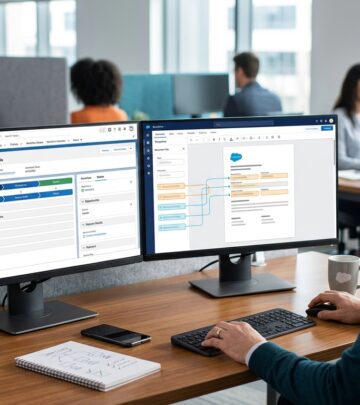
DocLink Review Insights for Modern Teams
A practical look at how DocLink supports document control, approval flow, and back-office efficiency.

Understanding Where DocLink Fits
DocLink is best understood as a document management and workflow automation platform designed to help teams reduce manual handling of business records. In practice, that means it is often used to organize files, route approvals, connect documents to accounting or operational tasks, and make it easier for people to retrieve the information they need without digging through shared drives or paper folders.
The review patterns associated with this kind of software usually center on a few practical questions: Does it save time? Is the interface easy to learn? Can employees trust the search and retrieval tools? And does the system fit naturally into daily work instead of creating another layer of admin? Those are the same themes that tend to matter most when organizations evaluate DocLink.
For teams that deal with invoices, contracts, support records, or compliance-related files, software like DocLink can become a central part of operations. Its value is not only in storing documents, but in helping people move them through a process with fewer delays and less reliance on email chains.
What Users Typically Expect From a Platform Like This
When buyers review document management tools, they usually want a combination of speed, reliability, and clarity. A strong system should make scanned files readable, allow users to find records quickly, and support business rules that keep work moving. It should also reduce dependence on manual filing and repetitive follow-up messages.
That expectation explains why reviews for DocLink often focus on practical outcomes rather than flashy features. Users tend to care about whether the product helps them:
- organize records in a more consistent way
- cut down on the time spent searching for documents
- move approvals through the right people in order
- maintain visibility into what has been processed and what is still pending
- improve the handling of scanned or imported files
These are not abstract benefits. They translate into less duplicate work, fewer lost files, and a more dependable workflow for finance, operations, and administrative teams.
Core Strengths That Matter in Daily Use
One of the most valuable things about document management software is that it can remove friction from repetitive work. DocLink is often appreciated for helping teams centralize documents and reduce the chaos that comes with scattered storage. When everything is available in one structured environment, employees spend less time asking coworkers for attachments or wondering which version is current.
Another strength is process consistency. A good workflow tool helps ensure that documents are routed the same way every time, which is especially helpful when a company has approval steps, sign-off requirements, or department-specific rules. Instead of relying on memory, the system becomes a guide.
Users also tend to value tools that support scanned content effectively. In many organizations, paper does not disappear overnight. Receipts, invoices, forms, and legacy records still need to be brought into digital systems. If the software handles these files cleanly, it becomes easier to transition toward a more paper-light operation.
Practical benefits often associated with the platform
- Centralized document access across teams
- Reduced time spent on manual filing and searching
- More dependable approval routing
- Better visibility into document status
- Support for records that begin as paper and end up digital
Where the Experience Can Feel Less Smooth
No business software is perfect, and document systems can become frustrating when usability does not match the complexity of the workflow. A common concern with platforms in this category is that they may take time to configure well. The initial setup can feel demanding, especially if the company wants the software to reflect multiple departments, forms, or approval paths.
Another area that can matter is interface speed and responsiveness. If a system feels slow or requires several clicks for routine actions, employees may hesitate to use it fully. Adoption is often the hidden challenge: even a capable platform can underperform if people view it as cumbersome.
Organizations should also think about change management. Teams that are used to shared drives, email attachments, or paper folders need clear training and a sensible rollout plan. Without that, a document system can become underused, which reduces the return on investment.
Common friction points buyers should evaluate
- Setup effort and administrative overhead
- How intuitive the interface feels for non-technical users
- Training needs for new employees
- Performance when handling large numbers of files
- How easily it fits existing business processes
Who Is Most Likely to Benefit
DocLink is most useful for organizations that work with a steady stream of documents and approvals. That may include accounting departments, administrative teams, operations groups, and businesses with compliance obligations. Any environment where a file has to be reviewed, stored, and later retrieved is a candidate for this kind of software.
Smaller teams may appreciate the order it brings, but mid-sized and larger companies often see the most value because the volume of paperwork and handoffs increases with scale. The more people involved in a process, the more helpful it is to have a system that can track ownership and status clearly.
Industries that depend on invoices, contracts, customer files, and internal records often gain the most from document automation. In those settings, the main benefit is not just storage; it is reducing delays and preventing work from getting lost between departments.
| Team Type | Likely Benefit | Why It Matters |
|---|---|---|
| Accounting | Invoice and payment workflow control | Helps reduce processing delays and misplaced records |
| Operations | Document routing and status tracking | Makes handoffs easier to follow |
| Administration | Central file access | Improves organization and retrieval |
| Compliance | Better record control | Supports consistency and audit readiness |
How to Judge Whether the Software Is a Good Fit
Before choosing DocLink or a similar platform, a buyer should map the real workflow instead of focusing only on feature lists. The right question is not simply whether the software can store documents, but whether it can support the way the organization actually operates. That means looking closely at how files enter the system, who touches them, what approval steps exist, and how the team retrieves records later.
It is also worth testing the experience from different user perspectives. An administrator may value configuration options, but a front-line employee may care much more about search speed and simple navigation. If the platform works for one group but frustrates another, adoption will likely suffer.
Another useful step is to assess the long-term maintenance burden. If a tool requires constant cleanup or frequent manual intervention, it may create more work than it removes. Strong document software should simplify the process over time, not just during the first week of rollout.
Questions to ask during evaluation
- How much customization is needed to reflect our process?
- Can non-technical staff use it comfortably?
- How well does it handle scanned files and attachments?
- What kind of training will our team need?
- Will it reduce bottlenecks or simply move them elsewhere?
Document Management in the Bigger Business Picture
Systems like DocLink are part of a broader shift away from manual paper trails and toward more controlled digital operations. That shift is not just about convenience. It affects accountability, cycle time, and the ability to answer questions quickly when a manager, auditor, or customer asks for information.
When documents are organized well, teams can act faster. Approvals happen more predictably. Searches take less time. Staff spend fewer hours reconstructing the history of a file. Over the course of a year, those small savings can add up to meaningful operational improvement.
At the same time, software cannot solve every workflow problem on its own. A company still needs clear policies, responsible ownership, and consistent habits. Technology works best when it reinforces a well-designed process rather than trying to replace one that has not been defined.
A Simple Framework for Decision-Makers
If you are evaluating DocLink, it helps to think in terms of fit, adoption, and payoff. Fit asks whether the platform matches your document environment. Adoption asks whether employees will actually use it. Payoff asks whether the time saved and the errors avoided justify the cost and implementation effort.
That framework keeps the decision grounded in business reality. A product can look excellent on paper and still fall short if it does not align with the way teams work. Conversely, a platform that is not the flashiest option may prove highly effective if it is stable, understandable, and tailored to the right use case.
- Fit: Does it support your document volume and approval process?
- Adoption: Will employees actually embrace the system?
- Payoff: Can it save enough time and reduce enough risk to matter?
Frequently Asked Questions
What is DocLink used for?
DocLink is used to manage documents and support workflows that depend on approvals, retrieval, and record organization. It is commonly considered by teams that want to reduce manual document handling.
Is DocLink mainly for accounting teams?
Accounting teams often benefit a great deal from it, especially for invoice-related workflows, but it can also be useful for operations, administration, and compliance functions.
What should buyers watch for during implementation?
Buyers should pay attention to setup complexity, training requirements, and how closely the software matches existing business processes. Those factors often determine whether adoption succeeds.
Does document management software replace all manual work?
Not entirely. It reduces a lot of repetitive handling, but a successful rollout still depends on clear internal procedures and regular use by the team.
What makes a document platform valuable in practice?
Its real value comes from saving time, improving visibility, and making documents easier to find and route. A strong system helps people work with fewer delays and less confusion.
References
- DocLink Reviews & Ratings — TrustRadius. 2026. https://www.trustradius.com/products/doclink/reviews
- Document Management Systems — National Archives. 2024. https://www.archives.gov/records-mgmt/document-management-systems
- Managing Electronic Records — U.S. National Archives and Records Administration. 2024. https://www.archives.gov/records-mgmt/eron/definition
- What is Records Management? — National Institute of Standards and Technology. 2023. https://www.nist.gov/records-management
Similar Articles






Read full bio of medha deb