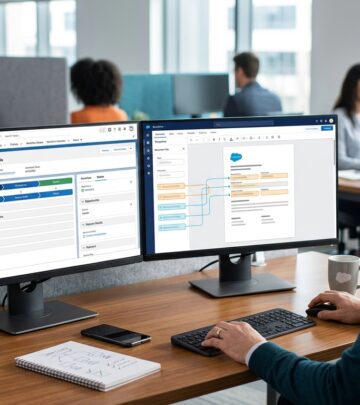
DocLinks EHR: Real-World Insights from Everyday Use
An in-depth, user-focused look at DocLinks EHR usability, workflows, support, and ideal practice fit.

Electronic health record (EHR) systems are now central to clinical care, billing, and regulatory compliance. DocLinks EHR is one of many options on the market aimed at small and mid-sized practices looking for a cloud-based platform to handle documentation, scheduling, and core practice operations. This article synthesizes common themes from real-world reviews of DocLinks EHR and places them in the broader context of what research and official guidance say about effective EHR use.
The goal is not to promote or condemn the product, but to help practices understand where DocLinks tends to work well, where users report friction, and what to evaluate if you are considering it alongside other systems.
DocLinks EHR in Context: What It Tries to Solve
DocLinks EHR positions itself as a cloud-hosted electronic medical record and practice management solution for smaller organizations that may not have dedicated IT staff. Like comparable systems, it aims to:
- Reduce paper-based documentation and improve record accessibility.
- Support scheduling, billing, and basic revenue cycle tasks.
- Provide templates, forms, and workflows tailored to clinical tasks.
- Enable secure sharing of information within the care team and, in some cases, with patients or external partners.
Across the EHR market, common issues include usability challenges, documentation burden, and interoperability gaps. Studies show that poorly designed EHR workflows can contribute to clinician burnout and errors.1,2 Looking at user feedback about DocLinks through that lens helps identify whether the system alleviates or adds to those pressures.
User Experience: Interface, Navigation, and Learning Curve
Among EHR buyers, interface design and ease of use are top decision factors. Official guidance from organizations such as the Office of the National Coordinator for Health IT (ONC) emphasizes the importance of usability and human-centered design in EHRs because these systems are used in time-pressured, safety-critical settings.3
First Impressions and Everyday Navigation
Feedback on DocLinks EHR commonly highlights the following aspects of user experience:
- Overall layout: Users often describe the layout as serviceable but not particularly modern. Some find the screens busy or cluttered, which can increase cognitive load when searching for specific data.
- Menu structure: Core functions like charts, schedules, and billing are usually accessible via standard navigation menus. However, some reviewers feel that key actions are nested deeper than they should be, adding extra clicks.
- Speed and responsiveness: Because DocLinks is cloud-based, performance depends on internet connectivity and server responsiveness. Users report generally acceptable loading times, with occasional lag during peak usage windows.
These patterns mirror general EHR usability challenges recognized in research, where clinicians frequently cite navigation complexity and multiple clicks as key sources of frustration.1
Learning Curve and Training Needs
New users of any EHR require training and a period of adjustment. For DocLinks EHR, reviewers often comment on:
- Basic training: Most practices receive onboarding training, though the depth and quality can vary. Staff with prior EHR experience adapt faster, while those new to digital documentation may need more support.
- Intuitive features: Some functions align with user expectations (e.g., clicking on a patient name to open a chart), helping reduce training overhead.
- Hidden capabilities: A recurring theme is that powerful features exist but are not obvious without explicit training or documentation, which can limit adoption.
Best practices from usability experts recommend iterative training and user-centered configuration to mitigate these obstacles.3 Practices considering DocLinks should allocate time for both formal training and informal learning, especially for super-users who can support colleagues.
Clinical Documentation and Workflow Support
Clinical workflows are where EHR strengths and weaknesses become most visible. DocLinks EHR provides standard documentation tools—progress notes, problem lists, medication lists, and forms—but the level of specialty-specific tailoring varies.
Templates, Forms, and Customization
User feedback suggests that DocLinks offers a collection of generic templates with some customization options. Practitioners in more specialized fields sometimes expect deeper specialty workflows or documentation shortcuts that mirror their existing processes. Where those are absent, users may perceive the system as “too basic” or misaligned with their needs.
On the positive side, customizable templates can help practices:
- Standardize documentation across providers.
- Ensure required fields for compliance and billing are captured.
- Reduce repetitive typing via macros or pre-defined text blocks.
However, as research highlights, overly rigid templates or poorly designed forms can increase documentation time and reduce note quality.1 Practices evaluating DocLinks should therefore explore how easily templates can be configured and whether they can be adjusted without vendor intervention.
Order Entry, Medication Management, and Safety
Computerized provider order entry (CPOE) and medication management are crucial for patient safety. U.S. federal programs have historically linked EHR certification to safety-related functions such as medication checks and allergy alerts.4
While DocLinks offers basic order and medication functions consistent with a modern EHR, key considerations include:
- Alert quality: Excessive non-actionable alerts can lead to alert fatigue, where clinicians override warnings without review. Practices should assess whether alerts in DocLinks are appropriately tuned.
- Medication histories: The ability to view complete medication lists and update them efficiently without duplications.
- Lab and imaging order workflows: How smoothly orders are created, transmitted, and returned into the record.
These functions can be strongly affected by how DocLinks is configured for a given practice, making implementation choices as important as the software itself.
Scheduling, Billing, and Administrative Tasks
EHRs increasingly integrate practice management features. DocLinks EHR aims to help clinics manage schedules, capture charges, and process claims more efficiently.
Appointment Management and Front-Desk Workflows
Reviewers typically mention standard scheduling functionality, including:
- Daily and weekly provider calendars.
- Appointment types with configurable durations.
- Patient demographic intake and insurance capture at check-in.
Usability at the front desk can significantly influence patient flow and satisfaction. Staff often look for:
- Quick search for patients by multiple identifiers.
- Easy rescheduling and cancellation with clear audit trails.
- Minimal duplication of data entry between registration and clinical documentation.
DocLinks appears to provide the basics, though some users wish for more automation or more refined patient communication tools (e.g., appointment reminders and online self-scheduling).
Revenue Cycle and Reporting
Effective revenue cycle management (RCM) requires accurate coding, timely claims submission, and robust reporting. DocLinks includes tools for charge capture and billing, but user satisfaction varies based on practice size and complexity.
| Workflow Area | Typical Tasks | What Practices Evaluate |
|---|---|---|
| Scheduling | Book visits, reschedule, track no-shows | Calendar usability, reminder capabilities |
| Coding & Billing | Assign codes, generate claims, post payments | Support for specialty codes, denial management |
| Reporting | Volume, revenue, quality metrics | Report customization, export options |
| Compliance | Audit trails, access logs | Ease of producing reports for auditors |
Because reimbursement requirements and reporting needs vary widely across specialties and payers, practices should conduct detailed billing and reporting tests during a DocLinks trial or demo.
Integration, Interoperability, and Data Access
Interoperability is a central theme in modern health IT policy. U.S. regulations encourage EHRs to support standardized data exchange through APIs and established formats so patients and providers can access and share information more easily.5
DocLinks EHR, like many systems targeting smaller practices, tends to focus on integrating with a defined set of third-party tools (such as clearinghouses, labs, or certain ancillary systems). Users often evaluate the system on:
- Lab and imaging interfaces: Whether results flow automatically into the chart and can be reviewed with minimal clicks.
- Practice-specific integrations: For example, behavioral health, physical therapy, or specialized registries if relevant.
- Data export and migration: The ease of extracting patient data if a practice transitions from or to another EHR.
Prospective buyers should ask specific questions about interoperability: which standards (e.g., HL7, FHIR) are supported, what interfaces exist out of the box, and what custom integrations entail in terms of time and cost.
Security, Privacy, and Compliance Considerations
All EHRs used in the United States must comply with the Health Insurance Portability and Accountability Act (HIPAA) and, where applicable, other regulations such as 42 CFR Part 2 for substance use disorder treatment records. Cloud-hosted EHRs like DocLinks typically act as business associates and must implement administrative, physical, and technical safeguards for protected health information (PHI).6
Key areas practices should review in relation to DocLinks include:
- Access controls: Role-based permissions, unique logins, and session timeouts.
- Audit logging: Tracking who accessed or modified records and when, with reports available for compliance audits.
- Encryption: Protection of data in transit (e.g., TLS) and at rest.
- Business associate agreement (BAA): A clear contract outlining responsibilities and breach notification processes.
Users generally expect these features as a baseline; satisfaction tends to hinge on how transparent and responsive the vendor is regarding security practices and incidents.
Customer Support and Vendor Relationship
Support responsiveness and vendor collaboration can significantly influence overall satisfaction with an EHR. In multi-year surveys, clinicians report that perceived vendor support quality is a major factor in whether they would recommend a system to peers.2
Support Channels and Response Times
DocLinks users report a mix of experiences with customer support. Central themes include:
- Availability of support: Phone, email, and sometimes ticket-based systems are used for issue reporting.
- Resolution speed: Routine issues are typically resolved in a reasonable timeframe; more complex requests (such as new reports or integrations) may take longer.
- Proactive communication: Some users would like more proactive updates about system changes, downtime, or new features.
Practices evaluating DocLinks should clarify support service-level agreements (SLAs), after-hours support availability, and whether dedicated account managers or implementation specialists will be assigned.
Updates, Upgrades, and Roadmap
Cloud-based systems like DocLinks can deploy updates centrally, reducing the burden on practice IT staff. However, frequent changes can introduce learning curve issues if not well communicated. Buyers should inquire about:
- How often major updates are released.
- How users are notified and trained on new features.
- How user feedback influences the product roadmap.
Engaging in user advisory groups or feedback channels can help practices advocate for enhancements that better match their workflows.
Strengths, Limitations, and Ideal Practice Fit
Based on common themes in user reviews and the context of EHR research and policy, DocLinks EHR tends to fit certain practice profiles better than others.
Where DocLinks EHR Often Works Well
- Small to mid-sized practices: Especially those with straightforward workflows and limited need for highly customized specialty modules.
- Clinics transitioning from paper: Practices moving off paper charts may find DocLinks a manageable step into digital records, provided they invest in training.
- Organizations preferring cloud hosting: Practices that lack in-house IT support may appreciate the reduced infrastructure burden of a hosted solution.
Commonly Reported Pain Points
- Specialty-specific needs: Some specialists report that workflows feel too generic and require workarounds or manual steps.
- User interface sophistication: The design is often described as functional but less polished than newer entrants, potentially affecting user satisfaction.
- Advanced automation: Practices seeking extensive automation, advanced analytics, or highly granular reporting may find the system limited without custom work.
How to Evaluate DocLinks EHR for Your Practice
Any EHR decision should follow a structured evaluation process. Research and implementation guides from agencies like the Agency for Healthcare Research and Quality (AHRQ) recommend involving a multidisciplinary team, defining requirements, and piloting systems before full rollout.7
Practical Evaluation Checklist
When reviewing DocLinks EHR, consider the following steps:
- Map your workflows: Document current clinical and administrative processes. During demos, walk through these scenarios end to end in the system.
- Include all roles: Involve physicians, nurses, front-desk staff, billers, and IT consultants in evaluations to surface diverse perspectives.
- Test interoperability: Ask for examples of live interfaces with labs, imaging centers, and other partners you use.
- Probe reporting needs: Request sample reports and, if possible, a sandbox environment where you can test building or modifying reports.
- Clarify costs: Discuss licensing, training, migration, integrations, and ongoing support fees to avoid surprises.
Frequently Asked Questions About DocLinks EHR
Is DocLinks EHR suitable for highly specialized practices?
DocLinks can be used in specialized settings, but user feedback suggests that some specialties may find the out-of-the-box workflows too generic. If your practice relies on very specific documentation or complex clinical pathways, you should carefully evaluate customization options and consider a pilot phase to verify fit.
How does DocLinks EHR support regulatory compliance?
DocLinks, like other EHRs, is designed to support HIPAA requirements and typical documentation needed for billing and quality reporting. However, compliance also depends on how the practice configures the system and trains staff. It is important to confirm with the vendor which certification programs the product meets and how it supports relevant regulations in your jurisdiction.
What kind of training should a practice plan for?
At minimum, plan for initial onboarding training for all staff, additional deep-dive sessions for super-users, and refresher training after major system updates. Allow time for users to practice in a non-production environment if available. Training is often a larger contributor to success than any particular software feature.
Can data be migrated into or out of DocLinks EHR?
Most modern EHRs, including DocLinks, offer data import and export options, but capabilities and formats differ. Ask the vendor for details on supported formats, previous migration projects similar to yours, and any additional costs. Also confirm how you would retrieve your data if you eventually switch systems.
What should I look for in DocLinks EHR support agreements?
Review response time commitments, channels (phone, email, portal), escalation paths for critical issues, after-hours coverage, and any limits on included support versus billable services. Understanding these details upfront helps avoid frustration later.
Conclusion
DocLinks EHR occupies a space in the market aimed at small and mid-sized practices seeking a cloud-based, general-purpose electronic health record and practice management platform. User feedback portrays a system that is broadly functional but not without trade-offs: the interface may feel basic to some, and specialty-specific workflows sometimes require extra configuration.
Whether DocLinks is a good fit for a particular organization depends heavily on practice size, specialty mix, reporting needs, and willingness to invest in configuration and training. By pairing real-world user insights with best practices from health IT research and policy, practices can make a more informed decision and design an implementation strategy that mitigates risk while maximizing value.
References
- Factors Affecting Physician Professional Satisfaction and Their Implications for Patient Care, Health Systems, and Health Policy — RAND Corporation. 2013-10-09. https://www.rand.org/pubs/research_reports/RR439.html
- Electronic Health Record Usability: Evaluation and Use Case Framework — Agency for Healthcare Research and Quality (AHRQ). 2019-06-01. https://digital.ahrq.gov/electronic-health-record-usability-evaluation-and-use-case-framework
- ONC Health IT Certification Program: Certification Criteria — Office of the National Coordinator for Health Information Technology (ONC). 2024-02-01. https://www.healthit.gov/topic/certification-ehr-and-health-it-products/onc-health-it-certification-program
- Computerized Provider Order Entry—Medication Safety Resource — Agency for Healthcare Research and Quality (AHRQ) PSNet. 2022-05-15. https://psnet.ahrq.gov/primer/computerized-provider-order-entry
- 21st Century Cures Act: Interoperability, Information Blocking, and the ONC Health IT Certification Program — Office of the National Coordinator for Health Information Technology (ONC). 2020-03-09. https://www.healthit.gov/curesrule/
- Summary of the HIPAA Security Rule — U.S. Department of Health & Human Services (HHS). 2013-07-26. https://www.hhs.gov/hipaa/for-professionals/security/laws-regulations/index.html
- Health IT Playbook: EHR Implementation Steps — Office of the National Coordinator for Health Information Technology (ONC). 2023-08-10. https://www.healthit.gov/playbook/electronic-health-records/
Similar Articles







Read full bio of medha deb