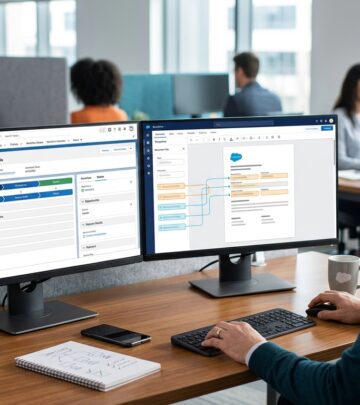
DocMagic SmartCLOSE Review and Guide
A practical look at how SmartCLOSE supports collaborative mortgage closing workflows.

Mortgage closings bring together many moving parts: lenders, settlement providers, borrowers, document packages, fee changes, and compliance checks. When those pieces are managed through disconnected tools and long email chains, the process can become slow, repetitive, and prone to errors. DocMagic SmartCLOSE is designed to reduce that friction by giving loan teams a shared environment for closing collaboration.
This article takes a practical look at what SmartCLOSE is meant to do, how it fits into a modern mortgage workflow, and why teams consider it when they want tighter coordination around disclosures, fee validation, and document delivery. Rather than treating closing as a one-off paperwork task, SmartCLOSE frames it as a structured collaboration between the parties who need to stay aligned from start to finish.
Why mortgage closing workflows need a shared system
Closing a mortgage is not just about generating a final set of documents. It often requires multiple rounds of review, updating fee information, confirming instructions, resolving questions, and making sure each participant sees the latest version of what matters to them. In a manual process, that can mean repeated phone calls, scattered message threads, and duplicated work.
A shared platform helps solve several common challenges:
- It reduces the need to send sensitive files through unsecured channels.
- It makes it easier to track who changed what and when.
- It helps different parties review loan cost information in a coordinated way.
- It creates one place to manage communication tied to the closing package.
SmartCLOSE is built around these ideas. Instead of viewing the process as separate handoffs, it treats collaboration as part of the workflow itself.
What SmartCLOSE is designed to do
At its core, SmartCLOSE is a collaborative closing portal. It is intended to help lenders and settlement providers work inside a controlled environment where they can exchange information, review fees, and move documents through the closing process more efficiently. It is not simply a file repository. The platform is positioned as a workspace where transaction details can be reviewed and updated in a way that supports compliance and operational consistency.
That distinction matters. Many tools can store documents or send messages. Fewer are built specifically for the back-and-forth that happens during loan closing. SmartCLOSE focuses on the handoff points that often cause delays, especially when settlement charges or disclosure details need approval before the final package can be produced.
How the workflow typically unfolds
Although every lender’s process may differ, SmartCLOSE generally supports a sequence like this:
- A settlement agent or other collaborating party is invited into the transaction.
- The participant logs in to review loan information and related closing data.
- Costs and fees are examined and edited as needed.
- Questions or proposed changes are communicated inside the portal.
- Updates are reviewed by the lender before final documents are generated.
This workflow is valuable because it keeps the parties working from a consistent version of the transaction record. If a fee changes, the update can be reviewed before it ripples into the final document set. That reduces the likelihood of mismatches between earlier disclosures and the closing package.
Key strengths teams usually look for
One reason platforms like SmartCLOSE attract interest is that they aim to simplify a process that is traditionally overloaded with manual steps. The most appealing benefits tend to fall into a few categories.
1. Better coordination between parties
Mortgage closings often involve people working in different organizations. SmartCLOSE helps those groups interact within a common environment, which lowers the chance that critical information gets lost in emails or missed during handoffs.
2. More controlled fee review
Fee changes are a common source of closing delays. With a shared review process, lenders and settlement providers can compare costs, propose adjustments, and get approvals before finalizing the package. That can lead to fewer surprises at the table.
3. A clearer audit trail
When updates happen in one system, it becomes easier to understand the history of a transaction. For compliance-conscious organizations, having a documented sequence of actions can be more useful than trying to reconstruct a process from scattered communications.
4. Improved speed and consistency
By centralizing collaboration, the platform can reduce back-and-forth and help teams move toward closing faster. In practice, that means fewer delays caused by version confusion or repeated requests for the same information.
Where SmartCLOSE fits in the broader mortgage stack
SmartCLOSE is most useful when a lender already relies on digital systems for document generation, compliance review, and loan processing. In that environment, a closing portal can act as the collaboration layer that ties those systems together. It is especially relevant for teams that want to connect settlement providers more directly into the workflow without giving up control over approvals or document finalization.
That also means SmartCLOSE is less about replacing an entire loan platform and more about improving one segment of the process. For lenders that already have a production system, the value often comes from making the closing phase more organized and less dependent on manual coordination.
Operational considerations before adopting a tool like this
Any technology purchase should be evaluated against the realities of day-to-day use. For SmartCLOSE, the most important questions tend to involve onboarding, collaboration habits, and how well the platform fits existing procedures.
| Consideration | Why it matters |
|---|---|
| User adoption | A strong platform still needs lenders and settlement partners to use it consistently. |
| Workflow alignment | The tool should support the team’s existing closing sequence rather than force unnecessary changes. |
| Fee review process | Organizations should confirm how updates are proposed, approved, and tracked. |
| Communication preferences | Teams should decide what belongs inside the portal versus what still requires direct contact. |
| Compliance needs | Closing systems should support recordkeeping and controlled access appropriate to sensitive loan data. |
These questions are not unique to SmartCLOSE, but they are especially relevant in mortgage operations where timing, accuracy, and auditability all matter at once.
What kinds of teams may benefit most
SmartCLOSE tends to appeal most to organizations that handle a steady volume of loans and need a disciplined way to coordinate with outside closing partners. It is a logical fit for lenders that want to reduce friction in the final stages of the loan lifecycle and are comfortable working in a portal-based environment.
- Retail and correspondent lenders that need repeatable collaboration with settlement providers.
- Operations teams that want fewer manual touchpoints during final document preparation.
- Compliance-focused organizations that value visibility into changes and approvals.
- Closing teams that want to centralize communication around one transaction record.
For smaller organizations, the question may be whether the platform’s structure is worth the added process discipline. For larger organizations, the efficiency gains may be easier to justify because the volume of transactions magnifies small delays.
Possible limitations to keep in mind
No mortgage technology is perfect, and a platform centered on collaboration will still depend on people and procedures. If an outside partner does not log in regularly, the benefits of centralization shrink. If internal teams continue to rely on side emails and separate spreadsheets, the system may become only one piece of a still-fragmented process.
Other limitations may include the learning curve of adopting another portal, the need to align multiple stakeholders, and the challenge of standardizing closing behavior across different partners. In other words, the software can support better coordination, but it cannot create it automatically.
That said, these limitations are often manageable when organizations are deliberate about training and workflow design. The most successful deployments usually come from teams that treat the platform as a process improvement, not just another login.
How to evaluate whether SmartCLOSE is the right fit
If a mortgage organization is considering SmartCLOSE, it helps to evaluate the product through practical questions rather than feature lists alone. The main issue is whether the tool solves a real problem in your closing process.
- Do fee changes and closing updates cause frequent delays?
- Are settlement partners comfortable working in a portal?
- Is your team trying to reduce reliance on email-based coordination?
- Would a shared review environment improve consistency and accountability?
- Do you need a more structured way to manage disclosure and closing package handoffs?
If the answer to several of these is yes, a collaborative closing system may deliver meaningful value. If the workflow is already tightly managed and low-volume, the return may be less obvious.
Practical takeaways
SmartCLOSE is best understood as a workflow tool for mortgage closing collaboration. It brings lenders and settlement providers into a shared environment where fee reviews, communication, and closing preparation can happen in a more controlled way. Its value lies not in flashy features, but in helping teams reduce confusion and keep the process moving.
For organizations that struggle with late changes, scattered communication, or inconsistent closing handoffs, that can make a real difference. For teams that already operate smoothly, the platform may still be useful as a way to formalize and document what they do well. In both cases, the central idea is the same: closings work better when everyone is looking at the same transaction through the same system.
Frequently asked questions
Is SmartCLOSE mainly a document storage tool?
No. It is better viewed as a collaborative closing environment that supports communication, fee review, and document-related workflow steps.
Who uses SmartCLOSE?
The platform is designed for mortgage lenders, settlement providers, and related closing partners who need to coordinate transaction details.
Does SmartCLOSE replace the need for human review?
No. It supports the review process, but staff still need to approve changes, manage exceptions, and ensure the final package is correct.
What problem does it solve best?
Its strongest use case is reducing friction during the final stages of a mortgage closing, especially when updates must be reviewed by multiple parties.
Is it useful for every lender?
Not necessarily. The greatest value usually comes to teams with enough volume and collaboration complexity to benefit from a more structured process.
References
- SmartCLOSE | Collaborative Closing — DocMagic. n.d. https://www.docmagic.com/smartclose
- SmartCLOSE — DocMagic User Guide — DocMagic. n.d. https://www.docmagic.com/media/docmagic/images/support/tutorials/smartclose/smartclose-training-guide.pdf
- SmartCLOSE® — DocMagic — DocMagic. n.d. https://www.docmagic.com/sites/default/files/training/SmartClose_2024_2.pdf
- DocMagic Begins Testing SmartCLOSE Program for TRID Preparation — American Land Title Association. 2015-04-24. https://www.alta.org/news-and-publications/news/newsID=28345&newsID=28345
- DocMagic Finalizes SmartCLOSE for Launch — National Mortgage Professional. 2015-08-14. https://nationalmortgageprofessional.com/news/55347/docmagic-finalizes-smartclose-launch
Similar Articles








Read full bio of Sneha Tete