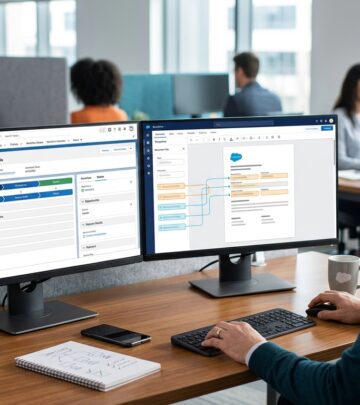
Docmosis Review: Template‑Driven Document Generation for Developers
An in‑depth, vendor‑neutral look at Docmosis for automated document generation, based on real-world usage feedback.

Docmosis is a document generation engine designed to help teams create PDF, Word, and other documents from templates, using data supplied by their own applications. It is frequently adopted by software companies, SaaS providers, and internal development teams that need reliable, high‑volume document production without reinventing formatting logic from scratch. This review synthesizes feedback from verified users and cross‑checks it against public technical information to provide a balanced, vendor‑neutral perspective.
What Docmosis Is Designed to Do
At its core, Docmosis lets you design document templates in familiar office tools (typically Microsoft Word or similar editors) and merge them with data from your systems. The resulting documents can be:
- Rendered to multiple formats such as PDF, DOCX, ODT, and sometimes HTML or image outputs.
- Produced on demand via API calls from web or desktop applications.
- Generated in batches for scheduled mailings, reports, or compliance documentation.
This approach mirrors the broader category of document automation engines, where layout is defined in templates and business data is supplied at runtime. Similar concepts are used in large-scale reporting and document automation platforms across industries such as insurance, government, and finance.1
Architecture Options and Deployment Flexibility
One of the recurring themes in user feedback is flexibility in how Docmosis can be deployed. While specific topology choices vary per organization, typical patterns include:
- Embedded library: Integrating Docmosis into a Java or .NET application to generate documents directly within the app runtime.
- On‑premise server: Running Docmosis as a dedicated service on internal infrastructure or private cloud for tighter data control.
- Managed cloud offering: Using a hosted instance where scaling and maintenance are largely handled by the vendor.
These options matter in regulated sectors where data residency, security, and infrastructure ownership are critical. Industry guidance for cloud adoption in financial and public sectors often emphasizes clear control over data flows and hosting locations, which flexible deployment helps support.2
Template‑Based Design: Strengths and Trade‑Offs
Docmosis follows a template‑driven paradigm. Templates are usually built using office‑style editors with special placeholder syntax, conditional blocks, and looping constructs that are interpreted by the engine.
Advantages of Docmosis Templates
- Shorter learning curve for non‑developers: Business analysts and document specialists can often work directly with templates without writing code, which aligns with general best practices in document automation where domain experts control the layout.1
- Separation of concerns: Developers focus on supplying data structures and API calls, while formatting, layout, and copy can be maintained in templates.
- Complex layouts: Templates can express tables, nested sections, headers, footers, and conditional blocks for different audiences or jurisdictions.
Typical Limitations Reported by Users
Feedback suggests that as templates grow more complex, the learning curve can increase:
- Advanced conditional logic, nested loops, and dynamic sections can become difficult to read and troubleshoot inside a word‑processor document.
- Non‑technical users may require training or close collaboration with developers for sophisticated documents.
- Template versioning, testing, and promotion between environments (dev, test, prod) require disciplined processes or supporting tools.
These challenges are not unique to Docmosis; similar constraints are seen in other template‑centric engines where the template language effectively becomes a low‑code programming environment embedded in a document.
Integration and API Experience
Docmosis is typically accessed programmatically from custom applications. Verified users often describe the API as straightforward once the first integration is in place, but note that up‑front setup can be nuanced for teams new to document engines.
Common Integration Scenarios
- Web applications: Generating invoices, letters, or reports on demand from a web UI.
- Back‑office systems: Creating regulatory documents, statements, and correspondence as part of scheduled jobs.
- SaaS platforms: Offering white‑label document outputs (e.g., certificates or contracts) as part of a product’s feature set.
Development teams typically integrate Docmosis by:
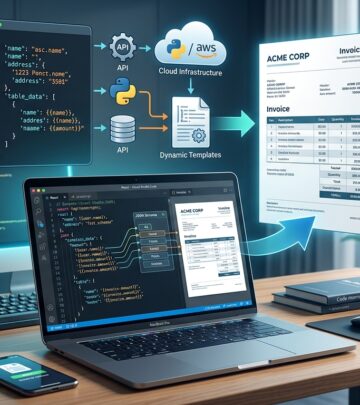
- Defining the data model the application will send (often JSON or mapped objects).
- Embedding or calling the engine via REST or language‑specific libraries.
- Returning or storing the generated document in storage systems, CRMs, or content repositories.
Developer‑Friendliness
Reported experiences commonly highlight:
- Clear core concepts: Template + data = document, which is conceptually simple once the syntax is understood.
- Need for good documentation: As with any API‑driven tool, teams rely heavily on reference guides, sample code, and configuration recipes. Official product documentation plays a critical role here, and many vendors in this space invest heavily in developer guides.3
- Error handling: Some users mention that debugging template errors or malformed data requires close attention to engine logs and examples.
Feature Overview from a User Perspective
The following table summarizes capabilities typically discussed in user reviews and marketing materials for Docmosis and comparable document engines. It is not an official specification, but a consolidated view of what teams generally rely on.
| Feature Area | What Users Commonly Do with It | Practical Observations |
|---|---|---|
| Multi‑format output | Produce PDF and Word versions of the same template. | Useful for workflows where editable drafts and final non‑editable versions are both needed. |
| Conditional content | Include or suppress sections based on flags (language, product, jurisdiction). | Reduces the need for separate templates for each small variation. |
| Loops and tables | Render lists of items such as invoice lines or schedule entries. | Handles everyday business documents that aggregate multiple records. |
| Images and logos | Insert customer logos, signatures, or charts from dynamic sources. | Important for white‑label or multi‑brand scenarios. |
| Localization | Support different languages and regional formats in one or several templates. | Often implemented via conditional blocks and localized data fields. |
Performance and Scalability Considerations
Performance expectations vary significantly across organizations. Some generate a handful of documents per hour, while others need to produce thousands per minute during peak times (for example, invoice runs or bulk policy communications). Modern document engines, including Docmosis and similar products, typically recommend scaling via:
- Running multiple instances behind a load balancer.
- Separating template storage, document storage, and processing nodes.
- Monitoring CPU, memory, and I/O performance, then adjusting instance size accordingly.
Independent benchmarks for generic document processing show that PDF and Word rendering can be CPU‑intensive, especially when templates contain images or complex layouts.4 For Docmosis specifically, real‑world user experiences indicate that performance is generally adequate for line‑of‑business workloads, but high‑volume deployments may require tuning and capacity planning.
Reliability, Stability, and Maintenance
User reviews often highlight stability as a critical selection factor. Once integrated, a document engine becomes a central dependency: outages or regressions can interrupt invoicing, customer communications, or regulatory reporting. Teams typically evaluate reliability based on:
- Runtime stability: Whether the engine can run for extended periods under load without memory leaks or crashes.
- Backward compatibility: How upgrades impact existing templates and integration code.
- Monitoring and logging: Availability of logs and metrics that simplify fault diagnosis.
Many organizations adopt practices similar to those recommended in general software operations literature—such as staging environments, canary releases, and observability—to manage upgrades and configuration changes safely.5
Support Quality and Vendor Responsiveness
A recurring pattern in feedback about Docmosis is positive commentary on support interactions. Themes include:
- Hands‑on assistance during evaluation: Teams frequently mention that vendor engineers help craft proof‑of‑concept templates and integration examples during trials.
- Responsiveness: Short response times to technical queries, especially when customers are actively integrating or troubleshooting.
- Template and design guidance: Advice on structuring templates, handling edge cases, or designing for maintainability.
Quality of support is often a decisive factor for specialized components such as document engines, where relatively small development teams may rely heavily on vendor expertise. This aligns with research on enterprise software adoption showing that perceived vendor support strongly influences satisfaction and retention.6
Licensing and Cost Fit
Specific pricing details are usually negotiated with the vendor and depend on edition, deployment model, and projected usage. However, users tend to consider cost along the following dimensions:
- Development effort saved: Building a robust, flexible document generation system from scratch is time‑consuming. Commercial engines can reduce initial development time and ongoing maintenance.
- Volume and concurrency: Licenses may be structured around server instances, document counts, or other usage metrics; organizations must model expected load carefully.
- Compliance and risk: For regulated industries, paying for a mature engine with support and patching can be more cost‑effective than maintaining bespoke solutions over years.
Organizations evaluating Docmosis often compare it not only to direct competitors but also to home‑grown solutions or broader document automation platforms. Cost‑benefit analysis is typically based on internal developer salaries, expected life span of the system, and organizational risk tolerance.
Ideal Use Cases for Docmosis
Based on aggregated user feedback, Docmosis tends to be a strong fit in scenarios where:
- Applications require consistent, branded documents in high volumes.
- Documents must be customized per customer or transaction using structured data.
- Organizations want non‑developers involved in layout and wording, while developers handle data and integration.
- There is a need to support multiple formats (e.g., PDF, Word) without separate implementations.
Typical document types generated with engines like Docmosis include:
- Invoices, quotes, and order confirmations.
- Contracts and policy documents.
- Customer letters, reminders, and notices.
- Operational or management reports.
- Certificates and acknowledgments.
Where Docmosis May Not Be the Best Fit
Docmosis may be less suitable when:
- Your use case centers on interactive, collaborative authoring (e.g., many users editing the same document live), where content management systems or collaborative office suites might be more appropriate.
- You only need simple mail‑merge functionality with low volume; built‑in features of office suites may suffice.
- Strict policy or procurement constraints require specific vendors or open‑source licensing only.
As with any specialized tool, the value of Docmosis is highest when document generation is strategically important, either for customer experience, revenue operations, or compliance.
Practical Tips for Teams Evaluating Docmosis
Organizations considering Docmosis or any similar engine can benefit from a structured evaluation. Based on user experiences and general IT adoption guidance, the following steps are useful:
- Define a realistic pilot: Select one or two representative documents (for example, an invoice and a more complex multi‑page report) and attempt to implement them end‑to‑end.
- Involve both developers and business users: Have developers integrate the API while document owners design templates, to ensure the workflow is sustainable.
- Measure performance: Run load tests at realistic volumes to understand resource needs and latency.
- Evaluate maintainability: Ask how templates will be versioned, tested, and deployed in the long term.
- Test support channels: Observe how quickly and effectively vendor support responds to technical questions during the trial period.
Balanced Verdict
Docmosis occupies a clear niche in the document generation market: a developer‑friendly engine that leverages familiar office‑style templates to produce high‑quality PDFs and related formats. User reviews consistently highlight strong vendor support, solid core functionality, and flexibility of deployment as key strengths. The main challenges arise around managing complex templates and ensuring long‑term maintainability, issues that are common to template‑driven engines in general.
For organizations where automated document production is central to operations—and where both developers and business users need clear roles in the process—Docmosis is a credible option to consider. Teams should, however, invest in disciplined template governance and thorough evaluation to ensure that the tool aligns with their performance, compliance, and cost requirements.
Frequently Asked Questions about Docmosis
1. Is Docmosis only for Java developers?
No. While Docmosis originated with a strong Java focus, modern document engines like it are typically accessible via REST APIs or language‑specific clients. This means that applications written in languages such as .NET, Node.js, Python, or PHP can interact with the service as long as they can make HTTP calls and handle binary document responses.
2. How difficult is it for non‑technical staff to maintain templates?
Simple templates—those with straightforward placeholders and limited conditional logic—are usually manageable for non‑technical staff after some training. As templates grow more complex, however, they start to resemble a low‑code environment; at that point, collaboration between document specialists and developers becomes important to avoid brittle designs and hidden logic.
3. Can Docmosis handle multi‑language documents?
Multi‑language output is commonly achieved by combining localized data fields with conditional content blocks in templates. For example, the same template can contain text in multiple languages, and the engine displays the appropriate blocks based on language codes in the input data. This approach is consistent with general practices in document automation for multilingual organizations.
4. How does Docmosis compare to custom-built document generation?
Building a custom engine can be appealing for full control, but it typically requires significant investment in layout logic, maintenance, and testing. Commercial engines like Docmosis package these capabilities and provide dedicated support and updates, which many organizations find more economical over the long term, especially when documents are business‑critical.
5. What security considerations apply when using Docmosis?
Security considerations depend on deployment choice. When hosted internally or in a private cloud, responsibility for network security, access control, and data protection rests largely with the organization, much like any internal service. When using a managed or public cloud offering, organizations should review data handling, regional hosting options, and certification status in line with general cloud security guidance from regulators and standards bodies.2
References
- Automating Document Workflows — AIIM (Association for Intelligent Information Management). 2020-06-15. https://info.aiim.org/automating-document-workflows
- Guidelines on Outsourcing Arrangements — European Banking Authority (EBA). 2019-02-25. https://www.eba.europa.eu/regulation-and-policy/internal-governance/guidelines-on-outsourcing-arrangements
- Getting started with Cloud APIs — Google Cloud. 2023-09-12. https://cloud.google.com/apis/docs/overview
- PDF Technology Overview — Adobe Inc. 2021-04-20. https://opensource.adobe.com/dc-acrobat-sdk-docs/pdfl-sdk/plugindev/overview/ovw_pdftechnologies.html
- Site Reliability Engineering: How Google Runs Production Systems — Beyer, B., Jones, C., Petoff, J., Murphy, N. (O’Reilly Media). 2016-03-23. https://sre.google/sre-book/table-of-contents/
- Enterprise Software: Quality of Vendor Support and Its Impact on User Satisfaction — Deloitte Insights. 2022-05-18. https://www2.deloitte.com/global/en/insights/industry/technology/enterprise-software-customer-satisfaction.html
Similar Articles





Read full bio of Sneha Tete