
Feature Management Platform Capabilities and User Experiences
Exploring how modern feature toggling solutions streamline development workflows

In contemporary software development, the ability to control feature availability without requiring code redeployment has become increasingly critical. Organizations across various scales are adopting specialized platforms designed to manage feature toggles, configuration settings, and deployment strategies in real-time. These solutions bridge the gap between development teams needing rapid iteration and operations teams requiring stability and control over application behavior.
Understanding Feature Toggling in Modern Development
Feature toggling represents a fundamental shift in how teams approach software deployment and release management. Rather than bundling all changes into a single deployment event, teams can now push code to production with features disabled by default, then gradually activate these features for specific user segments or environments. This approach reduces deployment risk, enables A/B testing capabilities, and allows teams to maintain tighter feedback loops with their user base.
The conceptual framework behind feature toggling involves separating feature deployment from feature activation. Code that implements new functionality can exist in the production environment while remaining invisible or inactive to end users. This separation provides development teams with unprecedented flexibility in managing the software lifecycle, allowing them to maintain continuous integration practices without the inherent risks traditionally associated with frequent deployments.
Core Capabilities That Drive Adoption
Modern feature management platforms offer several compelling capabilities that address common pain points in software development:
- Real-time Feature Control: Teams can toggle features on or off without redeploying application code, enabling rapid response to issues or market opportunities.
- Gradual Rollout Mechanisms: Features can be activated for specific percentages of users, particular geographic regions, or defined user segments, allowing teams to validate changes with real user traffic before full release.
- Configuration Management: Beyond simple boolean toggles, platforms support complex configuration values that can be modified without code changes, enabling parameterization of application behavior.
- Non-Technical User Access: Dashboard interfaces allow product managers, operations personnel, and other non-developers to make feature decisions without requiring development team involvement.
- Integration Flexibility: Most platforms provide SDKs and APIs for straightforward integration with existing development stacks, whether web applications, mobile platforms, or backend services.
Integration Architecture and Implementation Patterns
The implementation of feature management platforms typically follows established architectural patterns that minimize disruption to existing systems. Development teams value solutions that can work alongside current infrastructure, data sources, and deployment pipelines without requiring extensive refactoring.
Integration typically occurs at the application layer, where SDKs provided by the platform are incorporated into codebases. These SDKs handle communication with the feature management service, caching mechanisms for performance optimization, and fallback behaviors when the service is temporarily unavailable. The distributed nature of modern applications means that SDKs must be lightweight, performant, and capable of operating across diverse environments including web browsers, mobile devices, and backend servers.
Organizations particularly value platforms that can connect to existing configuration management systems and data sources. Rather than requiring centralized management of all configuration through a single vendor platform, teams benefit from solutions that can integrate with their current infrastructure, gradually adopting new capabilities as needs evolve.
Asynchronous Operations and System Reliability
Feature management platforms designed for modern distributed systems must support asynchronous operations and handle scenarios where network connectivity is unreliable or latency is high. Applications operating in mobile environments or distributed cloud infrastructure cannot afford to have their functionality depend on synchronous calls to external services.
Effective platforms implement intelligent caching strategies, allowing applications to function correctly even when temporarily disconnected from the feature management service. Local caching of feature states reduces latency for feature decision-making, while update mechanisms ensure that cached values remain reasonably current without creating excessive network traffic.
Asynchronous operation also extends to how teams interact with the platform. Batch operations for updating multiple features or scheduling changes for future times represent important capabilities for teams managing complex applications across multiple regions or environments.
User Experience and Interface Design
A critical differentiator among feature management solutions lies in their user interface and overall user experience. Teams consistently value platforms that combine powerful functionality with intuitive design. Platforms that require minimal learning curve and provide clear visualizations of feature states, user segments, and rollout progress enable faster decision-making and reduce cognitive load for team members.
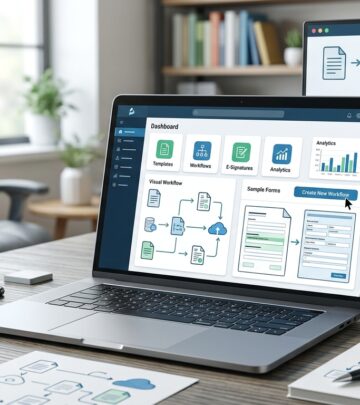
Dashboard interfaces that clearly communicate current feature states, historical changes, and upcoming scheduled modifications help teams understand their feature landscape at a glance. Customizable views allow different team members—developers, product managers, and operations personnel—to see relevant information for their roles without being overwhelmed by unnecessary technical details.
Availability and Uptime Considerations
For feature management platforms to be trusted by development teams, they must demonstrate exceptional reliability. Application availability depends on feature management system availability; if the feature management service becomes unavailable, applications need graceful fallback mechanisms. Many organizations require their tools to meet stringent uptime SLAs, often 99.9% or higher.
This reliability requirement influences platform architecture decisions. Most vendors invest heavily in distributed infrastructure, geographic redundancy, and automated failover mechanisms. Teams value transparency in uptime reporting and clear communication about any service disruptions.
Deployment Safety and Risk Mitigation
Perhaps the most compelling value proposition of feature management platforms is their ability to reduce deployment risk. By enabling gradual feature rollouts, immediate rollback capabilities, and granular targeting of features to specific user populations, these platforms transform deployment from an all-or-nothing event into a carefully controlled process.
Canary deployments, where new features are initially activated for a small percentage of users, allow teams to catch potential issues before they impact the entire user base. If monitoring systems detect anomalies in user behavior, error rates, or performance metrics, teams can immediately disable the feature for all users without requiring code changes or new deployments.
This approach to deployment safety extends the capabilities of traditional CI/CD pipelines. While CI/CD systems handle the technical aspects of building and deploying code, feature management platforms handle the business logic of which features should be active and for which users.
Comparing Deployment Approaches
| Aspect | Traditional Deployment | Feature Management Platform |
|---|---|---|
| Feature Activation | Code deployment required | Real-time without deployment |
| Rollback Speed | Minutes to hours | Seconds |
| User Targeting | All or nothing | Granular control and segments |
| Testing Scope | Limited pre-deployment | Real production testing possible |
| Team Involvement | Requires developers | Non-technical personnel capable |
Real-Time Decision Making for Development Teams
The capacity to make real-time decisions about feature availability transforms how development teams operate. Rather than committing to feature activation timelines weeks in advance, teams can respond to business needs dynamically. Product teams can coordinate feature releases with marketing campaigns or business events, activating features precisely when they’re needed.
This real-time capability also extends to performance and stability optimization. If a newly released feature exhibits unexpected performance characteristics, teams can disable it immediately while investigating root causes. This approach minimizes user impact and demonstrates operational maturity to stakeholders.
Scalability and Multi-Environment Support
Organizations operating at scale require feature management solutions that can handle thousands of features, millions of feature evaluation requests, and complex organizational structures with multiple teams and environments. Platforms must support development, staging, and production environments while preventing accidental configuration errors that could impact production systems.
Role-based access control systems allow organizations to delegate feature management responsibilities appropriately. Development teams might have full control over features in development environments, while production feature changes require approval from senior team members or cross-functional stakeholders.
Analytics and Decision Support
Beyond simple feature toggling, sophisticated platforms provide analytics capabilities that help teams understand feature adoption, user behavior differences between feature variants, and performance impacts of new features. This data-driven approach to feature management reduces subjective decision-making and helps teams understand the business impact of technical changes.
Teams value platforms that integrate with existing analytics systems, allowing feature exposure data to be correlated with other business metrics. Understanding how feature rollout percentages correlate with user engagement, retention, or conversion metrics enables more sophisticated feature management strategies.
Frequently Asked Questions
What distinguishes feature management platforms from simple configuration management tools?
Feature management platforms specifically focus on controlling feature availability and behavior, providing specialized capabilities for gradual rollouts, user targeting, and rapid switching. While configuration management tools handle infrastructure and application settings broadly, feature management platforms offer specialized functionality for feature-specific use cases including A/B testing, canary deployments, and user segmentation.
How do feature management platforms handle offline scenarios?
Most platforms implement local caching mechanisms that allow applications to function correctly when connectivity is unavailable. Feature states are cached locally on devices or servers, with update mechanisms that refresh cached values when connectivity is restored. Applications use fallback behaviors for scenarios where feature states are unknown.
Can feature management platforms integrate with existing CI/CD pipelines?
Yes, integration occurs at different levels. Applications deployed through CI/CD pipelines can incorporate feature management SDKs that work alongside existing deployment automation. API-driven interfaces allow CI/CD systems to trigger feature-related actions programmatically, enabling automated workflows that coordinate code deployment with feature activation.
What types of applications benefit most from feature management platforms?
Any application requiring frequent feature releases, user testing capabilities, or rapid response to issues can benefit from feature management platforms. Web applications, mobile apps, backend services, and microservices architectures all leverage these capabilities. Organizations of any size benefit, though larger organizations with complex release processes and multiple product teams tend to realize greater value.
How do these platforms handle feature flag explosion and complexity?
Mature platforms provide organizational capabilities including feature grouping, deprecation workflows, and lifecycle management for feature flags. Teams can organize features by team, product area, or release cycle, reducing cognitive load when managing thousands of active features.
Conclusion
Feature management platforms represent a fundamental evolution in how development teams deploy and control software. By enabling real-time feature control, gradual rollouts, and granular user targeting, these solutions reduce deployment risk while accelerating time-to-market. The combination of technical capabilities—integration flexibility, asynchronous operation, and reliable availability—with user-friendly interfaces and non-technical access makes these platforms valuable across organizations of all sizes. As development practices continue evolving toward continuous deployment and rapid iteration, feature management capabilities become increasingly essential infrastructure for modern software teams.
References
- Continuous Delivery: Reliable Software Releases through Build, Test, and Deployment Automation — Jez Humble and David Farley, Addison-Wesley Professional. 2010. https://continuousdelivery.com/
- Feature Toggles (Release Toggles) — Martin Fowler. 2015-10-29. https://martinfowler.com/articles/feature-toggles.html
- Infrastructure as Code: Managing Servers in the Cloud — Kief Morris, O’Reilly Media. 2016. https://www.oreilly.com/library/view/infrastructure-as-code/9781491924334/
- Site Reliability Engineering: How Google Runs Production Systems — Betsy Beyer, Chris Jones, Jennifer Petoff, and Niall Richard Murphy (Editors), O’Reilly Media. 2016. https://sre.google/books/
- DevOps Handbook: How to Create World-Class Agility, Reliability, and Security in Technology Organizations — Gene Kim, Patrick Debois, John Willis, and Jez Humble, IT Revolution Press. 2015. https://itrevolution.com/the-devops-handbook/
Similar Articles






Read full bio of medha deb