
Low-Code Platform Solutions for Enterprise App Development
Explore how modern low-code platforms streamline app creation without technical expertise
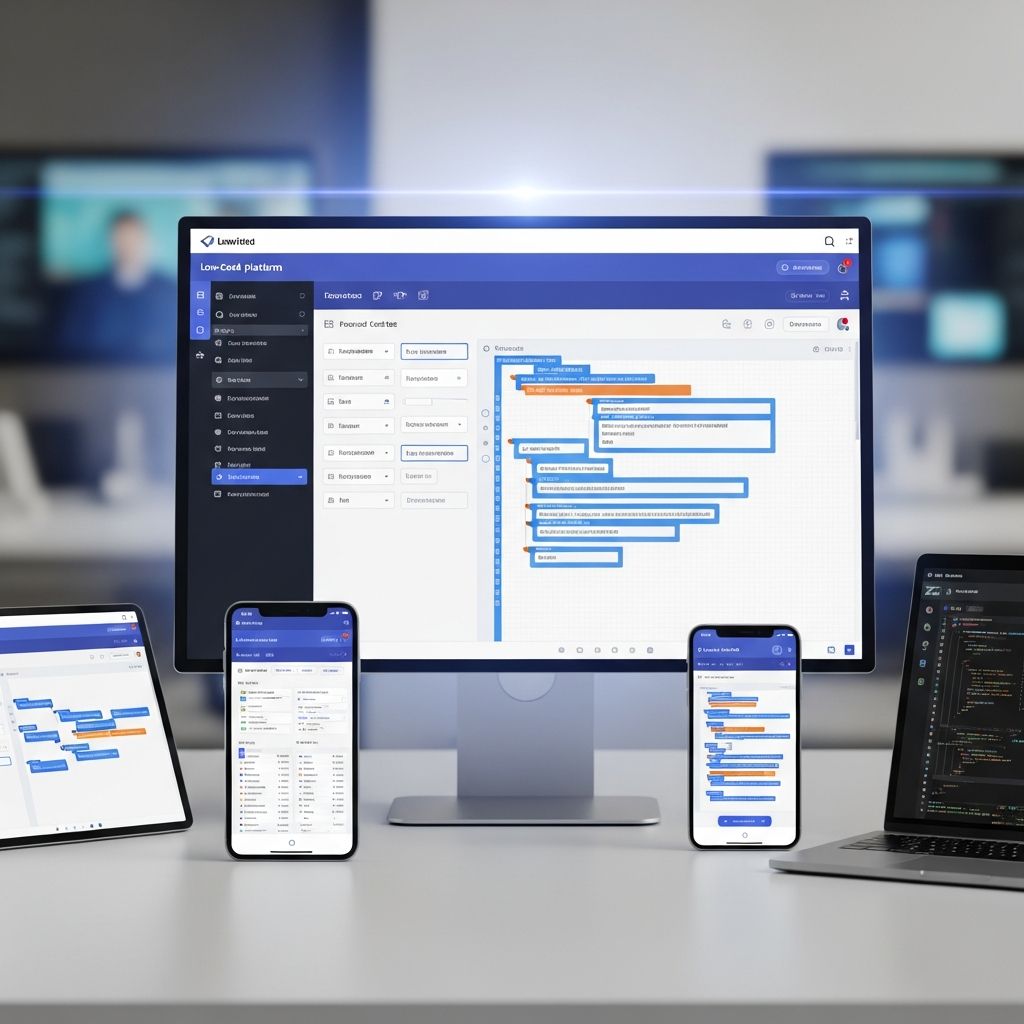
The landscape of enterprise application development has undergone a significant transformation over the past decade. Organizations are increasingly seeking solutions that allow them to build sophisticated applications without requiring extensive programming knowledge or lengthy development timelines. Low-code platforms have emerged as a pivotal technology in this shift, democratizing the ability to create business applications across organizations of all sizes.
These platforms combine visual development interfaces with underlying automation capabilities, enabling teams to construct both mobile and web applications rapidly. The fundamental value proposition centers on reducing the dependency on specialized technical talent while maintaining the flexibility and power of custom application development.
The Core Philosophy Behind Low-Code Development
At their essence, low-code platforms are built on a philosophy that separates the concerns of application logic from user interface design. Rather than requiring developers to write thousands of lines of code, these platforms provide abstraction layers that handle common programming patterns automatically.
The user interface typically features drag-and-drop components that represent pre-built functional blocks. These components encapsulate complex logic, allowing business analysts and citizen developers to assemble applications by combining these building blocks logically. This approach dramatically reduces the learning curve and accelerates the development cycle.
Workflow automation stands as another cornerstone element. Most low-code platforms include sophisticated workflow engines that can execute complex business processes without manual coding. These engines interpret declarative process definitions and execute them reliably, handling conditional logic, parallel processing, and event-driven actions.
Key Functionality Characteristics
Modern low-code platforms share several essential capabilities that distinguish them from traditional development environments:
- Visual Development Environment: Graphical interfaces replace traditional code editors, allowing users to construct applications through visual representation rather than text-based syntax.
- Pre-built Component Libraries: Extensive collections of reusable elements covering common business scenarios reduce development effort for standard use cases.
- Integrated Data Connectivity: Direct connections to enterprise databases, cloud services, and APIs enable seamless data integration without custom connector development.
- Automated Testing Capabilities: Built-in testing frameworks and validation mechanisms ensure application quality without separate test infrastructure investment.
- Deployment Automation: Streamlined deployment processes reduce the complexity of moving applications from development to production environments.
- Cross-platform Compatibility: Applications developed in a single low-code environment can typically function on web browsers, mobile devices, and various operating systems.
Application Development Workflow in Low-Code Environments
The typical development process within a low-code platform differs substantially from traditional software development methodologies. Rather than proceeding through lengthy requirements gathering, design documentation, and implementation phases, low-code development emphasizes rapid prototyping and iterative refinement.
Users begin by defining the data model for their application. This involves specifying the types of information the application will handle and the relationships between different data entities. The platform automatically generates appropriate database structures or connects to existing data sources.
Next, developers design the user interface by selecting and arranging components from the platform’s library. These components bind directly to the data model, creating automatic connections between user interactions and data operations. This binding reduces the boilerplate code traditionally required for data validation and synchronization.
Workflow logic is then defined using visual representations of business processes. Conditions, loops, and decision points are configured through graphical interfaces rather than programming statements. The platform translates these visual definitions into executable processes that handle application behavior automatically.
Pricing Considerations and Investment Models
Understanding the financial aspects of low-code platform adoption is crucial for organizational planning. Most platforms employ a per-user subscription model, with pricing typically structured around active users or deployment seats.
| Pricing Component | Typical Structure | Considerations |
|---|---|---|
| Per-User Licensing | Monthly or Annual Subscription | Scales with team size and user adoption |
| Setup and Onboarding | Varies by Platform | Some platforms include free setup; others charge consultation fees |
| Annual Commitment Discounts | 10-30% Reduction | Long-term commitments often receive preferential pricing |
| Implementation Services | Professional Services | Additional cost for custom configuration and migration support |
Entry-level pricing for low-code platforms generally ranges from $5 to $7 per user monthly when committing to annual subscriptions. Organizations should evaluate not only the base licensing costs but also implementation services, training, and ongoing support expenses when calculating total cost of ownership.
The financial case for low-code adoption often proves compelling when considering the alternative. Traditional custom development requires significant investment in specialized talent acquisition and maintenance. By contrast, low-code platforms enable organizations to leverage existing staff and reduce the need for specialized programming expertise.
Comparative Analysis: Low-Code Versus Traditional Development
Organizations evaluating low-code platforms frequently ask how these solutions compare to traditional custom development approaches. The answer depends significantly on specific project characteristics and organizational priorities.
Development Speed: Low-code platforms typically deliver applications 3-5 times faster than traditional development. The elimination of boilerplate coding and automatic handling of common patterns accelerates the development process substantially.
Technical Requirements: Traditional development demands specialized programming expertise in specific languages and frameworks. Low-code platforms democratize development, enabling business analysts and domain experts to participate in application creation.
Flexibility and Customization: While low-code platforms sacrifice some flexibility compared to fully custom development, they handle the vast majority of business application requirements. Complex scenarios may require hybrid approaches combining low-code and custom development.
Maintenance and Evolution: Applications built on low-code platforms benefit from vendor-provided updates and security patches. Traditional custom applications require dedicated resources to maintain and evolve over their lifecycle.
Time to Market: Organizations can deploy low-code applications to production within weeks, compared to months or years for traditional development projects. This speed advantage often translates directly to competitive benefits.
Integration Capabilities and Enterprise Connectivity
Modern business applications rarely exist in isolation. They must connect with existing enterprise systems, cloud services, and third-party applications. Low-code platforms address this requirement through comprehensive integration capabilities.
Most platforms offer pre-built connectors to popular enterprise applications including ERP systems, CRM platforms, and data warehouses. These connectors abstract the complexity of API integration, allowing users to configure data flows through visual interfaces.
For scenarios where pre-built connectors don’t exist, low-code platforms typically provide REST API or webhook capabilities. This allows developers to create custom integrations when necessary, striking a balance between ease-of-use and extensibility.
Data synchronization across multiple systems remains a critical concern for enterprise applications. Low-code platforms handle this through scheduled batch processing, real-time event-driven updates, or hybrid approaches depending on business requirements.
Security and Compliance Considerations
Organizations handling sensitive data or operating in regulated industries must evaluate security capabilities thoroughly. Low-code platforms typically implement enterprise-grade security through several mechanisms:
- Role-based access control enabling fine-grained permission management
- Data encryption at rest and in transit protecting information security
- Audit logging tracking all user actions for compliance documentation
- Compliance certifications addressing regulatory requirements (SOC 2, GDPR, HIPAA, etc.)
- Regular security updates and vulnerability patches from platform vendors
The shared responsibility model in low-code platforms requires organizations to implement appropriate security policies at the application level. While the platform provides infrastructure security, application developers remain responsible for implementing proper access controls and data validation.
Platform Selection Criteria and Evaluation Framework
Choosing an appropriate low-code platform requires systematic evaluation against specific organizational needs. Key evaluation dimensions include:
Feature Set Alignment: Assess whether the platform’s capabilities address the specific application requirements. Consider the breadth of available components and customization options.
Scalability Characteristics: Evaluate performance capabilities under anticipated load conditions. Consider both concurrent user capacity and data volume handling.
Learning Curve and Training: Different platforms have varying complexity levels. Organizations should consider the skill level of their potential user base and available training resources.
Vendor Stability and Support: Platform selection represents a multi-year commitment. Evaluate vendor financial stability, support quality, and roadmap alignment with organizational direction.
Cost Structure Transparency: Fully understand pricing implications including hidden costs, scaling dynamics, and potential cost reduction strategies through annual commitments.
Frequently Asked Questions About Low-Code Platforms
Can non-technical users really build applications on low-code platforms?
Yes, low-code platforms specifically target business users and domain experts. However, complex logic and extensive customization may require basic technical knowledge. Most organizations see success with a hybrid team of business analysts and developers working together.
What types of applications are best suited for low-code development?
Low-code excels at building business applications including workflow automation tools, data management systems, internal dashboards, and customer-facing portals. More specialized applications requiring unique algorithms or extreme performance optimization may benefit from traditional development.
How does low-code handle version control and collaboration?
Modern platforms include built-in version control, branching capabilities, and team collaboration features. These eliminate the need for external version control systems for low-code applications.
Are low-code applications secure for handling sensitive data?
When properly configured, low-code applications provide enterprise-grade security equivalent to traditionally developed applications. Success requires implementing appropriate access controls and following security best practices.
What is the total cost of ownership for a low-code platform?
Total cost includes licensing fees, implementation services, training, and ongoing support. Organizations should factor in productivity gains and reduced time-to-market when calculating financial justification.
Implementation Strategies and Best Practices
Successful low-code adoption requires thoughtful implementation planning. Organizations should begin with pilot projects addressing clear business problems rather than attempting enterprise-wide rollout immediately. This approach allows teams to develop expertise and demonstrate business value before scaling.
Establishing governance policies helps maximize organizational benefits. Clear guidelines regarding data security, application naming conventions, and deployment procedures prevent chaos as adoption spreads. However, governance should remain lightweight to preserve the agility advantages that low-code platforms provide.
Training and change management represent critical success factors. Organizations must invest in user education, establishing centers of excellence that can mentor new users and share best practices across teams.
Future Trajectory and Emerging Trends
The low-code application development market continues evolving rapidly. Artificial intelligence integration promises to further reduce coding requirements by suggesting logic patterns and auto-generating components. Advanced analytics capabilities help organizations understand application usage and optimize performance.
Industry-specific templates and pre-built solutions are becoming increasingly sophisticated, allowing organizations to accelerate deployment of common business processes. This commoditization benefits organizations implementing standard use cases while premium platforms target unique, complex scenarios.
References
- Forrester Wave: Low-Code Platforms for Application Development — Forrester Research, Inc. 2024. Available through vendor resources and enterprise research databases.
- Low-Code Application Development Platform Market Analysis — Gartner, Inc. 2024-2025. Research document providing comprehensive market overview and vendor evaluation.
- Application Development Best Practices Guide — International Standards Organization (ISO/IEC). Standards documentation for software development methodologies available at https://www.iso.org/.
- Enterprise Security and Compliance Requirements — National Institute of Standards and Technology (NIST). Cybersecurity framework available at https://www.nist.gov/cyberframework.
- Cloud Application Development Standards — Cloud Native Computing Foundation (CNCF). Technical specifications at https://www.cncf.io/.
Similar Articles





Read full bio of medha deb