Point of Sale Systems for Retail Business
Comprehensive guide to modern POS solutions for growing retail enterprises
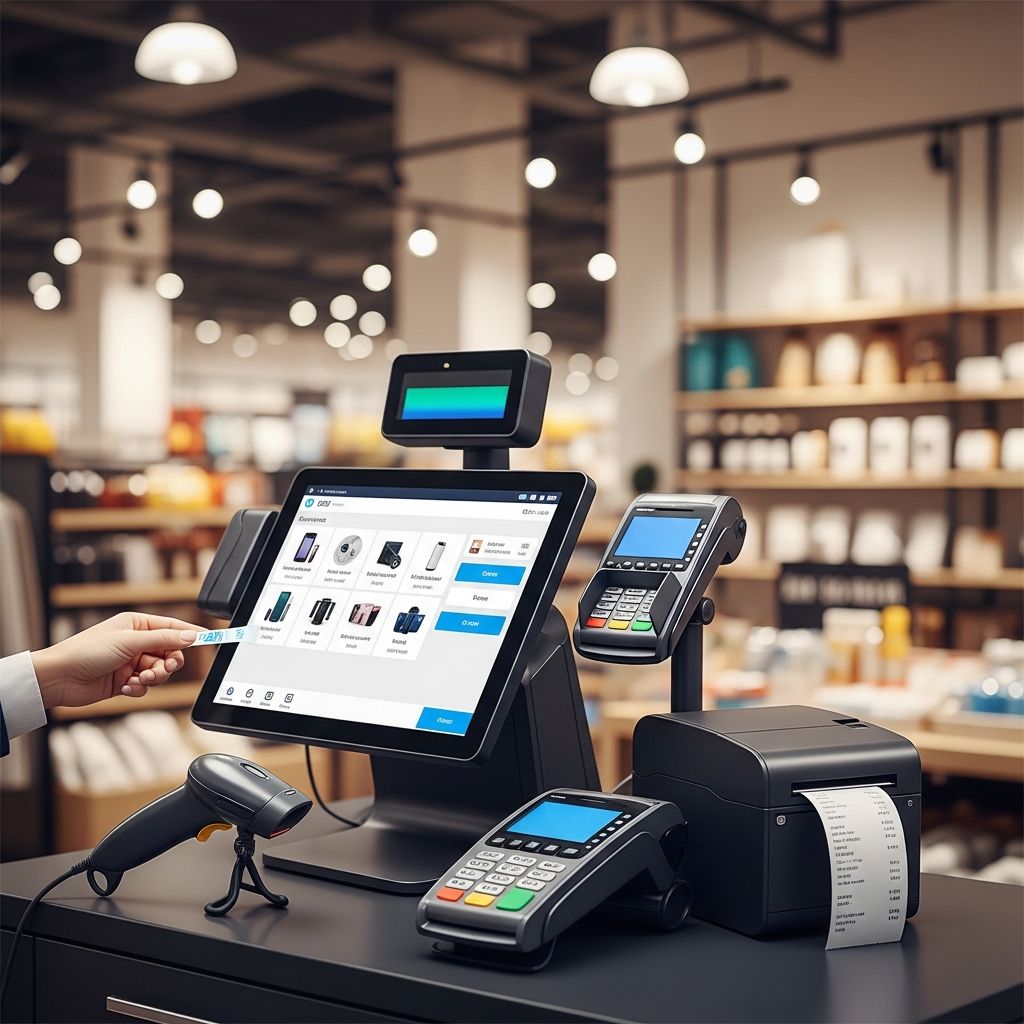
The modern retail landscape demands sophisticated solutions that go beyond traditional cash registers. Today’s successful retailers require integrated point of sale (POS) systems that manage sales transactions, inventory, customer relationships, and financial reporting simultaneously. Whether operating a independent bookstore, a specialty gift shop, or managing multiple franchise locations, business owners need comprehensive tools that streamline daily operations while providing actionable insights into their performance.
Understanding Modern Retail Management Technology
The evolution of retail technology has transformed how businesses operate at the point of purchase. Contemporary POS systems represent far more than devices that process payments; they serve as central hubs for operational intelligence and customer engagement. These platforms integrate multiple business functions into unified ecosystems, allowing retailers to make data-driven decisions while improving the customer experience.
Retailers today face unprecedented competition from both physical and digital channels. Traditional cash drawer operations have given way to sophisticated software platforms that provide real-time visibility into sales performance, inventory levels, and customer purchasing patterns. This transformation enables business owners to respond quickly to market demands and optimize their operations for profitability.
Core Components of Effective POS Solutions
Comprehensive retail management systems typically incorporate several interconnected components designed to work together seamlessly:
- Transaction Processing: Fast, reliable payment processing that supports multiple payment methods including cash, cards, mobile wallets, and emerging payment technologies
- Inventory Control: Real-time tracking of stock levels across locations, automated reordering capabilities, and visibility into product movement patterns
- Customer Data Management: Systems that capture and leverage customer information to enable personalized marketing and loyalty programs
- Financial Reporting: Comprehensive analytics dashboards that provide insights into revenue, margins, and operational metrics
- Employee Management: Tools for scheduling, performance tracking, and commission calculations
- Multi-Location Support: Centralized control and reporting for businesses operating multiple retail locations
Industry-Specific Applications and Use Cases
Different retail sectors have unique operational requirements that influence POS system selection and implementation strategies. Understanding these distinctions helps businesses identify solutions that align with their specific workflows and customer expectations.
Specialty Retail Operations
Businesses specializing in books, cards, and gift merchandise require POS systems that handle diverse product categories with varying price points and seasonal demand patterns. These retailers benefit from systems offering advanced categorization options, bundle pricing capabilities, and trend analysis tools that help identify bestselling items and emerging customer preferences.
General Merchandise and Departmentalized Retail
Broader retail operations managing multiple product departments need systems capable of handling complex inventory hierarchies, departmental profitability analysis, and cross-departmental promotional strategies. Modern POS platforms provide the flexibility to segment operations by department while maintaining unified reporting and financial controls.
Franchise and Buying Group Networks
Organizations operating through franchise models or centralized buying groups require POS systems capable of supporting standardized operations across multiple independently-owned or managed locations. These systems must balance corporate oversight with local operational flexibility, providing centralized reporting while allowing individual locations to maintain their unique customer relationships and operational practices.
Essential Features That Drive Business Success
Selecting an appropriate POS system requires understanding which features directly impact business outcomes and customer satisfaction:
Inventory Management Capabilities
Effective inventory management prevents stockouts that disappoint customers and prevents excess inventory that ties up capital. Advanced POS systems provide real-time visibility into stock levels, automated low-stock alerts, and intelligent reordering suggestions based on historical sales patterns. Some platforms integrate directly with supplier systems, further streamlining the procurement process.
Sales Analytics and Reporting
Data-driven decision-making separates successful retailers from struggling competitors. Comprehensive POS systems generate detailed reports on sales performance by product, category, time period, and customer segment. Dashboards provide immediate visibility into key metrics, while customizable reporting tools allow retailers to focus on measures most relevant to their business model.
Customer Relationship Enhancement
Modern retail success increasingly depends on building strong customer relationships. POS systems that capture purchase history, preferences, and contact information enable personalized marketing campaigns, targeted promotions, and loyalty programs that encourage repeat business. These capabilities transform transactional relationships into long-term customer partnerships.
Payment Processing Flexibility
Today’s customers expect multiple payment options. Modern POS systems support traditional card processing, digital wallets, mobile payments, and emerging payment technologies. This flexibility accommodates customer preferences while providing secure transaction processing that protects both the business and its customers.
Implementation Considerations for Retail Businesses
Successfully implementing a POS system requires careful planning and attention to several critical factors:
Scalability and Growth Capacity
Business systems should grow with the organization. Retailers should evaluate whether their chosen POS platform can accommodate expansion through additional locations, increased transaction volume, or expanded product offerings without requiring complete system replacement or major architectural changes.
Integration with Existing Operations
Most retailers already utilize accounting software, email marketing platforms, or other business tools. Modern POS systems should integrate with these existing systems to minimize data entry, reduce errors, and create unified information flows across the organization.
User Training and Adoption
System success depends on employee adoption. Platforms with intuitive interfaces require less training time, while vendors providing comprehensive training resources accelerate the implementation timeline. Some organizations benefit from phased rollouts that allow staff to master the system gradually rather than experiencing disruption across all locations simultaneously.
Support and Maintenance
Technical issues can disrupt retail operations and impact customer experience. Evaluating vendor support capabilities, response times, and availability ensures that problems are addressed quickly to minimize downtime.
Technology Stack and Infrastructure Requirements
Selecting a POS system involves understanding the technical infrastructure necessary to support operations. Modern systems typically operate on cloud-based architectures that provide flexibility, security, and reliability. Cloud deployment eliminates concerns about hardware maintenance, allows easy system updates, and enables access from multiple locations.
Hardware requirements vary by implementation model. Traditional terminal-based systems require dedicated register hardware, while tablet-based solutions offer flexibility to operate from mobile devices or non-traditional checkout locations. Retailers should evaluate which hardware approach best fits their physical environment and operational needs.
Security and Compliance in Retail Technology
Protecting customer data and payment information represents a critical responsibility for retailers. Modern POS systems incorporate multiple security layers including encryption, tokenization, and compliance with Payment Card Industry (PCI) standards. Retailers should verify that their chosen system meets or exceeds industry security requirements and understand their own responsibilities in maintaining a secure environment.
Cost Considerations and Return on Investment
POS system costs vary considerably based on features, deployment model, and transaction volume. Understanding both direct costs (software licensing, hardware, training) and indirect costs (implementation time, process changes) helps retailers make informed purchasing decisions. Calculating return on investment should consider both operational efficiencies gained and revenue improvements enabled by better data visibility and customer insights.
Pricing Models and Options
Vendors typically offer several pricing approaches including upfront licenses with ongoing support fees, subscription-based monthly pricing, or transaction-based pricing that scales with business volume. Each model has advantages depending on business size, growth trajectory, and preference for capital expenditure versus operational expense.
Making the Selection Decision
Choosing an appropriate POS system requires evaluating multiple vendors against specific business requirements. Retailers should develop a requirements checklist addressing must-have features, desired capabilities, and implementation constraints. Requesting demonstrations from multiple vendors, checking references from similar businesses, and evaluating trial periods helps ensure good fit before committing to long-term relationships.
The right POS system becomes an essential business tool that supports growth, improves operational efficiency, and enhances customer relationships. Taking time to understand available options and align selection with business objectives leads to greater success than rushing into implementation with inadequate evaluation.
Future Trends in Retail Technology
The retail technology landscape continues evolving with emerging capabilities that influence POS system selection. Artificial intelligence increasingly enables predictive analytics, demand forecasting, and personalized customer recommendations. Integration of omnichannel capabilities allows retailers to serve customers across online and physical channels with unified inventory and customer data. Mobile-first architectures recognize that retailers and customers increasingly use smartphones for shopping and business management.
Forward-thinking retailers select POS systems positioned to incorporate these emerging capabilities rather than systems that may become obsolete as technology advances. Evaluating vendors’ roadmaps and commitment to innovation helps ensure system relevance for years to come.
References
- PCI Security Standards Council: Payment Card Industry Data Security Standard (PCI DSS) Overview — PCI Security Standards Council. 2025. https://www.pcisecuritystandards.org/
- Small Business Administration: Retail Business Resource Guide — U.S. Small Business Administration. 2024. https://www.sba.gov/
- National Retail Federation: The State of Retail Technology Report — National Retail Federation. 2024. https://nrf.com/
- Cloud Security Alliance: Cloud Computing Security and Compliance Guide — Cloud Security Alliance. 2024. https://cloudsecurityalliance.org/
- International Organization for Standardization: Information Security Management Standards (ISO/IEC 27001) — International Organization for Standardization. 2022. https://www.iso.org/
Similar Articles



Read full bio of medha deb